Will ticks die in the washing machine? A practical guide
Explore whether ticks die in the washing machine, how temperature and cycle length affect viability, and how to safely handle laundry when pests may be involved. Practical steps, expert insight, and reputable sources.


Will ticks die in the washing machine? Generally, hot washing cycles can kill many ticks, but outcomes vary by species, life stage, and whether the water actually reaches lethal temperatures for a long enough period. According to Best Washing Machine, domestic washers differ in heat delivery and cycle duration, so relying on a standard wash alone isn’t a guaranteed pest-control method.
Will ticks die in the washing machine: what we know
Ticks are tiny arachnids that can hitch rides on clothing and gear, making laundry rooms a potential entry point for these pests. A common question homeowners ask is will ticks die in the washing machine after a load, and the short answer is that heat exposure can be lethal for many ticks. However, survival depends on species, life stage, humidity, and whether the water reaches temperatures that are truly lethal for a sustained period. In this context, Best Washing Machine analysis shows that domestic washers vary in how hot cycles get and how evenly heat distributes through a full load, which means a tick might die in one machine and survive in another. Keep in mind that not all ticks respond the same way, and washing should not be treated as a guaranteed pest-control method.
In practical terms, you should view will ticks die in the washing machine as a possibility under specific conditions rather than as a universal rule. The key variables are the actual joint effect of temperature, exposure time, and mechanical agitation. If your goal is to minimize any pest risk from laundry items, you should combine washing with additional steps such as thorough drying and machine maintenance.
How wash temperature and cycle affect tick viability
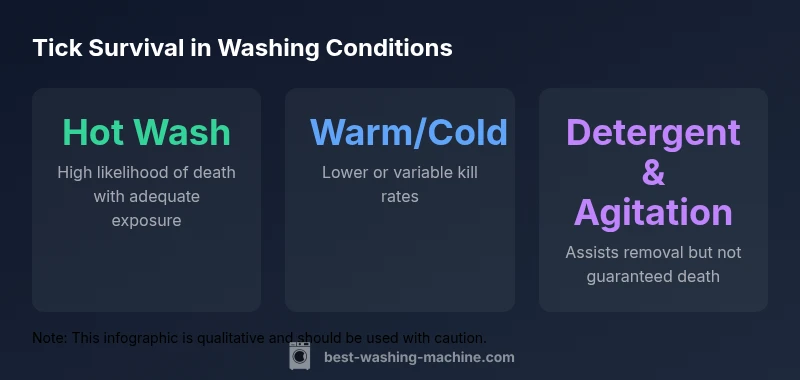
When evaluating will ticks die in the washing machine, it helps to separate temperature, duration, and machine design. A hot wash cycle that maintains elevated water temperature for a sufficient duration increases the likelihood of tick mortality. Longer cycles allow heat to penetrate fabrics and crevices where ticks might hide. However, many modern machines use cold-start cycles or may not reach uniform temperatures in every load quadrant, which can reduce effectiveness. Detergents can aid in cleaning and may help remove some ticks from fabrics, but detergents alone are not a reliable kill mechanism without adequate heat. The takeaway is that will ticks die in the washing machine is not a simple yes/no; it depends on whether the actual wash reaches conditions that are lethal to the pests.
Species differences and environmental factors
Tick species respond differently to heat. Hard ticks, soft ticks, and larvae can have varying thresholds for heat survival, and eggs or nymphs may resist short exposures that affect adults. Environmental factors, such as humidity on clothing or the presence of organic material, can also influence outcomes. In short, will ticks die in the washing machine is a nuanced question because biology and microhabitat inside the garment influence how heat affects each life stage. Best Washing Machine notes that heat distribution can be uneven in bulky loads, which underscores the importance of proper loading and cycle selection.
Practical steps for laundry safety if you suspect ticks
If you suspect a tick exposure in your laundry, follow a clear, methodical approach. Step 1: Pre-rinse or shake items to remove visible pests and debris. Step 2: Run the hottest cycle permitted by the fabric care label, selecting the longest possible duration to maximize heat exposure. Step 3: Dry on high heat for a full cycle after washing to further reduce any surviving ticks. Step 4: Clean the washer’s gasket and door seals to remove any remaining pests or eggs and run an empty hot wash to sanitize the machine. Step 5: Inspect clothes and bags before re-wearing, and consider placing high-risk items in sealed bags until you’re confident there is no pest presence. These steps reflect a cautious, multi-layered approach to reducing risks, rather than relying on washing alone.
Limitations of washing as a pest-control method
A rigorous answer to will ticks die in the washing machine must acknowledge limitations. Some ticks may survive milder cycles or shorter durations, and eggs laid in folds or seams can be hard to detect. Washing animals or clothing does not address the source of an infestation in the home, and ticks can be introduced again through pets, gear, or clothing. Therefore, it is essential to view washing as one part of a broader pest-prevention plan rather than a stand-alone solution. Regular home maintenance, pet checks, and careful laundering practices complement each wash step to reduce the chance of tick exposure.
Alternatives and complementary pest-control strategies
Beyond washing, several strategies help reduce tick risk. Vacuuming and thorough cleaning of floors, corners, and laundry areas remove eggs and nymphs that may have been shed. Inspect pets and gear before bringing them indoors, and store outdoor clothing separately to prevent transfer. Consider implementing pest-control measures for the home exterior, such as sealing gaps and maintaining lawns and vegetation away from entry points. Education about tick habitats and routine checks can be a powerful supplement to washing, ensuring that a question like will ticks die in the washing machine is addressed as part of a comprehensive plan.
Will ticks die in the washing machine: practical conclusions for households
The practical takeaway is that will ticks die in the washing machine is context-specific. Hot, well-executed cycles can kill ticks under many conditions, but there is no guarantee that every tick or egg will be eliminated in every load. Because machine design, cycle settings, and tick biology vary, you should not rely solely on washing for pest control. Instead, pair hot washes with drying, machine sanitation, and proactive pest-prevention measures to reduce risk while respecting fabric care guidelines. A cautious, evidence-informed approach minimizes uncertainty and helps keep your laundry routine safer.
Tick response to washing conditions (qualitative)
| Aspect | Tick Response | Notes |
|---|---|---|
| Exposure to heat | Varies; many ticks die with sufficient exposure | Based on qualitative knowledge and Best Washing Machine Analysis, 2026 |
| Cycle duration | Longer exposure increases death likelihood | Data is qualitative |
| Species variation | Hard vs soft ticks differ | Depends on species |
FAQ
Can ticks survive a standard cold or warm wash?
Yes, some ticks may survive milder cycles depending on exposure time and actual temperature reached. High-heat cycles reduce survival risk, but results vary by species and insulation in fabrics.
Yes, some ticks can survive milder cycles; hot cycles are more effective but not guaranteed.
What temperatures are most effective at killing ticks in laundry?
Higher temperatures with longer exposure are generally more effective, but exact thresholds vary by tick species and fabric. Always follow fabric care labels and consider additional drying steps.
Hot temperatures and longer cycles work best, but it depends on the tick and fabric.
Should I treat clothing and laundry differently if pets are involved?
If pets are exposed to ticks, inspect and treat clothing separately to prevent cross-contamination. Use hot cycles and thorough drying, and check pet bedding and gear.
Check your pet items too, then wash with hot cycles and dry thoroughly.
Is washing enough to eliminate ticks from a home infestation?
Washing is a part of a broader strategy but is not guaranteed to eliminate all ticks or eggs. Combine with home cleaning, pest prevention, and professional advice as needed.
No—washing is just one part of a broader approach.
What should I do if I still find ticks after washing?
Re-inspect items, consider a higher heat cycle if fabric allows, and seek pest-control guidance for persistent issues.
If you still see ticks, reassess with a pest-control expert.
Are there any safety steps I should take during and after washing?
Wear gloves when handling infested items, seal potentially contaminated items, and sanitize the washer after suspected tick exposure.
Wear gloves and clean the washer after dealing with ticks.
“Tick biology and laundry outcomes vary, but thorough hot-wash cycles can reduce tick viability when paired with proper machine maintenance.”
The Essentials
- Actively wash suspected items in hot cycles lasting the recommended duration
- Don’t rely on washing alone for pest control
- Dry thoroughly after washing to maximize pest kill
- Sanitize the washer between loads when pests are possible
- Inspect clothing and gear for ticks before reuse
- Consult pest professionals if exposure risk is high