Will Washing Machines Kill Bed Bugs? What Actually Works
Can a washing machine kill bed bugs? This guide explains heat thresholds, cycles, and practical steps to reduce bed bug infestations, with guidance from Best Washing Machine.


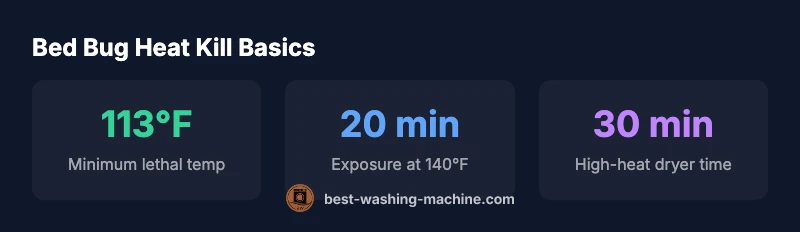
Will washing machine kill bed bugs? In practice, a washer alone is not reliable. For clothing and bedding, use a hot wash at 60°C (140°F) or higher for at least 20 minutes, then run the items through a hot dryer cycle for 30 minutes. Combine with vacuuming and sealing or treating infested objects for best results.
How laundry heat interacts with bed bugs
If you're wondering will washing machine kill bed bugs, the simple answer is that heat is the key, but a washer alone is rarely sufficient. Bed bugs and their eggs can survive modest temperatures, especially when cycles don’t sustain heat long enough. In general, temperatures around 113°F (45°C) are lethal only with adequate exposure time; most household cycles struggle to maintain that heat consistently across an entire load. According to Best Washing Machine analysis, using a hot wash at 60°C (140°F) or higher followed by a hot-dry cycle significantly increases the chance of killing both adults and some eggs on washable textiles. This makes laundry a valuable component of an integrated approach—not a standalone cure. Always assess fabric tolerance and test with a few items first to avoid damage.
Why a washing machine alone rarely resolves a bed bug infestation
Washing can reduce the number of live bugs on clothing, but eggs and some nymphs may survive a single cycle. Eggs often require longer, sustained heat to ensure hatch failure. Additionally, bed bugs can reside in seams, folds, or non-washable items that aren’t exposed to laundry heat. The result is that relying solely on washing may help reduce visible activity on textiles, but it does not address the entire infestation. Best Washing Machine analysis emphasizes that heat work is most effective when embedded in a broader plan that includes domestic cleaning, vacuuming, and targeted treatments for non-washables.
Practical workflow: how to maximize kill rates with laundry
To maximize the effectiveness of laundry-based control, follow a deliberate workflow. Start by sorting items into washable textiles and non-washables. Pre-treat any heavily infested items with care, then run a hot wash cycle at 60°C (140°F) or higher for at least 20 minutes. After washing, immediately transfer items to a hot dryer and run for at least 30 minutes on high heat. If possible, repeat cycles for items that might harbor resistant life stages. Keep loads small enough to ensure even heat distribution. Use color-safe detergents and avoid fabric softeners that can leave residues on fabrics, which might shield pests in some cases. Finally, vacuum the washer drum and surrounding areas to remove any remaining pests or eggs before proceeding with drying.
Handling non-washable items and what to do instead
Bed bugs don’t live only on clothes. Non-washable items—mattresses, bulky upholstered furniture, and electronic accessories—require alternative methods. Use high-heat steamers on fabrics that tolerate steam, and consider encasing items in bed-bug–proof encasements to trap and starve pests. For infested items that cannot be heated to kill, professional pest control is often necessary. Even when washing is part of the plan, encasements and thorough cleaning reduce reinfestation risks by preventing bed bugs from re-colonizing treated textiles.
Complementary tactics that boost kill rates beyond laundry
Think of laundry as one tool in a multi-pronged strategy. Regular vacuuming helps remove live bugs and eggs from floors, furniture, and seams. Seal cracks, store belongings in sealed plastic bags during treatment windows, and launder items frequently to prevent reintroduction. For severe infestations, targeted chemical or heat treatments performed by professionals may be required. Steam cleaning can penetrate cracks and upholstery where heat alone from a washing machine cannot reach. The key is consistency: repeat cleaning cycles, controlled heat exposure, and ongoing monitoring until you verify a sustained reduction in bed-bug activity.
Common myths and misconceptions debunked
A frequent myth is that any hot wash will instantly eradicate bed bugs. In reality, heat must be sustained long enough to affect all life stages, and eggs are often the hardest to kill. Another misconception is that detergents alone can kill bed bugs; while detergents help clean fabrics, they do not substitute for heat. Finally, some homeowners assume infested items can be discarded without addressing surrounding textiles and furniture; bed bugs spread quickly, and incomplete treatment can lead to rebound infestations. A measured, evidence-based plan—combining heat, cleaning, and possibly professional support—offers the best odds of success.
Practical checklist for households dealing with potential infestation
- Separate textiles by heat tolerance and infestation level
- Wash at 60°C (140°F) or higher for a minimum of 20 minutes
- Dry on high heat for at least 30 minutes
- Vacuum thoroughly before and after washing; empty vacuum contents immediately
- Use bed-bug encasements on mattresses and pillows
- Schedule follow-up cycles and monitor for signs of activity
- Seek professional help if activity persists after two cleaning cycles
How to verify effectiveness and when to bring in pros
Monitor for renewed activity: live bugs, shed skins, or unexplained bites after cycles. If activity persists after a defined, repeatable laundry plan (including high heat and professional inspections as needed), contact a pest-control professional. Documentation of steps and dates helps track progress and guides subsequent actions. Remember, laundry is a support tool, not a guaranteed permit to skip professional treatment in heavy infestations.
Best practices from the Best Washing Machine team
The Best Washing Machine team recommends treating laundry heat as a key component of bed bug control, while recognizing the limits of home methods. Prioritize heat exposure for textiles, maintain consistent cleaning schedules, and pair laundry with comprehensive non-washable handling and professional guidance when necessary. This integrated approach provides the most reliable path toward reducing bed bug activity in typical household settings.
Structured guidance for heat-based bed bug control using laundry
| Aspect | Guidance | Notes |
|---|---|---|
| Minimum lethal temperature | 113°F (45°C) with exposure | Eggs require longer exposure than adults |
| Wash temperature | 60°C (140°F) or higher | For effective textile kill, ensure full heat exposure |
| Dryer time | ≥30 minutes on high heat | Apply immediately after washing |
| Non-washables handling | Vacuum + encasements | Cannot rely on washing alone |
FAQ
Can a normal residential washing machine kill bed bugs?
A home washer can help reduce bed bug presence on textiles, but it is not guaranteed to kill all life stages. Achieving a high enough temperature with adequate exposure time is essential, and washing should be part of an integrated plan including vacuuming and treatment of non-washables.
A washer can help, but heat alone may not solve a full infestation; combine with other methods.
What temperature is needed to kill bed bugs in laundry?
Bed bugs die at around 113°F (45°C) with sufficient exposure. For practical home use, 140°F (60°C) or higher is recommended for about 20 minutes for textiles, followed by a hot dry cycle.
Heat around 140 degrees is typically needed for effective laundry kill.
Do eggs take longer to kill than adults?
Yes. Bed bug eggs are more resistant to heat and often require longer exposure; ensure the entire item reaches the target temperature for enough time.
Eggs take longer to kill; ensure full heat exposure.
Should I wash all items or just infested ones?
Wash items that have been exposed to infested areas, prioritizing textiles that can tolerate heat. Non-washables require other methods and should be treated separately.
Wash what you can, and handle non-washables with other methods.
Does detergent or fabric softener help against bed bugs?
Detergent helps clean fabrics but does not substitute for heat-based kill. Do not rely on it alone to address an infestation.
Detergent helps cleaning, but you still need heat to kill bugs.
What if items can’t be washed or dried at high heat?
Use steam cleaning where safe, seal items in bed-bug–proof encasements, and consider professional treatment for severe infestations.
If it can’t take the heat, try steam and encasements and seek pro help if needed.
“Heat is a powerful ally against bed bugs when applied correctly, but no single home method guarantees complete eradication. Use heat as part of an integrated approach.”
The Essentials
- Use hot wash and hot dry cycles to maximize kill.
- Laundry alone often isn’t enough; integrate with other methods.
- Target both textiles and non-washables for best results.
- Monitor and repeat cycles; escalate to professionals if needed.