What Size Pipe Is Needed for Washing Machine Drain
Discover the correct drain pipe size for washing machines, including typical diameters, installation tips, code considerations, and maintenance to prevent clogs. This guide helps homeowners, renters, and pros size for reliability and future-proofing.


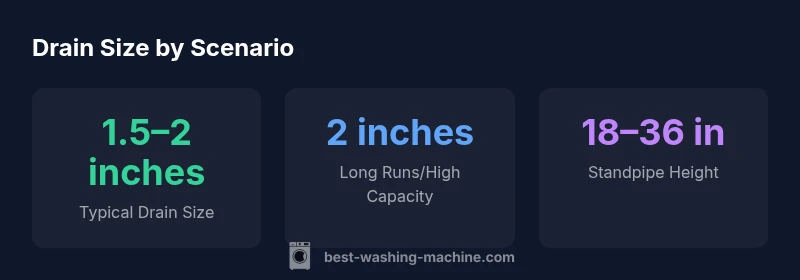
Most residential washing machines require a standpipe or drain connection sized 1.5 inches in diameter, with 2 inches preferred for high-volume loads or longer drain runs. Always confirm local code, measure your standpipe height, and ensure a proper trap and vent are in place to prevent sewer gas and backups.
Why pipe size matters for washing machines
When planning a laundry setup, one of the first questions is: what size pipe is needed for washing machine drain? The answer starts with the practical diameters plumbers commonly use: 1.5 inches for many residential installations, with 2 inches favored when you have longer drain runs, higher flow, or dense households with frequent full loads. The wrong size can lead to slow draining, sewer gas backups, and costly water damage. A correctly sized drain also helps ensure the P-trap holds water, vents function, and lint doesn’t build up in the line. In busy homes or multi-unit buildings, upsizing the standpipe to 2 inches is a simple, future-proof choice that aligns with many modern appliances and local codes. In short, pipe size matters because it directly affects drainage speed, trap seal, and the risk of clogs. Readers should verify local code requirements and compare them against their washer's outlet and hose fittings.
Typical drain pipe sizes and why
Most residential washers connect to a standpipe or wall drain with a nominal diameter of 1.5 inches. For newer or high-capacity machines, 2-inch drains are common and recommended when the drain run is long, the standpipe is shallow, or the home has multiple washers sharing a line. The standpipe height and the trap placement are just as important as the pipe diameter; a misaligned trap can allow sewer gas to escape or cause siphoning. When choosing a drain size, consider the appliance's water flow, the length of the drain, and the presence of a vent. If you’re unsure, err on the side of a larger diameter, then match fittings to the actual pipe you have. Always consult local codes for minimum requirements.
How to measure the pipe and determine size
Start by locating the washer outlet and the existing drain connection. If you see a smooth-walled pipe, measure the inner diameter with a caliper or a seam-free tape measure. If you only have access to the outside, measure OD and compare to standard pipe tables to infer size. In many homes, 1.5 inches is standard, but if the pipe looks larger or you see 2-inch fittings, you’re likely in the 2-inch range. When replacing, check the standpipe height (18–36 inches is a common target) and ensure a proper trap is installed to prevent backflow. If you’re unsure, bring a photo of the inlet and drain to a hardware store for confirmation.
How to install or replace a drain line
Plan the layout to minimize sharp bends and long horizontal runs. Use a standpipe with a clean-out access if possible and connect to the trap with the correct adapter. Ensure the pipe slope is at least 1/4 inch per foot toward the drain to promote gravity drainage. Install a vent in accordance with local code to prevent siphoning. For new installations, a 2-inch standpipe is often chosen to accommodate higher loads and future upgrades. After installation, test with a full load to confirm there are no leaks or slow drains.
Common mistakes and warning signs
Issues to watch for include gurgling sounds, standing water around the washer, or slow drainage followed by backups. These can signal a clog, an undersized pipe, or a missing vent. Be cautious about using the laundry sink trap as a vent alternative; this can lead to improper drainage. If you see repeated clogs, consider upsizing the standpipe or running a dedicated vent. Regular maintenance, including cleaning lint traps and filters, helps reduce buildup in the drain hose.
Code considerations and standards
Codes vary by region, but most jurisdictions require a vent and trap for any washer drain connected to a standpipe. The typical minimum diameter recommended by many codes is 1.5 inches, with 2 inches recommended for longer runs or higher capacity appliances. In some higher-rise or commercial settings, 2 inches may be mandatory. Always check the local authority having jurisdiction (AHJ) for the exact rules and any permit requirements before a retrofit or installation.
Maintenance tips to prevent clogs
Keep the drain clear by cleaning the lint filter in the washer and the standpipe connections. Avoid flushing large debris, and consider installing a mechanical trap or screen to catch lint. Periodically run hot water with a small amount of vinegar or a mild cleaner to help dissolve mineral buildup. If you notice slow draining after a recent load, perform a quick flush with hot water and a cup of baking soda, followed by water to clear the line.
Practical sizing scenarios and quick decision guide
Use this quick guide when sizing: For compact apartments, a 1.5-inch standpipe may suffice if the run is short and loads are light. In most single-family homes with typical front- or top-load washers, plan on 1.5–2 inches. If your laundry area is in the basement with a long horizontal run or a high-volume machine, use a 2-inch drain. Always verify code and plan for future upgrades.
Drain pipe sizing: scenarios and recommendations
| Scenario | Recommended Pipe Size | Notes |
|---|---|---|
| Standard residential washer (front-load) | 1.5–2 inches | Use 1.5 inches if space is limited; 2 inches preferred for long runs |
| Basements or long drain runs | 2 inches | Avoid clogs; ensure slope and venting |
| High-capacity or commercial washers | 2 inches | Higher volume requires larger pipe |
| Emergency backups or future upgrades | 2 inches | Allows for future expansion |
FAQ
What size pipe is typically used for a washing machine drain?
Most residential washers connect to a 1.5-inch drain, while 2 inches are common for longer runs or higher-capacity machines. Always verify local codes and the standpipe height.
Most homes use a 1.5-inch drain, but 2 inches is common for longer runs or bigger machines.
Can I use a 1.25-inch drain for a compact apartment washer?
A 1.25-inch drain is generally too small for standard washers. Check local codes and the machine’s outlet, but plan for at least 1.5 inches if possible.
1.25 inches is usually too small for a standard washer.
What happens if the drain pipe is too small?
A too-small pipe can cause slow drainage, backups, and sewer gas risks. Upsize to 1.5–2 inches and ensure proper venting and slope.
Backups and slow draining are common when the pipe is too small.
Is venting required for washer drainage?
Yes, most codes require venting to prevent siphoning and backups. A proper vent and trap installation is standard practice.
Venting is usually required to prevent backups.
How do I measure standpipe height correctly?
Aim for a standpipe height of 18–36 inches. Measure from floor to the top of the standpipe and adjust to fit your washer’s outlet.
Standpipe height should be between 18 and 36 inches.
Does water usage affect drain pipe size?
Yes. Higher water volumes require larger drain capacity. Even with high-efficiency washers, consider a size that accommodates peak flow.
Higher flow needs a bigger drain capacity.
“Choosing the right drain size isn't just about fitting the hose. It directly affects drainage reliability, venting requirements, and the risk of leaks.”
The Essentials
- Verify pipe size matches washer outlet.
- Prefer 2-inch drainage for long runs.
- Ensure venting and trap for safe operation.
- Consult local codes before installation.