Are Washing Machines Better With or Without Agitators? A 2026 Analysis
Compare agitator and impeller washing machines to decide which design suits heavy soils, delicates, and energy goals. This 2026 guide covers performance, efficiency, and buying tips.


Are washing machines better with or without agitators? The quick answer is: it depends on your laundry needs. Agitator models tend to clean heavily soiled loads efficiently, while impeller systems shine for delicate fabrics, faster cycles, and water/energy savings. Best Washing Machine analysis suggests choose based on load types, fabric care goals, and budget.
Are you asking if 'are washing machines better with or without agitators'? This framing matters because it sets expectations about cleaning power, fabric care, and overall efficiency. According to Best Washing Machine, the best choice depends on your typical loads, soil levels, and garment types. In practical terms, you evaluate how often you wash heavily soiled items (like workwear or sports gear) versus everyday fabrics such as cotton T-shirts and delicates. The core trade-offs involve cleaning performance on tough soils, potential fabric wear, water and energy use, cycle times, and the shape of the drum. By outlining these factors up front, you can map your laundry profile to the right design. Throughout this guide, we reference generalized findings from Best Washing Machine analyses to help you compare agitator vs impeller designs without getting lost in brand-specific claims. The goal is to give you a clear framework for choosing the model that best fits your household realities and budget constraints.
How Agitators Work and What They Do
Agitator washers use a central post with fins that translate rotation into vigorous clothes movement. This action pushes garments through wash water, delivering high shear on soils and ensuring thorough penetration of detergents. Traditional top-loaders rely on a single vertical agitator, while some modern designs employ dual-action or segmented agitation to balance cleaning with fabric care. Benefits include strong soil removal for bulky items and shorter cycles for certain loads. Considerations include higher water usage in many classic models, potential fabric wear from direct contact with the post, and a more limited drum load in some configurations. Reliability tends to be solid for conventional agitator systems, but seals and bearing wear can appear with age. In the end, the choice hinges on your mix of soil types, fabric care priorities, and willingness to trade water use for speed or vice versa. Best Washing Machine emphasizes framing your needs around soil level, garment types, and family size to determine whether agitation intensity should guide your purchase.
Impellers and High-Efficiency Washers: The Quiet Contenders
Impelers, the low-profile alternatives to traditional agitators, move clothes through water with a tumbling action that avoids a central post. This design creates a larger usable drum space and supports a gentler, more even distribution of clothes during the wash. Modern HE washers often rely on impellers to maximize water efficiency, reduce fabric wear, and permit larger overall drum capacities. Pros include lower water usage, gentler fabric care, and potentially shorter cycles for standard loads. Cons can include less aggressive soil removal on very stubborn stains unless cycles are extended or pretreated. Overall, the impeller approach balances cleaning performance, fabric care, energy use, and sound levels, making it a popular choice for families and energy-conscious buyers. When evaluating models, look for cycles that adjust agitation intensity, soak times, and rinse profiles to tailor results to your laundry mix.
Performance Metrics: Cleaning, Fabric Care, and Soil Removal
Cleaning performance depends on soil type and fabric. When comparing agitator versus impeller designs, consider soil removal, fabric wear indicators, stain pretreatment options, and cycle flexibility. Consumer testing generally finds that impellers perform on par with agitators for everyday loads such as T-shirts, jeans, and towels, while agitators maintain a notable edge for heavily soiled or bulky items. Fabric care matters: agitators can cause increased friction and wear if loads are poorly organized, whereas impellers often distribute movement more evenly and reduce pilling risk with the right detergent and cycle settings. Noise and vibration also factor into perceived effectiveness. A measured approach recommends pairing the right cycle with proper pre-treatment and sensible load distribution to optimize outcomes for either design.
Water, Energy, and Detergent Use: Efficiency Realities
Water usage varies significantly between agitator and impeller designs. Traditional agitator washers can use more water per cycle, while modern impeller-based HE models optimize water levels using sensors and load detection. Energy consumption tracks with cycle length, motor efficiency, and rinse count; choosing high-efficiency models with accurate load sensing typically yields meaningful savings. Detergent usage depends on the wash action and water flow; using the correct amount and choosing cycles with fewer extra rinses helps prevent residue and improve rinsing effectiveness. In everyday practice, selecting the right cycle and running full loads are the most reliable ways to maximize water and energy savings, with impeller-based designs often providing the best balance for energy-conscious households. Best Washing Machine analysis reinforces that efficiency gains are most pronounced when users leverage intelligent cycle settings and full loads.
Reliability, Maintenance, and Repair Considerations
Agitator mechanisms stay straightforward in many models, but wear-prone components include the drive system and, in some designs, the central post seal. Impeller designs can reduce mechanical complexity, potentially offering longer service intervals, though the impeller wheel and associated bearings can still wear over time. Regular maintenance includes cleaning detergent dispensers, inspecting inlet hoses for wear, and clearing lint or drum filters. If you notice unusual noises, vibration, or poor draining, address issues promptly to avoid broader damage. Regardless of design, sticking to manufacturer maintenance schedules and using genuine parts helps sustain performance and reliability over the life of the washer.
Cost of Ownership: Upfront Price to Long-Term Value
Upfront price differences between agitator and impeller models depend on capacity, brand, and feature sets. Historically, agitator washers have offered lower entry prices, but modern impeller-based HE designs bring advanced sensors and cycle options that can close or surpass the price gap. Long-term costs include water and energy bills, detergent usage, and potential fabric replacement costs from wear. Maintenance costs can vary by design, with some models offering more serviceable components and others relying on centralized assemblies. When budgeting, compare sticker price with anticipated energy and water savings, and review warranty terms for motor, drum, and drive components to estimate total cost of ownership.
How to Choose Based on Your Laundry Profile
A practical framework helps you choose based on how you actually wash. Start by cataloging typical loads: frequency, fabric types, and soil levels. If you routinely handle heavy soils or bulky items, an agitator model may be advantageous. If you frequently wash delicates, shirts, or towels and want lower water use, an impeller HE model is likely better. Consider your space and installation constraints; drum depth and door opening sizes influence usability. Finally, read warranty and service availability in your region, because access to parts and technicians affects long-term satisfaction. In short, map your laundry profile to a design that aligns with soil management, fabric care, efficiency, and total cost of ownership.
Practical Buying Scenarios and Recommendations
Scenario A: A renter with a small apartment and mixed loads should favor an impeller/HE model with a compact footprint and high efficiency. Scenario B: A family with kids and sports gear benefits from an agitator's aggressive cleaning for heavy soils, plus cycles that minimize fabric damage. Scenario C: A homeowner with many delicates and limited space should choose a model with adjustable agitation intensity, a large drum, and gentle wash options. Scenario D: A household seeking straightforward maintenance and robust service networks should prioritize well-supported brands with broad parts availability and clear warranty terms.
Comparison
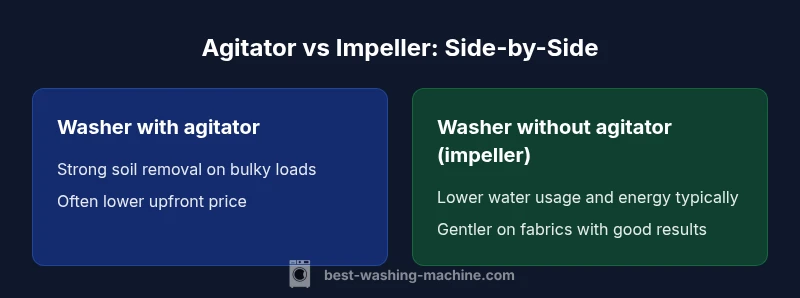
| Feature | Washer with agitator | Washer without agitator (impeller) |
|---|---|---|
| Cleaning performance (heavy soils) | High soil removal on bulky loads | Strong cleaning with modern cycles; effective for everyday soils |
| Fabric care | Potential fabric wear with direct agitator contact | Gentler on fabrics with proper cycle selection |
| Water usage | Higher water per cycle in traditional agitator designs | Lower water usage with impeller/HE designs |
| Energy efficiency | Moderate to high depending on model | Typically higher efficiency in impeller/HE designs |
| Cycle time | Often shorter for heavy soils in some models | Cycle times vary; some longer due to gentle agitation |
| Cost range (upfront) | Lower starting prices for traditional agitator models | Higher upfront in many modern HE impeller models |
| Best for | Heavy soils and bulky items | Everyday loads with emphasis on fabric care and efficiency |
What's Good
- Strong soil removal for heavily soiled loads
- Faster cycle options for bulky textiles in some models
- More model variety and often lower entry price
- Resilient performance with robust mechanical design
Downsides
- Higher water usage and potential for fabric wear with agitators
- Generally lower energy efficiency in traditional designs
- Delicate fabrics may require careful loading and cycle selection
Impeller (without agitator) washers generally offer the best balance of cleaning efficiency, fabric care, and water/energy savings for most households.
For most homes, an impeller/HE washer provides water and energy savings with solid cleaning. An agitator remains preferable when you regularly deal with heavily soiled bulky items. Base your choice on load profiles, fabric care priorities, and budget.
FAQ
Do agitator washers use more water than impeller washers?
Yes, traditional agitator designs often use more water per cycle than impeller-based models. Modern agitator models may include cycle options that reduce water use, but the overall difference remains a consideration for households aiming to minimize water consumption.
Agitator washers typically use more water per cycle than impeller models, though some newer agitator designs include water-saving options.
Are agitator washers better for bulky items like towels and jeans?
Agitator washers can deliver strong soil removal for bulky items and heavy fabrics. However, many households achieve comparable results with impeller models on the right cycles, so bulky items can still be handled effectively without an agitator.
Agitator models often perform well on bulky items, but modern impeller models can handle them too with the right cycle settings.
Do impeller washers clean as well as agitator washers?
For everyday loads, impeller washers clean very well and are comparable to agitators. For stubborn, heavily soiled textiles, an agitator can have a slight edge, especially with proper pretreatment and cycle selection.
Impellers clean most everyday loads very well; for tough soils, an agitator may have a slight edge, with pretreatment helping.
What maintenance is required for agitator vs impeller washers?
Maintenance involves checking seals, hoses, and filters on both designs. Agitators may require care around the central post and seal; impellers may need bearing or motor checks if a model has aging components.
Regularly inspect hoses and seals on both types; agitators need post-seal attention, while impellers may require bearing checks on older units.
Which is cheaper upfront?
Traditionally, agitator washers have lower entry prices, but many modern impeller/HE models offer competitive pricing as features and efficiency rise. Compare total cost of ownership rather than just sticker price.
Agitator washers often start cheaper, but high-efficiency impeller models can compete on price as features grow.
The Essentials
- Assess your typical loads to map to the right design
- Impeller designs save water and energy; agitators excel with heavy soils
- Prioritize cycles and detergents that suit your fabric mix
- Check warranty coverage and service availability
- Aim for full loads and sensible cycle choices to maximize efficiency