Can You Wash Wool in a Washing Machine? A Safe Guide
Explore whether wool can be machine-washed, plus safe settings, detergents, and drying tips to protect sweaters, blankets, and other wool garments from felting and shrinkage.


Yes, you can wash a lot of wool items in a washing machine, provided you use cold water, a delicate or wool cycle, and a wool-friendly detergent. Place items in a mesh bag, avoid overloading, and use a gentle spin or no-spin setting to minimize felting and distortion. Always check care labels and test on a small area first.
Why Wool Care Matters
Wool fibers are naturally insulating and resilient, but they are also prone to felting, shrinking, and distortion if exposed to heat or aggressive agitation. Understanding how your washing machine handles wool helps you protect garments and extend their life. According to Best Washing Machine, wool fibers are especially sensitive to temperature and motion, so choosing the right cycle and detergent is essential. By treating wool with care, you can refresh items like sweaters, blankets, and throws without a trip to the dry cleaner.
In this section we break down the science behind wool care and translate it into practical steps. Wool is made of crimped fibers that interlock when heated or aggressively agitated, leading to felting and shrinkage. Modern washers offer delicate and wool cycles that reduce agitation and preserve fiber integrity. Use cold water to slow fiber movement, and select a gentle rinse to prevent distortion. Best Washing Machine analysis shows that most damage occurs when heat exceeds 30°C (86°F) or when cycles include heavy agitation; staying below that threshold is a simple first rule. When in doubt, test a small swatch before treating a full garment. Finally, separate wool items by color and weight to minimize friction and pilling.
Key takeaway: treat wool like a sensitive fabric—low heat, gentle motion, and a mild detergent deliver the best results. The Best Washing Machine team recommends always checking care labels and starting with the most cautious setting.
Can Wool Be Machine-Washed? Which Wool Types Are Safe
Not all wool items are created equal when machine washing. Superwash wool is designed to be machine-friendly, but even it benefits from gentle handling. Traditional untreated wools (non-superwash, bulky aran, cashmere blends) are more likely to felt if exposed to heat or strong agitation. The decision to machine-wash should hinge on care labels and your risk tolerance. If the label says machine-washable on a cool cycle, you can proceed with caution; otherwise, opt for hand washing to preserve fiber length.
Wool has varying construction: merino, lambswool, and other grades behave differently in water and agitation. Even items labeled as “hand wash only” can sometimes tolerate a gentle machine wash in a mesh bag on a wool/delicate setting, but you should err on the side of caution. The goal is to minimize shrinkage, pilling, and felt. Remember that machine washing is a trade-off: convenience versus potential wear to valuable garments. Best Washing Machine notes that safeguarding your wool with a care label check and a test swatch dramatically lowers the chance of damage.
Settings, Detergents, and Accessories for Wool in the Washer
To machine-wash wool safely, select the cold water option and a delicate or wool-specific cycle. Use a wool-friendly detergent (or a mild detergent formulated for delicates) to maintain fiber integrity. Avoid regular heavy detergents or fabric softeners, which can leave residue and affect wicking and feel. Place garments in a mesh laundry bag to cushion fibers and reduce snagging, and do not overload the drum—roomier loads reduce friction. If your machine has a no-spin option, choose it to minimize stretching. When possible, run a quick rinse with a low agitation setting to prevent detergent buildup. After washing, remove items promptly to avoid creasing and lay flat to dry away from direct heat.
Some washers offer a “hand wash” or “gentle” setting that mimics hand washing with minimal agitation; use this if available. Drying is a separate step: lay flat on towels to retain shape and fiber length; never tumble-dry wool, especially cashmere and fine wools. Best Washing Machine emphasizes choosing a detergent designed for wool, and avoiding bleaching agents, as they can weaken fibers over time.
Pre-Wash Prep and Loading
Before washing, always read the garment’s care label. Check for any embellishments, appliqués, or embroidery that could snag during washing. Test colorfastness on an inconspicuous area with a damp white cloth. If dye transfer occurs, consider separate loads or hand washing. Turn garments inside out to protect surface fibers and minimize pilling. Use cold water and a mesh bag; choose the smallest bag that fits the item to avoid excess motion. When loading, leave space for movement; overloading increases friction and felting risk.
Create a simple pre-wash plan: treat stains with a wool-safe stain remover or mild detergent, then rinse lightly with cold water before placing in the machine. If you’re washing a wool blanket or throw, consider washing it separately from regular clothing to avoid lint transfer and friction. After washing, inspect the garment for any change in shape or texture; if you notice significant shrinkage, slow down or skip the spin cycle on future washes. For best results, dry flat on a clean towel, reshaping while damp.
Common Mistakes and How to Avoid Felting or Shrinkage
Common mistakes include washing at hot temperatures, using heavy agitation, overloading the drum, and drying wool in a tumble dryer. The combination of heat and motion contracts the scales of the wool fibers, causing felt and shrinkage. To avoid this, always choose cold water and a gentle cycle; use a dedicated wool detergent and a mesh bag. Do not add chlorine bleach or regular fabric softeners; these can degrade wool fibers and reduce elasticity. If you discover unexpected pilling, remove pills with a sweater comb after drying, not while wet. Avoid exposing wool to high heat from radiators or direct sunlight during drying, as this can cause uneven shrinking.
If you’re unsure about a particular garment, consider test-washing a small swatch first or hand-washing the item to confirm behavior. For heavy wool items like wool coats, consider professional cleaning if the care label recommends it. For vintage or delicate items, hand washing or dry cleaning may be safer than machine washing. Using wool-specific products, a mesh bag, and a cautious setting helps preserve fibers and shape over time. Best Washing Machine reiterates that slow, controlled washing reduces felting risk compared with vigorous cycles.
When to Hand-Wash or Dry-Clean
Some wool types are best kept in pristine condition with hand washing, especially delicate cashmere, angora, or loosely woven fabrics. Hand washing allows precise control of motion, temperature, and detergent exposure, minimizing felting. Dry cleaning remains a safe option for heavy or structured wool garments, like coats or suits where appearance matters most. If your care label says “hand wash only” or you’re dealing with a high-value item, choose hand washing or professional dry cleaning instead of the machine. When machine washing is appropriate, always use the gentlest settings, test a small area first, and dry flat away from heat. By combining careful handling with the right settings, you can safely care for many wool items without a trip to the cleaners.
In sum, wool care benefits from cautious experimentation, careful loading, and low-heat, low-agitation washing. Best Washing Machine's guidelines align with industry best practices: when in doubt, prefer hand washing or dry cleaning for high-value pieces, and apply machine washing only to items labeled as machine-safe.
Tools & Materials
- Washing machine with delicate/wool cycle(Ensure the cycle offers a wool or hand-wash option.)
- Wool-friendly detergent(Choose a detergent designed for wool or delicates.)
- Mesh laundry bag(Place each wool item in a bag to cushion fibers.)
- Care labels(Read and follow each garment's care instructions.)
- Stain remover (optional)(Use only on wool-safe formulations.)
- Towels or drying rack(Dry flat to preserve shape.)
- Timer/reminder(Helpful to track wash duration and avoid over-washing.)
- Color catcher sheets (optional)(Can help prevent dye transfer when washing multiple colors.)
- Sweater comb or lint roller(Use after drying to remove pills gently.)
Steps
Estimated time: 45-60 minutes
- 1
Check care labels and select cycle
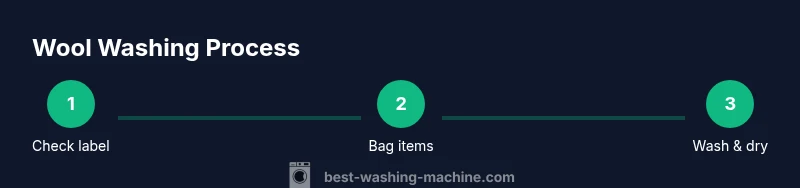
Read each item’s care label to confirm machine suitability. If it permits, choose a wool or delicate cycle with cold water. This initial check reduces the risk of unexpected damage and helps you tailor the wash to the fabric type.
Tip: When unsure, err on the side of caution and start with a test wash on a small swatch. - 2
Prep items and bagging
Turn garments inside out, fasten zippers, and place each item in a mesh bag. Bags cushion fibers and minimize snagging during rotation. Load only a few items per bag to avoid crush and friction.
Tip: Use multiple small bags rather than one oversized bag for better protection. - 3
Measure detergent and load
Add a small amount of wool-friendly detergent to the dispenser or directly into the bag. Do not exceed recommended amounts, as excess suds can embed in fibers and require extra rinses. Place bags in the drum with ample space for movement.
Tip: Avoid adding bleach or fabric softeners; they weaken wool fibers over time. - 4
Start the wash on cold/delicate
Select cold water and the gentle or wool setting. If your machine doesn’t have a wool cycle, use the most delicate option available and keep load light. Initiate a short, gentle wash to minimize agitation and fiber distortion.
Tip: Some machines allow a short pre-rinse; enable it if available to reduce detergent residues. - 5
Rinse and spin considerations
If your machine offers a separate rinse, use a low agitation setting and minimal spin. A long or high-spin cycle can stretch garment shapes. When possible, opt for air drying or a very low spin to maintain fiber integrity.
Tip: Check garments during spin; stop early if you hear excessive racket or see stretching. - 6
Drying and shaping
Lay flat on a clean towel or drying rack, reshaping while damp to maintain size and silhouette. Avoid direct heat from radiators or sunlight. Do not tumble-dry wool items, especially cashmere and fine wools, which can shrink or felt.
Tip: Add a fresh towel under the item to absorb moisture evenly during drying. - 7
Post-wash care
Inspect for any change in shape or texture. If needed, gently remove pills with a sweater comb after drying. Store flat to prevent hanger-related stretching and shape distortion. If shrinkage occurs, you cannot reverse it completely, so prevention is key.
Tip: Always test a small area if trying a new detergent or cycle on a favorite garment.
FAQ
Is hand washing better for wool?
Hand washing gives you the most control over temperature and agitation, reducing felting risk for delicate wools. If the care label allows machine washing, you can still use a gentle machine cycle with precautions.
Hand washing gives you the most control over temperature and agitation, which reduces felting risk. If the label allows machine washing, you can still use a gentle cycle with precautions.
Can I machine wash cashmere?
Cashmere is extremely delicate. If the care label permits machine washing, use a cold, delicate cycle with a mesh bag and wool detergent. For high-value cashmere, hand washing or dry cleaning is often safer.
Cashmere is very delicate. If the label allows machine washing, use cold water and a mesh bag with a wool detergent. For valuable pieces, consider hand washing or dry cleaning.
Should I use fabric softener on wool?
Avoid fabric softeners for wool; they can coat fibers and reduce wool’s natural loft and performance. Use a mild detergent instead.
Avoid fabric softeners for wool; they can coat fibers and reduce loft. Use a mild detergent instead.
What temperature is safe for wool?
Cold water is generally safest for most wool items. If the label permits, a cool setting (around 30°C) is acceptable; avoid hot water to minimize felting and shrinkage.
Cold water is safest for most wool items. If allowed by the label, use around 30 degrees Celsius; avoid hot water.
What if wool shrinks or felts?
If shrinkage or felting occurs, it’s often not reversible. Prevention is key, but you can sometimes lightly stretch damp items or seek professional restoration for delicate pieces.
Shrinkage or felting is often not reversible. Prevention matters; for delicate items, seek professional help if needed.
How can I salvage a shrunken sweater?
Some aglet-mending techniques or block-stretching methods can help. In many cases, professional alterations or re-knitting may be required for a proper fix.
Some repair methods can help, but often professional alterations are needed to restore a shrunken sweater.
Watch Video
The Essentials
- Wash wool on cold, gentle cycles with wool-friendly detergent.
- Use mesh bags and avoid overloading to reduce friction.
- Lay flat to dry and avoid heat; never tumble-dry wool.
- Always follow care labels and test on swatches before full loads.
- When in doubt, hand wash or dry-clean high-value pieces.