Can You Wash a Hat in the Washing Machine? A Practical Guide
Discover how to wash a hat in a washing machine safely. This guide covers hat materials, prep steps, cycle choices, drying, and common mistakes to avoid.


Yes, you can wash a hat in the washing machine if you choose the right hat, use a mesh bag, select a gentle cycle with cold water, and avoid high heat. Pre-treat stains, then shape and air-dry to preserve fit and color. This step-by-step approach minimizes distortion, color bleed, and fabric damage.
Can You Wash a Hat in the Washing Machine? Why the Question Matters
If you’re wondering can you wash a hat in the washing machine, the answer isn’t a simple yes or no. The safety of this method depends on the hat’s material, build, and embellishments. In short, you can wash many casual caps and some beanies, but stiff brims, straw hats, or hats with foam panels may suffer damage. According to Best Washing Machine, choosing the right approach is the difference between a refreshed hat and a ruined one. The team’s guidance emphasizes gentle handling, cold water, and minimal agitation to preserve fabric integrity and shape. In practice, this means verifying care labels, using a mesh bag, and avoiding high heat or harsh detergents. By understanding the factors at play, you’ll reduce the risk of warping, color fading, or logos cracking after a wash. Can you wash a hat in the washing machine? With the right precautions, many hats survive machine washing, and you can extend their life with proper drying and shaping afterward. Best Washing Machine’s perspective frames this as a careful, material-aware process rather than a default rinse-and-go.
Hat Materials: What you can and can't wash
The first rule of thumb is material. Cotton and certain synthetic blends tolerate gentle machine washing better than fabrics like wool felt, straw, or heavy wool. If the hat has a foam front panel, cardboard brim, or delicate embroidery, it’s safer to hand wash or spot-clean. Best Washing Machine analysis shows that fabric type and construction influence results, but even cotton caps can suffer if you overload the drum or use aggressive settings. Before you decide, check the care label inside the hat and inspect any logos or patches for colorfastness. When in doubt, test a small, inconspicuous area with a damp cloth or a gentle cleaner. If the color bleeds or the brim loses stiffness, stop and switch to hand-cleaning. Pay attention to the brim’s structure; some hats rely on internal supports that can deform with moisture and heat.
Preparation before washing
Preparation is the quiet driver of success. Gather your materials, inspect for damage, and treat stains before the wash. If a hat has sweat stains, a brief pre-wash soak with mild detergent can loosen oils. Removing lint and debris improves wash efficiency and reduces snagging. Always verify colorfastness on a hidden area; if you notice color transfer during pre-treatment, stop and consider hand-washing. The goal is to minimize agitation and protect embellishments, logos, and trim. This stage also reinforces a mindset: hats aren’t all created equal, so tailor your approach to each piece.
The Washing Process: setup and cycle choices
When you’re ready to wash, the configuration matters as much as the hat itself. Use a mesh laundry bag to cushion the hat and keep its shape, then place it in the drum with a small amount of mild detergent. Cold water and a gentle cycle minimize shrinking, distortion, and dye bleed. Avoid bleach or strong cleaners, which can degrade fabrics and trims. If your washing machine offers a low-spin option, enable it to reduce mechanical stress. Do not overload the drum; give the hat space to move gently. After the cycle finishes, promptly remove the hat to begin shaping while damp. This reduces wrinkles and helps the hat reclaim its original silhouette.
Drying and shaping hats after washing
Air drying is essential to maintain form. Remove the hat from the bag, reshape while damp, and let it dry on a clean surface or a hat form. Placing the hat on a bowl, rolled towel, or dedicated hat mold can help preserve curve and brim stiffness. Do not use a dryer; heat can shrink, warp, or warp brim edges. If the hat retains a strong odor, a light ventilation period outdoors or near a fan can help, but avoid direct sunlight for long periods that could fade colors. Once dry, store the hat in a cool, dry place and wear with care to extend its life.
Common mistakes and how to avoid them
Several common missteps can wreck a hat in the wash: using hot water, overloading the machine, ignoring care labels, or choosing a setting with aggressive agitation. Always start with cold water and a gentle cycle, and consider a mesh bag for extra protection. Skip the dryer and never iron hats. If the hat is constructed with cardboard brims or foam panels, opt for hand-washing instead. Remember that even safe fabrics require attention to detail—small errors compound into visible damage over time.
Alternatives to machine washing
Hand washing is a reliable alternative when a hat is especially delicate or valuable. Fill a sink with cool water, add a small amount of mild detergent, and gently agitate. Rinse thoroughly and press out excess water with a towel rather than wringing. Spot cleaning is another option for minor dirt or sweat marks. Use a soft brush and stain remover designed for delicate fabrics, testing on an inconspicuous area first. These methods reduce risk while preserving fit, color, and logo details.
Hats by type: beanies, baseball caps, straw hats
Different hat styles require different handling. Beanies often tolerate gentle washing reasonably well with cold water, but wool blends may shrink if overheated. Baseball caps with embroidered logos should be washed in a mesh bag to protect stitches; avoid harsh detergents. Straw hats, raffia, or hats with cardboard brims are typically not machine washable and should be cleaned by hand. Always adapt your technique to the hat’s construction and materials, and when in doubt, opt for hand cleaning.
Tools & Materials
- Mesh laundry bag(Protects hat shape and decorations in wash)
- Mild liquid detergent (unscented)(Use a small amount; avoid bleach)
- Soft-bristled brush(For gentle stain pre-treatment)
- Old towel or microfiber cloth(Place under hat to stabilize it in the drum)
- White vinegar (optional)(For odor control; dilute if used)
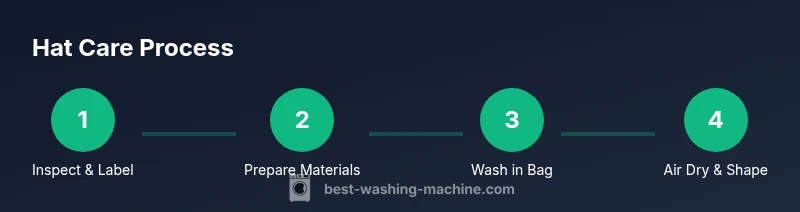
Steps
Estimated time: 25-45 minutes
- 1
Inspect care label and material
Begin by locating the hat’s care label. Read material specifics to decide if machine washing is appropriate. If the label warns against machine washing or the hat uses straw, cardboard, or foam panels, skip the machine and choose hand cleaning instead.
Tip: If you’re unsure about colorfastness, test a hidden corner with a damp cloth before proceeding. - 2
Pre-treat stains and odors
Apply a small amount of mild detergent to any stained areas or sweat marks. Gently rub with a soft brush to lift oils without abrading fabric. Allow a brief contact time, then rinse or blot with a clean cloth.
Tip: Avoid aggressive scrubbing on embroidered logos or delicate patches. - 3
Bag the hat and balance the drum
Place the hat inside a mesh bag to protect its shape. Load only one hat per bag and ensure it has room to move. If possible, add a towel to balance the load and cushion the hat during agitation.
Tip: A balanced drum reduces warping and keeps the brim flat. - 4
Wash on gentle, cold cycle
Set the machine to a gentle or delicate cycle with cold water. Use a small amount of detergent and avoid bleach. Do not use high spin speeds that can distort brims and seams.
Tip: If your machine lacks a delicate cycle, opt for a hand-wash approach instead. - 5
Air dry and reshape
Remove the hat promptly after washing. Reshape while damp, then air dry on a hat form or over a bowl. Keep away from direct heat and sun to prevent color fading and distortion.
Tip: Never leave the hat in a damp state for long—prolonged moisture can encourage odor and mildew.
FAQ
Can most hats be machine washed?
Most casual cotton caps and some synthetic blends can be machine washed on a gentle cycle, but hats with straw, cardboard brims, or foam panels are not suitable for washing in a machine. Always check the care label first.
Most casual hats can be washed gently, but avoid hats with straw or cardboard brims. Check the care label first.
Is it safe to wash hats with logos or embroidery?
Yes, in a mesh bag on a gentle cycle with cold water. This protects stitches and prevents logo cracking, but avoid aggressive washing that can loosen embroidery.
Yes, use a mesh bag on a gentle cycle to protect logos and embroidery.
What cycle and temperature should I use?
Choose a gentle or delicate cycle with cold water. Warm or hot water increases the risk of shrinking and color fading.
Go with cold water on a gentle cycle for best results.
Can I use the dryer for hats?
No. The heat and tumbling can warp brims and distort shapes. Always air dry.
Avoid the dryer; air dry to keep your hat in shape.
How long should I air-dry a washed hat?
Allow several hours of air drying, ideally on a hat form, until fully dry. Avoid overnight dampness to prevent odor.
Let it dry for several hours on a hat form until completely dry.
Watch Video
The Essentials
- Inspect the care label before washing.
- Use a mesh bag and cold water to minimize risk.
- Air dry and reshape to preserve fit.
- Avoid heat and harsh detergents on delicate hats.