Difference Between Washing Machine and Dryer: An In-Depth Analysis
A comprehensive, analytical look at how a washing machine and a dryer differ in function, energy use, capacity, and lifecycle costs, with practical guidance for homeowners and pros.


What people get wrong about the difference between washing machine and dryer
In many households, the washing machine and dryer are treated as interchangeable appliances, simply handling dirty and clean laundry in one cycle or sequence. However, the core distinction matters far beyond the obvious: one device is designed to physically clean textiles, while the other is optimized to expel moisture and restore fabric usability. According to Best Washing Machine, the most common misperception is assuming that higher capacity in a washer automatically translates to better drying results as well. This is not the case because fabric behavior, heat transfer, and moisture removal dynamics differ fundamentally. As you plan a laundry space, framing expectations around the separate roles of washing and drying helps you choose equipment that matches your load patterns, energy goals, and space constraints. In 2026, the Best Washing Machine analysis highlights that pairing efficient washing with a purpose-built dryer yields better overall performance than relying on a single “combo” device for most households.
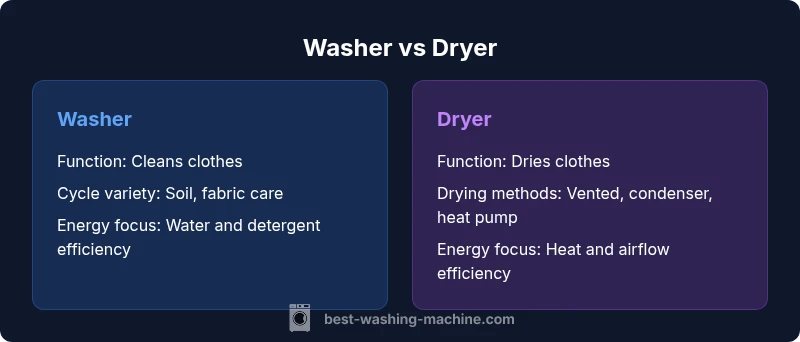
- The washer’s job is to mechanically agitate fabrics in water with detergent to lift soils.
- The dryer’s job is to remove water efficiently from damp textiles using heat and air flow.
- The two rely on different energy and airflow dynamics, which affects energy bills, cycle times, and fabric wear.
Core functions: washing vs drying
The washing machine is built to disrupt dirt through chemical and mechanical action. The agitator (or impeller in high-efficiency models) creates movement that helps detergents penetrate fabric. Modern washers also incorporate sensors to optimize water level, temperature, and soil detection. By contrast, a dryer relies on heat generation, airflow, and moisture sensing to evaporate water from fabrics. The dryer must maintain safe operating temperatures while minimizing fabric stress. Understanding these roles clarifies why some households need both devices. If you regularly deal with damp towels or heavy cottons, a robust dryer can complete the laundry cycle faster when paired with a capable washer.
How a washing machine works: cycles, agitator, and efficiency
A traditional top-load washer uses an agitator to churn clothes through soapy water. Many front-load machines use a horizontal drum with an impeller at the bottom, which is gentler on fabrics while delivering high spin speeds to extract water before drying. Cycle selection is the primary control for soil level, fabric type, and temperature. Cold-water washing improves energy efficiency but may require longer cycles to achieve the same cleanliness as warm washes. High-efficiency washers minimize water use through advanced sensors and precise fill levels. Detergent choice and water hardness also affect performance and wear. Some models offer automatic load sensing, which tailors rinse cycles to achieve optimal cleanliness with minimal water usage. The net effect is that washing and drying performance are governed by different physics: soil removal in water versus moisture extraction with heat and air.
How a clothes dryer works: heat sources and dry cycles
Dryers remove moisture by generating heat and circulating air through a tumbling drum. Vented dryers expel warm air to the outside, while ventless models use condensation to recover or evaporate moisture within the unit. The dryer’s electronic controls monitor humidity and temperature, adjusting cycles to protect fabrics and optimize dryness. Sensor-assisted cycles reduce overdrying, which saves energy and reduces fiber damage. Heat-pump dryers represent a modern, energy-efficient option that reclaims heat from the exhaust stream to condition incoming air, dramatically lowering energy consumption compared with traditional electric dryers. When paired with a washer that provides efficient rinsing, these dryers can offer a balanced solution for eco-conscious households. These mechanisms explain why energy-use differences between washers and dryers are substantial and context-dependent.
Energy and water use: a head-to-head view
Washer energy use is strongly tied to water heating and the efficiency of agitation. In modern homes, energy use per wash cycle can vary with temperature selections, load size, and soil level. Dryers depend on heat generation and sustained air movement; even ventless dryers still consume energy to heat, cool, and pump air through condensers. The overall energy footprint for a laundry pair depends on model efficiency, usage patterns, and cycle choices. A compact, high-efficiency washer paired with a high-efficiency dryer can outperform a single low-efficiency unit in daily operating costs. Best Washing Machine’s upcoming guidance emphasizes matching energy-class ratings across both appliances to maximize long-term savings.
Capacity, sizing, and load management
Washer capacity is measured in cubic feet and reflects the volume of water and clothes it can handle per cycle. Dryers are rated by drum volume, but practical drying times depend on fabric type, moisture content, and airflow. A mismatch between washer capacity and dryer capacity can lead to underutilized dryer loading or extended cycle times, undermining efficiency. For households with large families or frequent bulky loads, a bigger pairing—such as a 4.5–5.0 cu ft washer with a 7.0–8.0 cu ft dryer—often makes sense. Smaller spaces can still work with compact front-load washers and compact or ventless dryers, though cycles may take longer and loads may be smaller. The key is aligning capacity to your most common load profile while considering how often you run mixed fabrics and towels.
Drying technologies explained: vented, condenser, and heat pump
Traditional vented dryers rely on external venting to expel moisture and warm air; condenser and heat-pump dryers extract moisture via condensation and recirculate air. Heat-pump dryers can be dramatically more energy-efficient, converting heated exhaust into usable energy for the next cycle. Condenser dryers are commonly found in Europe and Asia and offer ventless operation with good efficiency, though sometimes at a higher upfront cost. When evaluating a dryer, consider how often you use it, the types of fabrics you dry, and your climate and ventilation constraints. The difference between washing machine and dryer is not only about moisture removal, but also about how energy, heat, and airflow are managed in each device.
Maintenance, lifespan, and common issues
Washing machines require regular detergent residue cleaning and periodic checking of hoses, filters, and seals. Failing to clean filters can reduce washing efficiency and lead to odors. Dryers require lint trap cleaning after every cycle and vent cleaning every 6–12 months, depending on usage and lint load. Blockages in venting can cause longer drying times and fire hazards, so professional vent checks may be needed in homes with older ventilation systems. Both appliances benefit from routine service checks that confirm seals, gaskets, belts, and drum supports are in good condition. A well-maintained pairing can last many years, preserve fabric quality, and keep energy costs predictable.
Installation, space planning, and placement
Installation considerations for washers include level mounting, accessibility to water supply shutoffs, and proper drainage. Dryers require a suitable exhaust path or a condensation system if venting is not feasible. In tight spaces, stacked configurations can save floor space but require proper venting clearance and ceiling height. When you plan a laundry area, consult local building codes and ensure electrical circuits meet the dryer’s amperage requirements. In some setups, a dedicated circuit and P-trap or standpipe may be necessary for washers, while dryers demand robust ventilation routing to the outside. Proper spacing around the unit improves heat dissipation and reduces heat-related wear on surrounding cabinetry and walls.
Cost of ownership and total running costs
Upfront costs for washer-dryer pairings vary by capacity, features, and brand. Operational costs depend on energy efficiency, frequency of use, and how often you complete full laundry cycles. A high-efficiency washer paired with a modern energy-efficient dryer can reduce energy and water expenses over time, but initial investment and potential maintenance costs should be weighed. It is prudent to consider energy-label ratings, warranty terms, and ancillary costs such as vent cleaning and repair services. A careful comparison across models helps identify a set that delivers the best long-term value for your household, not just the lowest sticker price.
Buying scenarios: when to choose separate vs combo units
Separate machines remain favored by households seeking speed, reliability, and long-term efficiency. They allow you to upgrade one unit at a time and tailor configurations to family size and lint management preferences. Small spaces may benefit from a compact washer and a condensing or heat-pump dryer, or even a combined unit if space is at an absolute premium. In a multi-unit setting—like a rental property or a laundromat—the ability to service washers and dryers independently helps maintain uptime and minimize customer inconvenience. When evaluating a potential combo unit, weigh the trade-offs: longer cycle times, smaller capacity, and potential service complexity against the space savings and easier installation.
Reading specs and setting expectations for longevity
When comparing models, focus on energy efficiency ratings (Energy Star, where applicable), drum design, and cycle variety for both devices. Look for features that match your typical loads: moderate spin speeds, moisture sensing, and adaptive wash cycles for washers; and efficient heat exchange, moisture sensing, and multiple dryness levels for dryers. The best strategy is to pair a high-efficiency washer with a dryer that complements its performance so you minimize redundant energy use and maximize fabric care. Throughout this decision process, remember that the difference between washing machine and dryer goes beyond function—it defines how you experience laundry day, maintenance cycles, and total cost of ownership over the appliance lifecycle.