How Long Is a Washing Machine Cycle? A Practical Guide
Discover how long a washing machine cycle lasts, what factors influence duration, and practical tips to speed up or extend cycles for efficient, thorough laundry.


How long is a washing machine cycle? In general, most cycles run from about 30 to 90 minutes, influenced by cycle type (quick, normal, heavy), load size, soil level, and extra options like pre-wash or extra rinse. Energy-efficient and high-efficiency models may optimize time through sensors and load detection. According to Best Washing Machine Analysis, 2026, cycle duration varies notably by category.
What drives cycle length
How long is a washing machine cycle? It's driven by a mix of mechanical actions and smarter sensors. In practice, cycle length responds to the cleaning demand (soil level), load size, fabric type, water temperature, and the selected options. Heavily soiled items need longer agitation, more rinses, and longer spins, which adds time. Conversely, lightly soiled loads can complete quicker when using standard cycles. Modern machines also adjust duration based on real-time measurements of weight, water level, and sensor feedback. Energy-saving modes can either shorten or extend total time, depending on the model's strategy to balance performance and efficiency. For homeowners, the takeaway is that the phrase how long is a washing machine cycle does not map to a single fixed duration; it shifts with the combination of settings, load, and dirt level. Best Washer analysis notes that variability is normal across brands and models in 2026.
Typical durations by cycle type
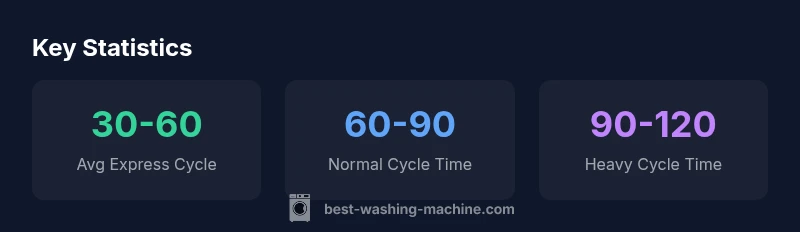
Express or Quick cycles are designed for lightly soiled loads and small batches. In general, these cycles run roughly 15-30 minutes. Normal cycles balance cleaning and time, typically 30-60 minutes, depending on the machine and options. Heavy or Bulky cycles, used for large or stubborn stains, commonly take 60-120 minutes. Some sanitizing or extra-rinse cycles can add additional minutes. Note that spin-only routines used for damp clothing can take 10-20 minutes. The key is to read your washer's cycle guide and watch for sensor-driven adjustments.
Load size and soil level effects
Loads that fill the drum to capacity require longer wash phases and more rinses to ensure even cleaning. Heavier soils require robust agitation and extra rinses; this directly extends cycle length. Light loads or small items often finish quicker, especially when using default eco or normal cycles. Fabric type also plays a role: delicate fibers may need gentler cycles with longer overall times due to extended rinse or spin phases. Understanding these dynamics helps you predict how long is a washing machine cycle for a given load and setting.
Sensor technology and energy efficiency
Modern washers monitor weight, fabric type, water pressure, and temperature to decide fill levels, agitation patterns, and rinse cadence. This sensor-driven approach can shorten or extend total time depending on the actual load and dirt level. In 2026, more models use adaptive cycles that tailor duration in real time, reducing wasted minutes without compromising cleanliness. If you want consistent results, start with a standard cycle and let the machine adjust rather than forcing a fixed duration.
Practical tips to manage cycle length
- Choose a shorter cycle when clothes are lightly soiled or lightly worn; use quick or express modes.
- Disable extra options (pre-wash, extra rinse) unless truly needed for stubborn stains.
- Sort by soil level and fabric type to optimize cleaning and time; avoid overloading.
- Favor appropriate water temperature and avoid heaters if energy savings are your priority, as heating adds minutes.
- Run eco or energy-saving modes when possible, but be mindful of potential duration changes depending on the model.
Front-load vs top-load: timing differences
Front-load machines typically spin faster and use less water, which can reduce overall cycle time for many normal loads. Top-load machines may take longer on some cycles due to deeper agitation or larger drum movements. However, cycle duration is highly model-specific and depends on the cycle type and soil level. When comparing brands, note that a given cycle type can feel longer or shorter across different designs, especially if sensors guide the duration.
Estimating your own cycle duration: a quick method
To estimate how long is a washing machine cycle for your home, run a test with a representative load. Start a standard cycle, use a timer, and record the start and end times. Repeat for lighter loads and heavier soils to see the range. Keep in mind that actual times include water fill, agitation, rinsing, and spinning, and sensors may adjust on the fly. This practical approach gives you a reliable sense of typical durations for your machine.
Typical cycle durations by cycle type
| Cycle Type | Typical Duration | Notes |
|---|---|---|
| Express/Quick | 15-30 minutes | Short cycle for lightly soiled loads |
| Normal | 30-60 minutes | Balanced performance and duration |
| Heavy/Duty | 60-120 minutes | Rough loads or heavy soils |
FAQ
How long is a typical washing machine cycle?
Most cycles fall in the 30-60 minute range, with quick cycles shorter and heavy cycles longer. Exact times vary by model and settings.
Most cycles run between 30 and 60 minutes, but check your machine's cycle guide for specifics.
Do front-load and top-load machines take different times?
Front-load washers are generally faster on normal cycles due to efficient tumbling and fast spin; however, total time depends on soil and options.
Front-loads are usually quicker on normal cycles, but it depends on soil and settings.
Can I speed up a cycle without sacrificing cleaning?
Yes—use quick cycles, reduce extra rinses, and avoid unnecessary pre-washes. Pre-sort by soil and fabric to improve efficiency.
Use quick cycles and fewer extras; sort by soil to stay efficient.
Why do cycles sometimes seem longer than advertised?
Ads show ideal durations. Real loads trigger sensor-based adjustments, extra rinses, and filling times that extend the total duration.
Ads show ideal times; real loads often take longer due to sensors and extras.
What is eco-mode and does it affect time?
Eco modes save energy by optimizing water and heating, which can extend duration slightly but reduce overall energy use. Check your model's behavior.
Eco mode saves energy, and may lengthen the cycle a bit.
How does load size affect cycle length?
Larger loads require more water and longer rinse/spin phases, which can extend cycle length. Smaller loads finish sooner, especially on standard cycles.
Larger loads take longer; smaller loads finish quicker on standard cycles.
“Cycle length is a balancing act between cleaning performance and energy use; modern washers use sensors to tailor duration to the load. The Best Washing Machine team recommends starting with the standard cycle and increasing time only if needed.”
The Essentials
- Start with a normal cycle for balance.
- Express cycles save time on light soils.
- Soil level and load size are major time drivers.
- Modern sensors tailor duration for energy efficiency.