How Long Does a Washing Machine Take: A Data-Driven Guide
Explore typical wash times across cycles, loads, and settings. Learn how to estimate your model’s duration, optimize for deadlines, and understand factors that affect cycle length.


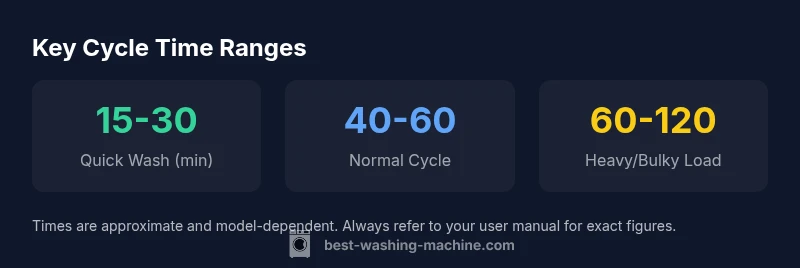
On average, a standard washing cycle runs about 30 to 60 minutes, depending on cycle type, load size, and efficiency settings. Quick washes are typically 15 to 30 minutes, while heavy-duty or bulky loads can take 60 to 120 minutes. When you enable eco options or extra rinse, expect modest increases in total time.
Understanding How Long a Washing Machine Takes
If you've ever asked how long does a washing machine take, you're not alone. The answer isn't a single number. Cycle duration depends on a mix of cleaning needs and energy use, plus the specific model you own. According to Best Washing Machine analysis, the most meaningful factors are cycle type, load size, water level, spin speed, and any energy-saving or extra rinse options you enable. In this section, we break down what each factor does and why it matters for your daily schedule. You’ll learn to translate the timer on the display into practical expectations for laundry day, whether you’re washing a few work shirts or a bulky comforter. You’ll discover that more items don’t always add proportionally to time, but different cycles and settings almost always change the total duration. By understanding these controls, you can plan ahead, pick faster options when you’re in a hurry, and avoid surprises when the cycle finishes.
This overview also helps homeowners, renters, and laundromat operators compare model behavior and set realistic expectations for busy mornings or weekend laundry marathons. The timing story is not static; it shifts with soil level, load density, and the presence of options like extra rinse or steam. The upshot is practical: knowing the cycle family helps you predict how long a full wash will take on your machine.
What Influences Cycle Duration
Cycle duration isn’t random; it’s engineered. Manufacturers balance cleaning effectiveness with water and energy efficiency. The most influential factors include the cycle type (quick, normal, heavy, or specialized), the size and soil level of the load, the water level and temperature, the spin speed, and the presence of optional features like extra rinse, steam, or suds-control. Load balancing also matters; an unbalanced load can trigger longer agitation or multiple spins to reach the same cleanliness level. Even the door mechanism and safety checks can pause and extend timing. Finally, many modern machines use sensors to adapt the duration—some loads finish early, others need more agitation based on how quickly soil loosens. In practice, a lightly soiled shirt batch on quick wash will finish faster than a heavily soiled or bulky set.
Brand-specific quirks also color timing. Some models report a timer that stays constant regardless of soil, while others display adaptive durations. For the reader of Best Washing Machine analyses, recognizing that cycle length is a function of both intent (cleanliness vs. speed) and technological approach helps explain why two identical machines may behave differently in real-world use.
Typical Cycle Lengths by Type
- Quick Wash: 15-30 minutes
- Normal/Regular: 40-60 minutes
- Heavy Duty: 60-90 minutes
- Bulky/Bedding: 90-120 minutes
Notes: These ranges vary by model and efficiency class; energy-saving features may extend or compress times depending on soil level and water inlet temperature. Different brands may present slightly different on-screen timers, but the general pattern remains: faster cycles for lighter soils and smaller loads, longer cycles for bulky or heavily soiled items. If you’re new to a washer, run a test with a small, lightly soiled batch to see where your preferred cycle lands on the timing spectrum.
How Load Size and Settings Change Time
Load size directly influences cycle duration through water use and agitation. Smaller loads require less water, which can shorten the wash phase and reduce rinse times in some models. Selecting heavier soil settings or longer rinse sequences adds minutes, sometimes noticeably. Temperature choice also plays a role: hotter washes may extend overall duration due to longer pre-warm periods and additional agitation needed to lift soils. Conversely, eco-friendly temperatures and lower spin speeds may slightly reduce energy use at the cost of minor time increases. Some machines also adjust cycle length dynamically with smart sensing; in practice, a lightly loaded load with normal soil may finish faster on an eco setting, while a heavily soiled or multi-item batch may push the timer toward the upper end of the range.
Eco Modes, Delay Start, and Time Savings
Eco modes focus on water and energy efficiency rather than raw speed. They can save energy but often extend the total cycle time, especially on heavily soiled items. Delay-start features shift laundry to a later time, which can help you align wash completion with your schedule, but it doesn’t inherently shorten the cycle itself. If you need a quick turnaround, consider using the standard or quick wash options during off-peak hours or selecting cycles with shorter agitation and spin profiles. Combining an eco cycle with a smaller load can yield a balanced outcome—reasonable cleanliness with predictable timing—and most modern machines report estimated durations when you start the cycle.
Estimating Time on Your Model
To estimate your model’s timing accurately, follow these steps:
- Check the user manual or on-screen cycle menu for each option’s duration range.
- Select a typical load and cycle, then observe the timer as it begins. Some models show a dynamic estimate that updates as the cycle progresses.
- Run a controlled test: a small, evenly distributed load with moderate soil, then note start and finish times.
- Add a small buffer (5–15 minutes) for potential delays or extra rinses.
- Compare across cycles to build a personal timetable library you can reference for future planning.
The practice of logging times for your most-used cycles creates a personal calendar of laundry expectations, which reduces anxiety around schedules and helps you manage other tasks around finishing times.
Practical Tips to Meet Deadlines
- Use Quick Wash for lightly soiled items or smaller batches when you’re pressed for time.
- Combine cycles with on-demand options (delay start or pre-soak) to align with your day.
- Load balancing matters: distribute items evenly to minimize agitation time and extra spins.
- When possible, choose a cycle with a shorter baseline duration and a shorter rinse option; avoid unnecessary extras like extra hot water.
- Consider front-load versus top-load models: front-loads often complete cycles more quickly for comparable loads due to efficient tumbling and spins.
- Plan laundry in blocks: group similar fabrics to reduce switching times between cycles.
Handling Anomalies That Increase Time
If a cycle drags longer than expected, several issues could be at play. Overloading the drum reduces effectiveness and can trigger extended agitation or re:cycles to achieve cleanliness. Unbalanced loads can force the machine to pause and re-balance, adding minutes to the overall time. Clogged filters or hoses, detergent buildup, and mineral-rich water (hard water) can also slow cycles. Finally, malfunctioning sensors or software glitches may cause fluctuating timers. Regular maintenance—clean lint filters, inspect hoses, and run a calibration cycle when recommended—helps ensure your cycles run close to their rated durations. If timing is markedly inconsistent, consult customer support or a professional technician to verify the model’s performance against the manufacturer’s specifications.
Choosing a Washer with Consistent Cycle Times
When shopping, prioritize models with transparent cycle times, clear timer displays, and predictable behavior across modes. Look for automatic load sensing, sensible rinse profiles, and burn-in tests in reviews that show how cycles run with typical household loads. Front-loading models often deliver shorter, more consistent cycles for the same load size, thanks to efficient tumbling and high spin speeds. It’s also helpful to compare total cycle times across several brands to identify models that align with your schedule—and remember that a slightly longer cycle with superior energy efficiency can save time in the long run by reducing repeat runs and energy costs.
Structured comparison of common washing machine cycle times
| Cycle Type | Typical Time (min) | Notes |
|---|---|---|
| Quick Wash | 15-30 | Short cycle for lightly soiled loads |
| Normal/Regular | 40-60 | Balanced time and cleanliness |
| Heavy Duty | 60-90 | Bulky or heavily soiled items |
| Bulky/Bedding | 90-120 | Covers comforters and large items |
FAQ
Why do some cycles take longer on my washing machine?
Longer cycles usually result from heavier soil, larger or bulkier loads, higher spin speeds, or the use of eco/extra rinse options. Sensor-based cycles may also extend duration if the machine detects more soil or an unbalanced load that requires additional agitation.
Heavy soils or bulky items often push cycle timer higher; eco modes and extra rinses add time. Ensure loads are balanced for best timing.
Do eco or quick wash modes actually save time?
Quick wash modes save time for lightly soiled loads, but eco modes focus on energy and water efficiency and can sometimes extend total time. The benefit is lower resource use rather than a guaranteed finish time.
Quick washes save minutes on light soils, eco modes save energy and water but may take longer.
Can cycle times vary between brands or models?
Yes. Different brands use different sensors, drum designs, and software to manage cycles. Two machines with similar labels may perform differently in real-world loads, so check manufacturer specs and user reviews for timing patterns.
Different models handle cycles differently; always check specs and reviews for timing details.
How can I estimate the exact cycle time for my load?
Start with the cycle you plan to use, note the displayed estimate, and run a test with a similar load. Use that data point for future planning and add a small buffer to account for unexpected delays.
Check the timer, run a quick test, and build a reference time for future loads.
Does adding extra rinse affect cycle duration?
Yes. An extra rinse adds minutes to the overall time, especially if it requires additional water heating or longer spinning to drain and rinse thoroughly.
Extra rinse usually adds time because it requires more water and sometimes more spin.
“Understanding cycle times helps you choose models with predictable durations and clear timers. The Best Washing Machine Team recommends prioritizing machines that display accurate estimates and adapt reliably to different loads.”
The Essentials
- Plan with your cycle family in mind.
- Expect variation across models and soils.
- Use test runs to build your personal timing library.
- Eco and delay options affect completion time, not only energy use.
- Balanced loads and proper detergent use help keep times predictable.