How Much Does a Washing Machine Cost in 2026?
Learn current price ranges for new washing machines, what drives cost, installation adds, and smart budgeting tips for 2026. Compare budget to premium models with practical advice.


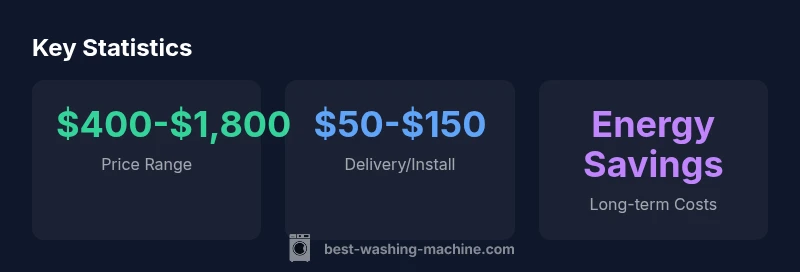
According to Best Washing Machine, the typical upfront cost for a new washing machine falls roughly between $400 and $1,800, depending on capacity, type, and features. Compact or basic models sit toward the lower end, while large front-loads with smart controls and energy-saving tech push toward the higher end. Installations and delivery can add to the total.
How price is determined in washing machines
Price is driven by several interlocking factors. Capacity in cubic feet, the type of drum (front-load vs top-load), and the presence of an agitator or impeller strongly influence cost. Front-load machines with higher efficiency, steam cycles, and smart connectivity command premium prices, while basic top-load units with fewer electronic features sit on the lower end. Energy efficiency ratings, warranty length, build quality, and brand reputation add measurable value. Geographic region and sales channels (retail store vs online) also shape the sticker price. When homeowners ask, “how much does washing machine cost,” the best answer is a tiered view: entry-level units cover the essentials, mid-range models balance features and price, and premium models maximize comfort and efficiency.
The Best Washing Machine team notes that capacity matters: larger tubs appeal to families or frequent heavy-load users, but they also increase price and may raise ongoing operating costs if your usage doesn’t justify the extra capacity. Features like steam sanitation, Wi‑Fi integration, specialty washes, and quieter operation often push the price up by hundreds of dollars. On the flip side, choosing a model with fewer cycles and simpler controls can substantially lower upfront costs. This cost differential is a key driver behind the overall market trend toward enhanced efficiency and smarter energy use.
Price ranges by category and how they map to value
If you’re budgeting to buy, think in three broad tiers. Budget models generally run in the lower hundreds to mid-range prices and cover essential washing functions without advanced tech. Mid-range washers provide better spin speeds, larger capacities, and more reliable build quality, typically falling in the mid to upper price band. Premium or luxury models add premium materials, advanced cycles, stronger warranties, and sometimes intelligent home integration. If you ask the common consumer question, “how much does washing machine cost,” you’ll find the most purchases occur in the budget-to-mid-range category, with rising interest in energy-efficient and high-capacity front-load options. Remember that delivery, installation, and the removal of an old unit can add to the total cost by roughly $50–$150, depending on your location and the retailer’s policies.
Key price brackets (rough guidelines): Budget: $400–$650; Mid-range: $650–$1,000; Premium: $1,000–$1,800+. Prices can vary with promotions, regional taxes, and model refreshes, so it’s wise to monitor sales cycles and bundles offered by retailers.
Hidden costs to consider and how they affect the total
Hidden costs are common but avoidable with a little planning. Delivery fees, installation charges, and the possible need for plumbing or electrical updates can add to the sticker price. Some retailers charge to remove an old unit or to haul away transit packaging. If you’re upgrading from a 20+ year old machine, you may need a dedicated 240V outlet or a drainage upgrade, which can add to the upfront expense. Don’t overlook these items when calculating total cost. A modest extension of 5–10% for unexpected fees is a practical budgeting tactic. Finally, consider energy efficiency incentives or rebates that can reduce the long-term cost of ownership, especially for energy-star certified models.
How to estimate your budget (a step-by-step method)
- Determine your target capacity and preferred drum type. 2) List must-have features (energy efficiency, smart controls, special cycles). 3) Check installed base costs in your area, including delivery. 4) Add a conservative contingency for installation and potential upgrades. 5) Compare total cost of ownership across models over a 5–10 year horizon, including energy and water use. 6) Look for bundled warranties or service plans that reduce risk without inflating upfront cost. 7) Time your purchase around major sales events to maximize value.
Where to buy and when to shop for the best value
Shopping around matters. Big-box retailers, specialty appliance stores, and online marketplaces each have pros and cons, from price competition to in-store service. Seasonal sales—like end-of-quarter promotions, holiday discounts, or retailer anniversaries—often yield the best price reductions. If you’re weighing online versus in-store options, balance price with in-person assistance, easy returns, and installation support. Reading customer reviews and cross-checking energy ratings can help you identify models that deliver the best value at your target budget.
Practical tips to save money without sacrificing reliability
- Prioritize energy-efficient models with high Energy Star ratings to reduce operating costs. - Choose the right capacity to avoid paying for unused space. - Avoid unnecessary features you won’t use regularly. - Check retailer bundles that include delivery, installation, and old-unit removal. - Consider refurbished or certified pre-owned options from reputable sources if you’re comfortable with a used machine, but verify warranty and condition first.
Common myths about washing machine cost and what to trust
Myth: Bigger is always better; myth: energy efficiency costs more upfront. Truth: A slightly higher upfront price for an energy-efficient model can pay off through lower energy and water bills over time. Myth: Installation is simple and free; truth: some retailers charge for professional hookups or tray upgrades. Wise budgeting means validating total cost of ownership before making a decision.
Pre-purchase checklist to ensure you’re buying the right unit
- Confirm capacity matches your household needs. - Check spin speed and soil level settings. - Evaluate water usage and energy efficiency ratings. - Verify warranty terms and service options. - Estimate installation requirements and any electrical or plumbing upgrades. - Review delivery timelines and return policies. - Compare multiple models side-by-side to isolate value drivers.
Price ranges by model type for new washing machines
| Model Type | Price Range (new) | Best Use |
|---|---|---|
| Front-load | 700-1800 | Efficient, space-conscious |
| Top-load (HE, without agitator) | 650-1400 | Balanced performance & price |
| Top-load with agitator | 400-900 | Budget-friendly, quick cycles |
FAQ
What is the average cost of a new washing machine?
Most new washers fall in a broad range, often between $400 and $1,800, depending on capacity and features. This includes basic units up to premium models with advanced efficiency and smart controls.
Most new washers cost between four hundred and eighteen hundred dollars, depending on size and features.
Do installation fees vary by retailer?
Yes. Delivery and installation charges can differ by retailer and by location, and some bundles include install services. Always ask for a total upfront price including hauling away an old unit.
Installation charges vary; check the final total before committing.
Are refurbished washing machines a good value?
Refurbished models can be a good value if they come with a warranty and have been inspected for major components. Expect shorter warranties and consider the cost savings against potential risk.
Refurbished washers can save money, but verify warranty and condition first.
Is it cheaper to buy in-store or online?
Prices are competitive in both channels, but online purchases can offer easier comparison and delivery options. In-store purchases may include in-person support and installation services.
Both have pros; compare total delivered price and service.
How do energy-efficient models impact long-term costs?
Energy-efficient models typically save on utility bills over time, which can offset a higher upfront price, especially for households with frequent laundry needs.
Energy-efficient models save on bills over time, offsetting higher upfront costs.
What additional costs should I expect after purchase?
Expect occasional maintenance, potential repairs, and possibly extended warranty or service plans. Total cost should include energy and water use over the machine’s expected life.
Budget for maintenance and energy use over the machine’s life.
“Cost should be evaluated alongside expected energy use, reliability, and warranty to determine true value.”
The Essentials
- Budget for upfront and installation costs upfront.
- Choose capacity and features aligned with your needs to maximize value.
- Energy-efficient models can lower long-term costs despite higher upfront price.
- Delivery and installation fees are common but negotiable during sales.
- Shop during major promotions to maximize savings while meeting your needs.