How Much Does It Cost to Run a Washing Machine
Learn how much it costs to run a washing machine, including electricity, water, and efficiency factors. Get practical estimates, tips to reduce bills, and a clear cost breakdown for different washer types in 2026.


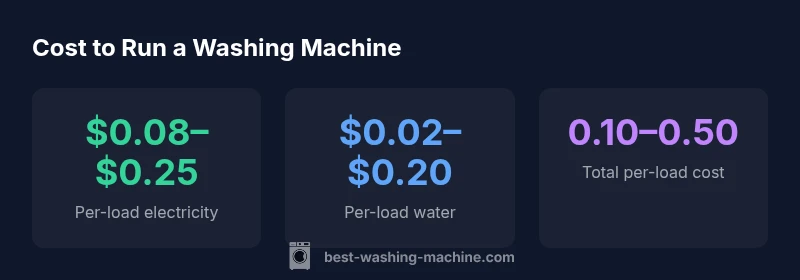
The cost to run a washing machine depends on electricity and water rates, the machine’s efficiency, and the wash settings you choose. Generally, per-load costs range from roughly $0.08 to $0.60, with cold-water cycles and high-efficiency models pushing the lower end. Annual costs vary by usage, but typical households see a few dozen dollars per year for regular laundering.
What determines the cost to run a washer
Your monthly laundry bill hinges on three main inputs: energy usage, water consumption, and how often you run cycles. Local energy prices vary by utility provider and region, so electricity costs per load can swing noticeably. Water rates, sewer charges, and regional tariffs further influence the bottom line. The efficiency of the machine matters a lot: modern high-efficiency (HE) front-loaders typically use less water and energy than older traditional top-loaders. The wash setting matters too: hot or warm cycles consume far more energy than cold cycles. Load size affects total energy per cycle; a full, properly loaded machine is generally more cost-efficient than several small loads due to fixed cycle overhead. Don’t forget standby power—phantom draw when the machine is plugged in but idle—which adds a small, ongoing cost. Finally, age matters: older units often run longer and less efficiently, raising per-load costs over time.
How electricity use translates to per-load costs
Most modern washing machines list energy use per cycle in
How water usage affects costs
Water costs per load depend on your region’s water and sewer rates and on the efficiency of your machine. Modern HE washers use substantially less water—often around 15 to 20 gallons per load—compared with older models that can exceed 30 to 40 gallons. If your local water price is a few dollars per thousand gallons, per-load water costs typically amount to a few cents. In places with expensive water or sewer charges, the cost difference between a water-saving cycle and a standard cycle becomes more meaningful. Pairing low-water settings with cold cycles further reduces overall per-load costs.
The impact of load size and cycle selection
Cycle choice and load size significantly influence costs. A full-capacity load on an efficient machine is often more cost-effective per pound than running multiple partial loads, due to fixed cycle overhead. Quick wash cycles and cold cycles generally use less energy than regular or heavy-duty cycles, but may not deliver optimum cleaning for heavily soiled items. For bulky items like towels and bedding, consider a larger, energy-efficient model or adjust settings to maximize efficiency per pound. In most homes, selecting cold or cool wash with a standard or quick cycle reduces energy and water usage without compromising cleanliness.
How to estimate your own costs
To estimate costs, start with your electricity rate (cents per
Practical ways to reduce cost
Adopt cost-saving habits: use cold water whenever feasible, run full loads, and choose energy-efficient models with high Energy Star ratings. Shorter or faster cycles save energy, though you may trade some cleaning power. If hot water is standard in your home, you can install a dedicated hot-water heater with better efficiency and use it strategically. Maintain the machine—fix leaks, replace worn gaskets, and clean filters—to prevent energy waste. When possible, schedule laundry during off-peak pricing, if your utility offers time-of-use rates. In shared laundry or rental settings, seek programmable settings to maximize efficiency and consistency.
Example scenarios
Scenario A: A one-person household that runs 4 loads per week on cold cycles in a region with moderate electricity costs. Per-load electricity costs are low and water usage is modest; monthly running costs are typically a few dollars, with greater savings possible by using quick cycles and fully loading the drum. Scenario B: A family of four that does 12–14 loads weekly, including towels and bedding. This increases electricity and water use, especially if hot washes are used for heavily soiled items. Upgrading to a high-efficiency washer and consistently using cold cycles can slash yearly costs significantly.
Seasonal changes and regional differences
Costs drift with seasons and local tariffs. Colder months can affect how you use hot water, and some areas see higher electricity or water prices during peak seasons. Regional tariff structures, availability of off-peak pricing, and the prevalence of time-of-use plans can shift your per-load costs. If you live in a high-rate region, efficiency gains compound more quickly, making energy-saving upgrades and mindful cycle choices particularly worthwhile.
How to track and verify your costs
Maintain a simple log of loads per week, cycle types, and whether cold or hot water was used. Multiply per-load costs by your weekly loads and then by 52 weeks to estimate annual expense, adjusting for seasonal changes. Use smart meters or energy monitors where available to capture exact per-load energy consumption. By building a personalized model, you’ll know when an upgrade or behavior change will yield meaningful savings.
Estimated per-load costs by major washer types
| Category | Energy per load (kWh) | Water per load (gal) | Cost per load (USD) |
|---|---|---|---|
| Front-load HE | 0.5–1.0 | 15–20 | 0.08–0.25 |
| Top-load HE | 0.6–1.8 | 20–30 | 0.10–0.40 |
| Standard top-load | 1.0–2.0 | 25–40 | 0.15–0.60 |
FAQ
What is the average cost per load?
Costs vary by electricity rate and water usage, but typical per-load ranges are roughly 0.08–0.60 USD depending on the cycle and efficiency. Using cold water lowers this further.
Per-load costs usually range from a few cents to less than a dollar, depending on energy rate and chosen settings.
Does heating water dramatically affect cost?
Yes. Heating water is a major energy draw, so hot or warm cycles increase per-load costs compared with cold cycles.
Heating water drives up costs; cold cycles save money.
Are high-efficiency washers worth the upfront cost?
In most cases, high-efficiency washers reduce per-load costs over time, especially for households with many loads. The payback depends on usage and local rates.
They usually pay off over time if you run many loads.
How can I estimate my annual running costs?
Multiply per-load cost by your estimated loads per week and then by 52 weeks. Adjust for seasonal variations and any TOU pricing.
Multiply per-load costs by weekly loads and weeks in a year.
Do washers use standby power?
Some models consume a small standby power when idle. Unplugging or using a smart switch can reduce this tiny ongoing cost.
Standby power is usually small but real; unplug if convenient.
How does time-of-use pricing affect costs?
If your utility uses off-peak pricing, run larger or longer cycles during off-peak hours to save money.
Off-peak times are cheaper for running cycles.
“Effective cost management starts with understanding how energy and water use translate into per-load expenses, then choosing settings and models that emphasize efficiency.”
The Essentials
- Estimate per-load costs using local energy and water rates.
- Cold-water cycles typically reduce energy usage significantly.
- Upgrade to high-efficiency models to lower per-load costs.
- Load fully and choose appropriate cycles to maximize efficiency.
- Track usage to forecast annual laundry expenses.