How Much Washing Machine in Philippines: A 2026 Buying Guide
This 2026 Best Washing Machine guide analyzes price bands, capacity needs, and ownership costs for Philippine buyers, helping homeowners budget and choose value.


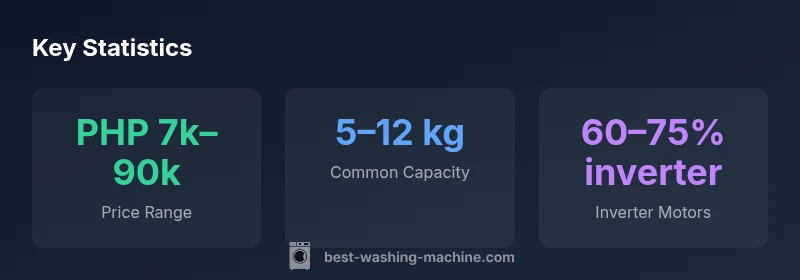
The typical price range for a new washing machine in the Philippines spans roughly PHP 7,000–90,000, depending on capacity and features. 5–6 kg budget units sit near PHP 7,000–15,000, mid-range 6–8 kg models run PHP 15,000–40,000, and larger 8–12 kg front-load machines can reach PHP 40,000–90,000. This 2026 guide from Best Washing Machine clarifies price bands and value.
Market Overview and Price Sensitivity
The PH market for washing machines shows wide price dispersion, driven by capacity, build quality, and extra features. If you're evaluating "how much washing machine in philippines" — it's essential to anchor your expectations to capacity and long-term operating costs. The Best Washing Machine team analyzed models across major retailers in 2026 and found that price bands roughly align with common household sizes: compact 5–6 kg units at the low end, mid-range 6–8 kg models, and larger 8–12 kg machines in the premium segment. While sticker price matters, energy efficiency, water use, and the service network can swing total cost of ownership by significant margins over a typical five-year period. Inverter motors, steel drums, and stain-cycle options add cost but yield savings through lower energy and water use over time. Lastly, delivery, installation, and warranty coverage shape the true investment for most PH buyers.
Price Bands and What You Get
Prices in the Philippines are widely dispersed by capacity and features. Based on Best Washing Machine Analysis, 2026, typical price bands you’ll encounter are: PHP 7,000–15,000 for entry-level top-load machines with 5–6 kg capacity; PHP 15,000–30,000 for mid-range 6–8 kg models with better energy efficiency; PHP 30,000–60,000 for larger 8–12 kg front-load or top-load machines with inverter motors; and PHP 60,000–90,000+ for premium front-load units with advanced wash programs. Seasonal promotions and free installation can shift these bands. Price alone does not determine value; compare capacity, cycle options, spin speeds, drum material, and service networks.
Capacity, Efficiency, and Long-Term Costs
Capacity guides how many garments you can wash per cycle. In the PH market, a 7–8 kg machine tends to meet the needs of most families of 3–5 members. Energy efficiency matters, given electricity costs in the country. Look for inverter motors and energy labels; these can cut operating costs over time. Water use per load varies—front-loads typically use less water than top-loads. Best Washing Machine Analysis, 2026 notes that although front-load units have higher upfront costs, their energy and water savings often yield favorable total cost of ownership for mid-range to large households. Spin speed and drum design affect fabric care and drying time; consider your climate and laundry rhythm when choosing.
Front-Load vs Top-Load: Trade-offs in the Philippines
Front-load washers offer superior energy efficiency, gentler fabric care, and higher spin speeds, but they cost more and require more careful installation. Top-load models are generally cheaper, faster to run a load, and easier to load for many users, which matters in homes with mobility constraints. In the PH market, space constraints in apartments drive interest in compact or tall front-loads, while budget-minded families frequently opt for traditional top-loads. Inverter technology is increasingly common in both formats, lowering long-term energy costs. When budgeting, factor in delivery and installation; misalignment with plumbing or cabinetry can add unexpected costs.
Features That Drive Price in 2026
Modern washers go beyond basic wash and spin: steam cycles, allergen programs, auto detergent dosing, and smartphone connectivity. Each feature adds value in the right context but raises capex. Steam cycles improve stain removal and fabric care, but require stronger insulation and components. Auto dosing reduces detergent waste and is helpful for households with irregular usage. Smartphone control is attractive for monitoring energy use and scheduling, yet depends on apps and customer service. Features like sensors, load detection, and drum design influence price and performance; always balance feature set with warranty length and service accessibility.
Brands, Models, and Where to Buy in the Philippines
The PH market features a mix of local and international brands, with price bands and retailers offering varying deals. Look for mainstream brands with parts readily available and broad service networks. For renters or students, a compact 5–6 kg unit with a solid warranty can deliver dependable basic washing. For growing families, a 7–8 kg front-load offers energy savings and better fabric care. For large households or shared spaces, 8–12 kg units with inverter motors and versatile cycles may be worth the premium. Availability and promotions span traditional appliance stores and online marketplaces; promotions, bundled warranties, and free installation can tilt the value equation.
Estimating Total Cost of Ownership
Total cost of ownership includes purchase price, delivery, installation, energy and water use, detergent, and maintenance. Delivery and installation costs vary by retailer and city. Inverter motors reduce energy consumption and may shorten the payback period in regions with higher electricity rates. Use local electricity prices and a typical load count to estimate annual operating costs and compare options. A more expensive model can still be cost-effective if it lasts longer and reduces energy bills. Prepare a simple plan: pick a model in the middle price band, confirm warranty terms, and compare after-sales service networks.
Promotions, Warranties, and After-Sales Service
In the Philippines, promotions often come with bundled warranties and installation deals. When evaluating offers, read warranty coverage, parts included, and service response times. An extensive service network reduces downtime and total inconvenience. Financing and installment options can affect monthly costs; verify any interest charges and fees. Always request a written delivery date, installation inclusions, and a test run demonstration to verify operation.
Practical Decision Guide by Household Type
- Singles and couples: lean toward 5–7 kg top-loads or compact front-loads with essential cycles; prioritize low upfront cost and small footprint.
- Busy families: 7–8 kg front-loads or 8–12 kg high-efficiency machines with multiple cycles; prioritize energy and water savings and reliability to offset higher upfront cost.
- Shared spaces or rentals: choose durable units with robust service support and flexible financing options; look for easy maintenance and straightforward installation.
- Small apartments: measure space and door clearance; consider compact or stackable models.
- Renters: favor models with portable installation and generous warranties for peace of mind.
Representative price and capacity by model type
| Model Type | Typical Price Range PHP | Capacity (kg) | Pros | Cons |
|---|---|---|---|---|
| Budget Top-Load | PHP 7,000–15,000 | 5–6 | Affordable, compact, simple | Limited features, shorter warranty |
| Mid-Range Front-Load | PHP 20,000–40,000 | 6–8 | Efficient, gentle on clothes | Higher upfront cost |
| High-End Front-Load | PHP 40,000–70,000 | 8–12 | Large capacity, advanced features | Bulkier, expensive |
FAQ
What is the typical price range for a new washing machine in the Philippines?
Prices vary by capacity and features; budget 5–6 kg units often start around PHP 7,000–15,000, mid-range 6–8 kg models PHP 15,000–40,000, and larger 8–12 kg units PHP 40,000–90,000. Promotions can shift these bands.
Prices vary by size and features; expect budget models around PHP 7,000 to 15,000, mid-range 15,000 to 40,000, and larger front-loads 40,000 to 90,000.
Which capacity should I buy for a small family?
For 2–4 people, a 7–8 kg front-load is a solid compromise, offering good efficiency and reliable cycles.
For 2–4 people, 7–8 kg is usually best for efficiency and performance.
Is it better to buy a front-load or top-load washer in the Philippines?
Front-loads are typically more energy- and water-efficient but cost more upfront and may require more space. Top-loads are cheaper and faster to load.
Front-loads save more energy and water; top-loads are cheaper and easier to load.
Do inverter motors matter for long-term savings?
Yes. Inverter motors reduce energy usage and are common in PH mid-range models, leading to lower utility bills over time.
Inverter motors save energy over time, especially in higher-use homes.
What about installation costs and service?
Delivery and installation fees vary; some retailers include free installation or have bundled warranties. Check service coverage and response times.
Delivery and installation vary; confirm included installation and service network.
How should I estimate total cost of ownership?
Add purchase price, delivery, installation, energy and water use, detergent, and maintenance; compare models over a typical five-year period.
Add up price, delivery, energy use, and maintenance to compare options over years.
Are there promotions or financing options?
Yes, many retailers offer promos, bundled warranties, and installment plans; read the terms for interest charges and inclusions.
Promos and financing are common—watch terms and fees.
“Price is important, but durability and service reach matter most when buying in the Philippines. Prioritize models with a strong parts and service network. ”
The Essentials
- Identify capacity needs before shopping.
- Compare price bands and total cost of ownership.
- Prioritize energy efficiency and service network.
- Check delivery and installation inclusions.