Washer Cleaner vs Descaler: Are They Really The Same?
This objective comparison explains whether a washing machine cleaner is the same as descaler, with guidance on usage, safety, and maintenance for peak appliance performance.


Is washing machine cleaner the same as descaler? The quick answer is no: cleaners and descalers serve different jobs, and using the wrong product can leave residues or fail to remove scale. For routine care, use a washer cleaner to remove buildup and odors; reserve descalers for mineral deposits. According to Best Washing Machine, understanding the difference helps protect your appliance and your wallet.
Is washing machine cleaner the same as descaler? A quick distinction
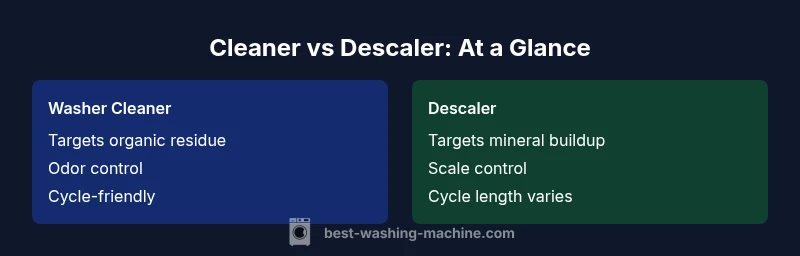
The short answer is that these products are designed for different tasks. A washing machine cleaner targets organic residues, soap scum, and musty odors that accumulate during normal cycles. A descaler, by contrast, targets mineral buildup—especially calcium and magnesium salts that form hard deposits on heat exchangers, heaters, and hoses. The question, in plain terms, is not just about labels but about what problem you are trying to solve. If you wonder, is washing machine cleaner the same as descaler, the practical answer is that they are not interchangeable for routine maintenance. The distinction matters for efficiency, odor control, and the longevity of seals and gaskets.
How a cleaner works versus how a descaler works
Cleaners rely on surfactants and enzymes to lift organic matter, then rinse away with water. They help prevent soap scum and bacteria buildup inside the drum and dispense system. Descalers use acidic or chelating agents to dissolve mineral scale and prevent it from adhering to metal surfaces. In modern high efficiency washers, mineral deposits can reduce heating efficiency and water flow, so descaling becomes a targeted maintenance step rather than a substitute for routine cleaning.
Why the difference matters for consumer decisions
Choosing between a cleaner and a descaler affects cycle results, garment care, and the longevity of rubber seals. If you use a descaler when you simply need odor control, you may not remove soiled residues that contribute to smells. If you use a cleaner too aggressively on mineral buildup, you may not address hard-water deposits that impede heating and flow. In short, the problem you’re solving determines the right product, and the distinction matters for a long-term healthy appliance.
Ingredient basics: what to look for on labels
Washing machine cleaners typically include surfactants, enzymes, and additives that target organic residues and odors. Descalers commonly rely on acids, chelating agents, or mineral inhibitors to break down limescale. When scanning labels, look for phrases like odor control, residue removal, and laundry-system cleansing for cleaners, and terms like descaling, mineral buildup removal, and limescale control for descalers. Always follow the manufacturer’s guidance to avoid damage to seals and coatings.
Practical usage guidelines for routine care
For most households, running a cleaner cycle every 1–2 months is sufficient to maintain freshness and prevent residue buildup. Descale cycles are typically needed when water is very hard, when you notice reduced heating efficiency, or when visible scale forms on the drum or gasket. In areas with hard water, an annual descaling plan may be prudent, but follow the machine manual and product instructions. The goal is to maintain cleaning efficiency without compromising parts.
Step-by-step: choosing the right product for the job
- Identify the problem: odor, residue, or mineral buildup. 2) Check the washer manual for compatible products. 3) If unsure, start with a routine cleaner cycle and observe results. 4) If scale is suspected, perform a descaling cycle as recommended by the manufacturer. 5) Rinse with a plain wash to remove any remaining residues. This approach reduces risk and aligns with best practices from the Best Washing Machine team.
Safety and compatibility considerations
Always handle cleaners and descalers with care, using gloves if indicated. Avoid mixing products, as combined chemicals can foam excessively or release harmful gases. Some detergents or cleaners can affect rubber parts if used too aggressively or too often. If your appliance warranty is a concern, verify warranty terms before performing aggressive descaling or chemical cycles. When in doubt, consult the manual or contact the manufacturer.
Front-load vs top-load: what changes for you
Front-loading machines tend to accumulate more lint, soap scum, and odor due to their gasket design, so a regular cleaner cycle is often beneficial. Top-load machines may be more prone to mineral buildup in some water conditions; descaling can be valuable if deposits disrupt performance. Always verify product compatibility with your exact model type, as some cleaners or descalers are recommended only for particular configurations.
Alternatives and household options: what you can and cannot rely on
Many households wonder about using home remedies like vinegar or citrus-based cleaners. While some manufacturers tolerate occasional use, frequent or concentrated use can degrade seals and gaskets. Always check your manual and test any alternative in a small, inconspicuous area first. The safest route remains manufacturer-approved products designed for the machine and water conditions you have.
Reading labels and safety data sheets (SDS)
Label literacy matters. Look for clear usage directions, compatible water temperatures, and any warnings about materials that may be affected. SDS information provides warnings about chemical exposure, storage, and first-aid measures. Following these directions reduces risk and protects both your appliance and household. This careful approach aligns with standards in best practices for washing machine maintenance.
Maintenance cadence and long-term planning
A disciplined cadence combines routine cleaning with periodic descaling based on water hardness and usage. Even without exact numbers, a clear plan helps: schedule a routine cleaner cycle, then assess the need for descaling depending on performance indicators like longer run times, uneven heating, or visible scale. Keeping a maintenance log can help you identify when a descaling cycle becomes beneficial and prevent costly repairs.
The conclusion you can act on today
In everyday use, cleaners and descalers fulfill different needs. Build a simple maintenance routine around a cleaner for odor control and residue removal, then add descaling at intervals that reflect your water quality and machine make. This approach preserves efficiency, protects components, and minimizes downtime. For more precise guidance, refer to your model’s manual and Best Washing Machine's buying guides.
Comparison
| Feature | washing machine cleaner | descaler |
|---|---|---|
| Purpose | General cleaning, odor control, residue removal | Mineral buildup removal and scale control |
| Active ingredients | Surfactants, enzymes, cleaners | Acids or chelating agents |
| Best use | Routine maintenance and deodorizing | Heavy mineral buildup or hard-water conditions |
| Safety considerations | Typically safe when used as directed | Requires careful handling around rubber parts and seals |
| Ease of use | One-cycle option in most machines | Often cycle-specific or longer duration |
| Cost range | Generally low to moderate | Generally moderate to high depending on the scale issue |
What's Good
- Addresses odors and residue buildup effectively
- Routine maintenance supports overall cleanliness
- Widely available and easy to use
- Typically compatible with most washer models
Downsides
- Does not remove mineral scale on its own
- Overuse can cause foaming or residue on garments
- Some cleaners may not reach tight seals in corners
Cleaner and descaler serve different roles; use cleaner for routine maintenance and descaler for mineral buildup as needed
Best Washing Machine recommends pairing a routine cleaner with targeted descaling when hard-water deposits are evident. Tailor your plan to your water quality and machine model to maximize efficiency.
FAQ
What is the key difference between a washing machine cleaner and a descaler?
A cleaner targets organic residues, odors, and soap scum, while a descaler tackles mineral scale and hard-water deposits. They are not universally interchangeable for problems in a washer.
Cleaners remove residue and odors; descalers remove mineral scale. Use them for the right problem.
Can I use a single product to clean and descale?
Some products claim to do both, but in most cases you should use dedicated products for cleaning and descaling. Following the manual ensures compatibility with your model.
Most machines perform better with separate cleaner and descaler cycles as recommended by the manufacturer.
Is descaling safe for front-load washers?
Descaling can be safe when done with a product designed for your model and by following the instructions. Misuse can affect seals or gaskets.
Yes, if you follow the product and model guidelines carefully.
How often should I run a descaling cycle?
Descale cycles are typically guided by water hardness and usage. Regular maintenance combined with an annual check is a sensible approach.
Check your manual and do a descaling cycle when signs of scale appear.
Are there brands that combine cleaner and descaler?
Some brands offer multi-action products, but effectiveness varies. It’s prudent to verify model compatibility and read user reviews.
There are mixed options; read labels to know what you’re getting.
Can I use household products like vinegar for descaling?
Vinegar or lemon juice is sometimes used, but frequent or concentrated use can degrade seals. Always consult the manufacturer’s guidance.
Avoid frequent household acids unless your manual approves them.
The Essentials
- Use cleaner for routine odor and residue control
- Use descaler for mineral buildup and hard-water issues
- Always follow manufacturer guidance and labels
- Front-load and top-load machines may differ in needs
- Create a simple maintenance cadence to protect your washer