Which Washing Machine Is More Durable? A Practical Guide
Compare durability across common washing machines to learn which washer lasts longer under real-world use. This guide covers design, maintenance, and warranty considerations for homeowners and pros.


Front-load washers with robust drums and quality motors are usually more durable; top-load models can be easier to service. For a full durability assessment, use the detailed comparison and maintenance guidance in this article.
What durability means in washing machines
Durability in washing machines goes beyond a single test result or the length of a warranty. It encompasses how the critical components hold up under daily use, how often parts fail, and how easily those parts can be replaced. For consumers asking, which washing machine is more durable, the answer depends on design choices, materials, and care routines. According to Best Washing Machine, durability is strongest when a model combines a sturdy drum, a resilient drive system, and sealed hardware that tolerates mineral buildup and heat. Real-world longevity also reflects maintenance habits and load patterns, which is why this guide focuses on practical indicators you can monitor over time.
Durability drivers: design and materials
Durability starts with the core construction. A stainless steel or reinforced steel drum minimizes wear on clothes and reduces drum deformation. The outer tub, frame, and door mechanism should resist rust and fatigue. The motor and belt or direct-drive system should provide reliable torque without overheating. Bearings, seals, and gaskets matter because seals that fail are a common cause of leaks and downtime. In this section we examine how these elements influence long-term performance and how to read durability claims from manufacturers. Best Washing Machine analysis shows that models with metal components in high-stress areas tend to outlive those built with cheaper plastics, though design and assembly quality matter as much as material choice.
Front-load vs top-load: durability perspectives
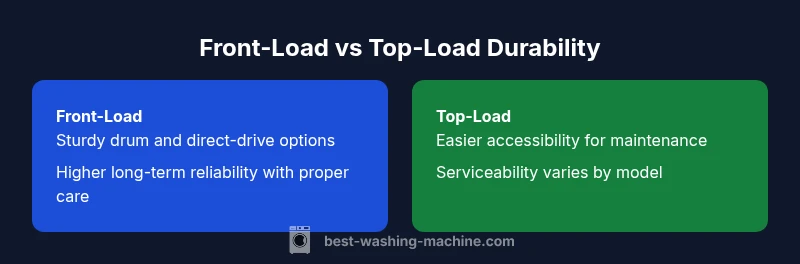
When choosing durability, many shoppers compare front-load and top-load architectures. Front-load designs often use taller drums, reinforced bearings, and direct-drive or high-quality belt systems that reduce mechanical wear. Top-load models can simplify repairs due to accessible parts and typically have shorter service intervals for certain components. However, agitators, if present, can wear seals and transmissions differently than impeller-based systems. In practice, the more durable option depends on usage: frequent heavy loads and high spin speeds favor front-load robustness, while occasional, light-use households may find top-load maintenance easier and less costly over time.
Common failure points and how to avoid them
Even the most durable washer can fail if routine maintenance is neglected. Common trouble spots include drum bearings, door seals, and inlet valves afflicted by mineral deposits. Regular drum cleaning, gasket inspection, and using the right detergent can significantly extend life. Avoid overloading the machine, which strains the motor and drum. Periodic inspection of hoses for cracks and clamp tightness prevents leaks from cascading into expensive repairs. In this section, we outline a maintenance routine designed to minimize downtime and maximize dependable operation.
Reading durability claims and warranty
Manufacturers advertise durability using terms like “heavy-duty,” “industrial-grade,” or “lifetime warranty”—claims that require careful interpretation. Look for the exact warranty length on drum and motor components and whether wear items (belts, seals) are included. Note whether service coverage includes parts, labor, and travel. Best Washing Machine cautions that warranties often hinge on normal residential use and proper installation. If you anticipate high usage or challenging loads, consider extended warranties or service plans that align with your expected life cycle.
Maintenance routines that extend life
A deliberate maintenance routine yields higher durability in the long run. Use appropriate load sizes, rotate or reverse loads to prevent uneven wear, and run a monthly cleaning cycle to clear detergent residues. Pay attention to the door seal, filter screen, and water inlet valve for mineral buildup. Keep the area around the machine dry to prevent rust on metal components. This section provides a step-by-step seasonal maintenance plan designed for busy households and small offices alike.
Practical selection criteria for durability
When evaluating durability, build a checklist that spans core components (drum, motor, bearings, seals), mechanical design (serviceability, modularity), and anticipated maintenance. Consider the warranty scope and the availability of service in your area. For households with hard water or mineral-rich supply lines, choose models with anti-build-up features and easier access to replacement parts. This portion helps you translate durability theory into a real-world shopping list.
Real-world testing and MTBF concepts
Manufacturers frequently use accelerated aging tests to estimate longevity, but real-world results depend on usage patterns. While you cannot predict exact lifespans, you can compare MTBF concepts and field data across brands and models. The goal is to identify units with proven reliability in similar environments—laundry-heavy households, rentals, or commercial settings. This section explains how to interpret test results and apply them to your purchase decision.
Brand and model durability differences by category
Durability varies not only by design but by the friction points across categories. Front-load models labeled as high-end often outperform budget counterparts in long-term wear due to better components and tighter tolerances. In contrast, budget top-loads may excel in repairability and lower upfront costs even if their long-term endurance is more variable. By cross-referencing brand performance and model reviews, you can set realistic expectations for longevity.
Comparison
| Feature | Front-Load Washer (durability-focused) | Top-Load Washer (durability-focused) |
|---|---|---|
| Drum Construction | Stainless steel drum with reinforced bearings | Stainless/coated steel drum with conventional design |
| Motor/Drive System | Direct-drive or beltless motor options; quieter and durable | Traditional belt-driven motor; easier to service |
| Repairability/Parts Availability | Modular design with widely available parts | Parts availability varies by model; some budget lines have limited parts |
| Warranty Range | Typically 3-5 years on major components | Typically 2-3 years on major components |
| Maintenance Needs | Moderate maintenance; periodic bearing and seal checks | Moderate to higher maintenance depending on design |
| Best For | Durability-focused households, high usage, fabric care | Budget-conscious buyers who value serviceability |
What's Good
- Helps readers compare durability factors systematically
- Highlights differences in design that affect lifespan
- Supports time-saving decisions with a structured framework
- Integrates maintenance considerations into selection
Downsides
- Durability is environment-dependent and cannot be precise
- Models vary widely; the table cannot predict exact lifespans
- Warranty terms differ by region and seller
- May require cross-referencing multiple sources for accuracy
Front-load washers generally offer stronger durability under real-world use, with caveats for maintenance and serviceability
Choose front-load if you prioritize long-term durability and fabric care. Top-load models can be a strong choice when easy access to parts and lower upfront cost matter more.
FAQ
What defines durability in a washing machine?
Durability refers to a washer’s ability to perform reliably over time under normal use. It depends on drums, motors, seals, and control boards, plus how well you maintain the unit.
Durability means how long the washer lasts with proper care.
Do front-load washers typically last longer than top-load models?
Often, yes, because of stronger drums and efficient drives, but outcomes vary by brand and maintenance. Real-world lifespans depend on usage and serviceability.
Front-loads often last longer, but it depends on care and parts.
How important is drum material for durability?
Drum material, usually stainless steel or ceramic-coated steel, resists wear and corrosion. A sturdier drum reduces fabric damage and reduces risk of leaks from fatigue.
A tougher drum generally means longer life.
What warranty length should I look for to gauge durability?
Look for longer coverage on major components (drum, motor) and clear terms for wear items. A robust warranty signals manufacturer confidence in durability.
Longer warranties usually indicate higher durability expectations.
Are high-efficiency models more durable?
High-efficiency models can be very durable if built with quality parts, but some budget HE lines may compromise on long-term components for efficiency gains.
HE can be durable if well-made; cheaper HE lines may vary.
What maintenance steps extend a washer’s life?
Regularly clean drums and gaskets, avoid overloading, use appropriate detergents, and inspect hoses. Routine maintenance reduces wear and prevents leaks.
Keep it clean, don't overload it, and check hoses.
The Essentials
- Prioritize drum material and motor quality when durability matters
- Consider warranty length as a proxy for durability confidence
- Maintenance habits dramatically influence actual lifespan
- Front-load designs often offer longer service life with proper care
- Budget and repair access can offset upfront durability differences