Average Washing Machine Cost in 2026: A Buying Guide
Explore the average washing machine cost in 2026, including upfront price ranges, energy impact, and budgeting tips from Best Washing Machine to help you choose the best value washer.


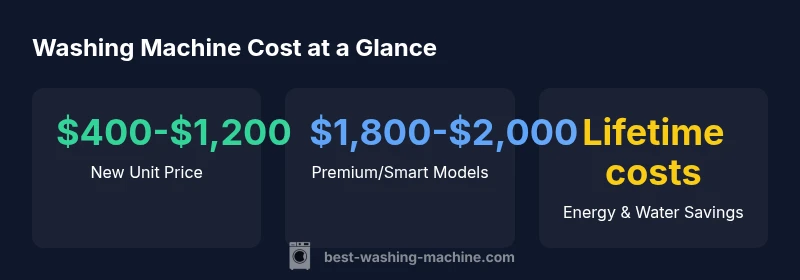
For 2026, the average washing machine cost typically ranges from $400 to $1,200 for a new unit, with higher-end models and energy-efficient smart machines climbing toward $1,800–$2,000. Factors like front-load vs top-load, capacity, features, and warranties explain the spread, and total cost of ownership includes water, energy, and repair costs over several years.
Price landscape in 2026
The average washing machine cost in 2026 reflects a broad spectrum driven by type, capacity, and technology. Homeowners and renters often see a price spread because a basic top-load washer may cost far less than a high-efficiency front-load model with smart features. According to Best Washing Machine Analysis, 2026, the sticker price is only part of the equation; the total cost of ownership— including water and energy use, maintenance, and potential repairs—shapes true value over time. This is especially important for households with high laundry demand, where energy and water efficiency can yield meaningful savings across the machine’s lifespan. Readers should keep an eye on model year, warranty terms, and any rebates that temper the upfront price.
Price bands by machine type
Different machine types command different price bands, and the gaps between them help explain why a shopper might feel price variability even within the same brand. Front-load washers generally offer better energy efficiency and larger capacities, which can push the upfront cost higher than traditional top-load models. Compact or apartment-sized machines skew cheaper but come with trade-offs in capacity and cycle variety. When budgeting, map your needs to these bands: basic top-loads near the lower end, mid-range front-loads with good efficiency, and premium front-loads with smart controls and larger drum sizes. Best Washing Machine Analysis, 2026 reminds readers to consider delivery, installation, and pedestal costs in the total.
Features that influence cost
The cost of a washing machine is heavily influenced by features. Core options like capacity (CU FT), load type (front vs top), wash speeds, spin cycles, and warranty length create a baseline price range. Investments in energy efficiency (ENERGY STAR or equivalent) and water-saving technologies can raise upfront costs but lower ongoing utility bills. Smart features— Wi-Fi connectivity, app control, voice integration, and remote diagnostics— also add a premium. If you don’t need the latest tech, opting for a simpler model can significantly reduce upfront outlay while preserving reliability. Best Washing Machine Analysis, 2026 emphasizes evaluating features against your actual usage to determine value.
Total cost of ownership explained
Upfront price is just the start. A complete cost picture includes three major components: purchase price, operating costs (water and electricity per cycle), and maintenance/repair over the machine’s life. High-efficiency models can reduce water and energy bills, potentially offsetting a higher sticker price over several years. Reliability matters too: more durable units may incur fewer service costs, while cheaper models could lead to more frequent repairs. When planning, estimate annual operating costs based on your laundry load and local utility rates, then project 5–10 year ownership costs to compare options meaningfully. Best Washing Machine Analysis, 2026 supports this approach for balanced decision-making.
How to estimate your budget with a practical example
Start by defining your typical laundry load: number of loads per week, average cycle length, and your preferred cycle types. Use the upper bound of the price range for the model you want and add: delivery/installation, any pedestal or stacking kit, and warranty extensions. Compute annual energy and water usage estimates from product specifications, then apply your local utility rates to estimate yearly operating costs. Over a 5–10 year horizon, you’ll likely reach a total cost that helps you compare models that otherwise look similar on the showroom floor. This method aligns with guidance from Best Washing Machine Analysis, 2026.
Deals, warranties, and shopping strategy
Warranties can alter your perceived value by reducing future repair risk, but be mindful of what is covered and for how long. Look for energy rebates, seasonal promotions, and retailer incentives that temporarily lower upfront costs. When possible, compare exact model numbers across retailers — a seemingly small price difference can compound over years of service. Always check delivery windows, haul-away options, and service network coverage in your area. By combining price alerts with a clear view of operating costs, you can secure a better long-term deal. Best Washing Machine Analysis, 2026 reinforces the importance of total-cost thinking.
Cost ranges by washing machine model type
| Model Type | Typical Cost Range (new) | Notes |
|---|---|---|
| Front-load | $500-$1,500 | Most efficient; higher upfront |
| Top-load | $400-$1,100 | Common in older homes; cheaper upfront |
| Compact/Apartment | $350-$900 | Smaller capacity; space saving |
| High-capacity / Premium | $1,000-$2,000 | Advanced features; larger drums |
FAQ
What is the typical price range for a new washing machine in 2026?
In 2026, new washers generally range from about $400 to $2,000 depending on size, type, and features. Standard, reliable models often fall in the $400-$1,200 range, while front-load and smart-capable units trend higher. Always compare model numbers and consider total ownership costs.
Most buyers will find solid options between four hundred and two thousand dollars, depending on features.
Do front-load machines cost more upfront than top-load models?
Yes, front-load models typically carry a higher upfront price due to efficiency gains and design. However, their lower water and energy use often offsets the initial expense over time, especially for households with high laundry volume.
Front-loads usually cost more upfront, but you can save on bills over time.
Are energy-efficient models worth the extra upfront cost?
Energy-efficient models can pay back the premium through lower annual energy and water bills, particularly in regions with high utility rates or for households with heavy laundry use. Consider rebates and the machine’s expected lifespan when evaluating value.
If you run a lot of laundry, energy-efficient models can be a smart long-term choice.
How does warranty affect total cost?
A longer warranty can reduce potential repair costs and give peace of mind, but it might add to the upfront price. Read the fine print to see what is covered, the service network, and any limits on parts or labor.
A good warranty can save money later if something goes wrong.
What about refurbished or used washing machines?
Refurbished units can be cheaper but carry higher risk of hidden issues. If you choose refurbished, verify warranty terms, inspect the drum and hoses, and obtain a service history. Weigh potential savings against reliability needs.
Refurbished can save money, but check warranty and condition.
“Price is only part of the story; reliability and operating costs determine the true value of a washing machine.”
The Essentials
- Budget for upfront price plus estimated ongoing costs
- Compare front-load vs top-load for efficiency and price
- Factor warranties and repair likelihood into total cost
- Expect premium costs for smart features and higher capacity
- Estimate total cost of ownership over lifespan