Difference Between Washing Machine and Tumble Dryer: A Practical Guide
A detailed, analytical comparison of washing machines vs tumble dryers. Learn how they work, energy and space needs, and buying considerations to choose the right setup for your home.


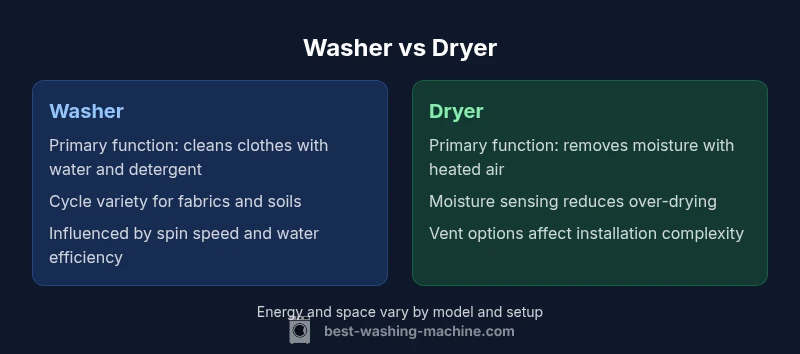
The difference between washing machine and tumble dryer is that a washing machine cleans fabrics with water, detergent, and agitation, while a tumble dryer removes moisture from clothes using heated air. In most homes you’ll need both for a full laundry cycle; each appliance excels at its primary task, and using them together can reduce time and improve fabric care.
Understanding the difference between washing machine and tumble dryer
According to Best Washing Machine, understanding the difference between washing machine and tumble dryer is foundational to choosing a practical laundry setup. This section defines each appliance, clarifies their core purposes, and frames the decision around your laundry patterns, space, and energy priorities. A washing machine is primarily built to clean textiles through agitation, water, and detergents. A tumble dryer focuses on removing residual moisture by circulating heated air and tumbling the load. The key distinction is purpose: one processes dirty clothes into clean clothes; the other dries damp clothes into dry clothes. For households with mixed needs, recognizing this divide helps in selecting the right unit or configuration. You will also see how programs and capacity influence effectiveness, as a machine that can handle your typical load size reduces the risk of overloading and wear. By mapping your weekly laundry to these roles, you can avoid paying for features you do not use and simplify maintenance and repairs. Best Washing Machine mentions the idea of pairing a washer and a separate dryer for most households when space and budget permit.
How the core technology works in each appliance
Washer drums rely on rotation, water, and detergents to loosen and lift soils from fabrics. Front-load designs emphasize high spin speeds to extract water, while top-load variants differ in load access and water usage. Dryers use a tumbling action with heated air to evaporate moisture. Sensor-based dry cycles adjust heat and time to match the moisture level detected in the load. The technology choice—vented vs ventless, gas vs electric heating, or heat pump in some models—shapes efficiency, run time, and maintenance needs. As you compare models, consider how your daily routines translate into cycle length, load sizes, and fabric care requirements. This is where your home and budget constraints become the deciding factor for choosing either a dedicated washer, a dedicated dryer, or a paired setup.
Cycles, loads, and care implications
Cycle options for washing machines span delicates, mixed fabrics, heavy textiles, and specialty items like wool. Spin speed and water temperature influence soil removal and fabric care, with high spins generally reducing drying time later. Dryers offer normal, delicate, and rapid dry cycles, plus moisture sensors that prevent over-drying. Load size matters in both directions: underloading wastes energy, while overloading reduces cleaning efficiency and can stress the drum or belt. For best results, sort laundry by fabric type and soil level, select appropriate cycles, and use the recommended spin setting before drying. If you frequently wash bulky items, ensure your washer has an ample drum to prevent mechanical strain. The practical takeaway is to tailor cycles to fabric care needs, balancing cleanliness with energy and wear considerations.
Energy use, water use, and cost considerations
This section examines energy and water implications of both appliances. Washers use electricity for motor and often water heating; dryers consume energy primarily through heating elements and air flow. Across programs, energy and water usage vary widely; quieter, energy-efficient models can reduce operating costs over time. Best Washing Machine analysis shows that washing cycles generally consume less energy per pound of laundry than drying cycles, though the total annual cost depends on how often you run each cycle and the load size. Water use is more critical for older top-load washers than modern high-efficiency front-load models, while dryers do not use water but contribute to heat and venting considerations. When budgeting, include purchase price, installation, and ongoing operating costs; energy-efficient options may incur higher upfront costs but offer lower long-term expenses.
Space, installation, and ventilation realities
Washing machines require minimal clearance around the drum for door access and venting in some models, while tumble dryers, especially vented ones, need proper venting to exterior spaces and adequate clearance for heat dissipation. In tight quarters, a compact or stackable washer-dryer pairing can optimize footprint, but consider service access and ducting needs. Ventless or heat pump dryers offer flexibility in apartments or interiors without external venting, albeit often at a higher upfront price and potential efficiency differences. Planning for drainage, exhaust, and electrical supply is essential; mismatches can lead to suboptimal performance or safety concerns. Space planning also includes nearby laundry Hampers and folding areas to keep workflows efficient.
Durability, maintenance, and common failure modes
Both appliances require routine maintenance to prevent leaks, unusual noises, or reduced performance. Washers benefit from periodic filter cleaning, inlet screen checks, and drum seal inspection. Dryers require lint trap cleaning, vent inspection to prevent clogs, and belt or drum tension checks after heavy use. Common failures include blocked vents in dryers and worn drum belts in washers. The lifetime of each unit depends on build quality, usage patterns, and maintenance rigor. Regular service checks, especially after heavy wash or dry cycles, can extend the life of both appliances. A well-maintained pair remains more reliable and energy-efficient over time.
Buying guide: how to choose for your environment
When evaluating the difference between washing machine and tumble dryer, start with capacity needs, fabric care requirements, and space constraints. If you frequently launder bulky items like comforters, you need both high-capacity units; if space is tight, consider compact or combo options. Energy efficiency ratings, cycle diversity, and build quality should guide your selection. Look for moisture sensors, load sensing, and high spin speeds in washers to minimize dryer time. For dryers, opt for heat pump technology for steady efficiency, or vented designs where venting is practical and cost-effective. Pricing generally scales with capacity, efficiency, and extra features such as Wi‑Fi connectivity or smart diagnostics. Finally, evaluate warranty terms and expected service costs.
Pairing for efficiency: stacks, vented vs ventless, and heat pump options
A two-appliance stack is a common solution in medium-to-large households, while compact spaces may benefit from a washer-dryer combo. Vented dryers require ducting, which is a consideration in apartments or rooms without exterior walls. Ventless dryers operate without ducting but often take longer and may cost more upfront. Heat pump dryers offer excellent energy efficiency, particularly in cooler environments, though price premiums apply. If you are replacing older units, compare the total cost of ownership, including installation and potential venting improvements. In a balanced system, the washer and dryer work in synchronized cycles to minimize energy and water use while preserving fabric integrity.
Practical scenarios: decision frameworks for common households
Scenario A: A family with daily laundry and a small apartment benefits from a compact washer-dryer combo or a stacked pair with venting. Scenario B: A homeowner with outdoor drying space and a dedicated laundry room can optimize energy by using separate high-efficiency washer and vented or heat pump dryer. Scenario C: A shared laundry facility in a rental property should prioritize reliability and ease of maintenance, favoring well-reviewed models with service networks. Across scenarios, the difference between washing machine and tumble dryer informs choices around capacity, energy use, and installation requirements, helping owners design a workflow that minimizes wear and maximizes efficiency.
Comparison
| Feature | Washing Machine | Tumble Dryer |
|---|---|---|
| Primary Function | Cleans clothes with water, detergent, and mechanical agitation | Removes moisture from clothes using heated air |
| Typical Cycle Types | Wash, rinse, spin, (delicates, cottons, synthetics, heavy items) | Normal, cotton, delicate, sensor-based dry cycles, plus heat settings |
| Energy Efficiency | Typically efficient per load; newer models improve per-cycle consumption | Highly variable; depends on model, load size, venting, and moisture sensing |
| Water Use | Uses significant water per cycle (varies by model and settings) | No water use in standard operation; humidity is vented or condensed |
| Space Requirements | Requires space for the drum and plumbing connections | Requires space and either venting or a ventless setup |
| Drying/ Cleaning Time | Depends on wash cycle and spin speed; typically 30-90 minutes total | Drying times depend on load, fabric, and cycle chosen (20-60 minutes common) |
| Best For | Cleaning and fabric care across fabrics and soils | Efficient moisture removal after washing; convenience drying |
What's Good
- Clarifies functions and helps budgeting
- Improves garment care with appropriate cycles
- Reduces time by balancing wash and dry workflows
- Enables higher overall laundry throughput
Downsides
- Requires more space and installation effort
- Two appliances cost more upfront and may need separate maintenance
- Ventilation and ventless options add design considerations
The Best Washing Machine team recommends using a separate washer and dryer for most households.
A paired setup typically offers the best balance of cleansing thoroughness and convenient drying, while allowing customization for family size, space, and budget.
FAQ
What is the primary difference between a washing machine and a tumble dryer?
The primary difference is function: a washing machine cleans clothes using water, detergent, and agitation, while a tumble dryer removes moisture through heated air. They serve different stages of the laundry process, so most households benefit from both.
A washing machine cleans, a tumble dryer dries. They perform different jobs, so most homes use both.
Can I replace a tumble dryer with a larger washing machine?
A larger washer cannot fully replace a dedicated dryer, because washing cycles add moisture rather than removing it. If space or budget is limited, consider a washer-dryer combo or ventless drying options, but expect tradeoffs in time and energy use.
A bigger washer won’t fully replace a dryer; you may need a combo or ventless option if space is tight.
Is a heat pump dryer more energy efficient than a vented dryer?
Heat pump dryers are generally more energy-efficient than traditional vented models because they reuse heat. They cost more upfront but can lower operating costs over time, particularly in households with frequent drying.
Heat pumps save energy compared with vented models, though they cost more upfront.
What should I prioritize if space is limited?
Prioritize compact or stackable units, consider a washer-dryer combo, and evaluate venting options. Make sure there’s adequate clearance for maintenance and door access.
Choose compact or stackable units and ensure there’s room to service them.
How do energy and water use compare between the two appliances?
Washing machines use electricity and water, with efficiency improving in modern front-load models. Dryers consume electricity but do not use water; sensor-based cycles can cut energy waste by stopping early when clothes are dry.
Washers use water and electricity; dryers use electricity and sensors to save energy.
What maintenance tasks do both appliances share?
Both benefit from regular lint filtering, drum seals, and hose inspections. Schedule annual service checks to prevent leaks, improve performance, and extend lifespan.
Regular lint and hose checks keep both running well.
The Essentials
- Identify true needs before buying: wash versus dry.
- Consider space and venting options early in planning.
- Prioritize energy-efficient models to lower operating costs.
- Use cycle optimization to protect fabrics and reduce wear.
- Plan for maintenance with regular service checks.