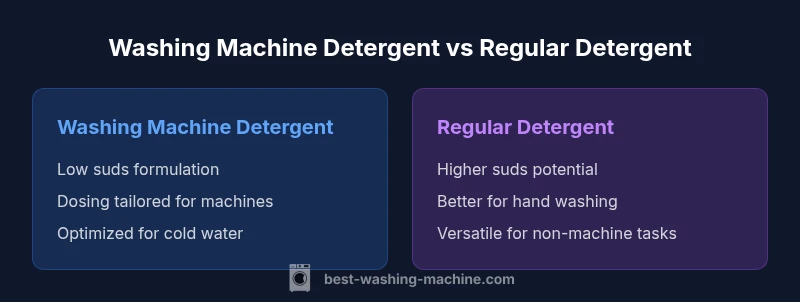
Washing Machine Detergent vs Regular Detergent: A Guide
Discover the differences between washing machine detergent and regular detergent. Learn when to use each, proper dosing, how formulations affect performance, and tips for avoiding residue and optimizing fabric care.


Washing machine detergent is formulated for machines with low water, controlled suds, and efficient rinsing (often HE-labelled). Regular detergent is designed for hand washing or traditional machines and may produce more suds and require more water. For HE washers, use machine detergent; for manual loads, regular detergent works, but avoid using machine detergents in non-machine tasks.
What the difference means in practice
According to Best Washing Machine, the difference between washing machine detergent and normal detergent comes down to formulation, dosing, and the intended washing environment. The key distinction is that washing machine detergents are engineered to perform in low-water, high-efficiency cycles with minimal suds and robust rinse performance. In contrast, regular detergents are designed for hand washing or non-HE machines where suds and longer rinse cycles are less of a constraint. This distinction is especially important when you live in areas with hard water or rely on cold-water washes, where machine detergents tend to deliver more consistent results while minimizing residue on fabrics. In short, the two product groups are optimized for different use cases and equipment. When chosen correctly, they help protect fabrics and keep washing routines efficient.
How detergents are formulated for machines vs hand washing
Machine detergents (including HE variants) are engineered to dissolve quickly in low water volumes and to work with efficient, short cycles. They usually feature low-suds surfactants and enzymes that target common stains without overwhelming the machine’s rinse system. Regular detergents, however, are formulated for a broader range of washing conditions, including longer fills and higher suds. This makes them versatile for manual loads but potentially problematic in modern HE washers where excess suds can interfere with rinsing and sensor cycles. Understanding these formulation differences is the first step toward selecting the right product for your laundry routine and machine type.
Comparison
| Feature | washing machine detergent (HE) | regular detergent (hand washing/standard machines) |
|---|---|---|
| Suds control | Low-suds designed for machines | Higher suds risk; not ideal for most machines |
| Dosing guidance | Compact, machine-dose compliant | Label-guided dosing; may require larger amounts |
| Dissolution | Formulated to dissolve in low water and fast rinse | May require more agitation and water for dissolution |
| Temperature performance | Effective in cold and warm washes, optimized for cold starts | Versatile across temps; not machine-specific optimization |
| Residue risk | Less residue when used as directed in machines | Potential residue if misused or overloaded |
| Environmental impact | Concentrated formulas reduce packaging; milder for machines | Typically larger volumes; packaging varies by brand |
| Best for | HE front-load and many high-efficiency washers | Hand-wash loads and non-machine tasks |
What's Good
- Optimized for machines with low-suds formulations
- Better rinse performance and fabric care in machines
- Concentrated formulas save space and reduce packaging waste
- Designed for cold-water cleaning and energy efficiency
- Clear dosing helps avoid overuse and waste
Downsides
- Often more expensive per load than regular detergents
- Not ideal for hand-washing or non-machine loads
- Capsules can be messy if damaged or misused
- Availability may vary by region and brand
Washing machine detergent is generally the better choice for modern machines due to low-suds, machine-optimized dosing, and better performance in cold washes.
If you own a HE or front-load washer, use machine detergent to prevent excessive suds and ensure optimal rinsing. Regular detergent remains suitable for hand washing and non-machine tasks. In mixed households, reserve HE detergents for machines and regular detergents for manual cleaning.
FAQ
What is the main difference between washing machine detergent and regular detergent?
The main difference lies in formulation and intended use. Washing machine detergents are engineered for machine use with low suds and efficient rinsing, while regular detergents are designed for hand washing or standard washers. This ensures optimal performance and fabric care in each scenario.
The two are designed for different washing setups—machines need low suds and quick dissolution, hand washing can tolerate broader formulations.
Can I use regular detergent in a high-efficiency washer?
You should generally avoid regular detergent in HE washers. HE detergents are specifically formulated to produce fewer suds and to rinse efficiently in low-water cycles. Using regular detergent can lead to oversudsing, longer rinse times, and potential residue.
Stick with HE detergent for high-efficiency machines to prevent suds problems.
Is it safe to mix detergents?
Mixing detergents is not recommended. Different formulations can interact in unpredictable ways, potentially causing excess suds, residue, or fabric sensitivity. If you run out, clean a load with a single product rather than combining chemicals.
Don’t mix detergents; use one product per load for best results.
Do detergent capsules work in all washers?
Detergent capsules are designed to dissolve in machine cycles; most modern machines handle them well. Some older models or certain top-load washers may require capsules to be placed in the drum rather than the dispenser. Always follow the manufacturer’s guidance.
Capsules work in many washers, but check your machine’s manual.
How does water temperature affect detergent choice?
Detergent performance can vary with temperature. Machine detergents are formulated to work across cold-to-warm cycles and often perform better in cold water. Regular detergents are versatile but may rely more on agitation and heat for optimal dissolution.
Cold washes often favor detergents designed for machines.
What signs indicate I’m using the wrong detergent?
Signs include excessive suds that don’t dissipate, strong odors after rinsing, fabric residues, or clothes that feel insufficiently clean. If you notice these, check dosing, detergent type, and compatibility with your washer.
Look for suds you can’t rinse away and fabrics that feel greasy or sticky.
The Essentials
- Choose detergent based on your washer type
- Use HE detergent for machines to prevent suds and residue
- Follow label dosing to avoid waste and buildup
- Prioritize machine detergents for cold-water cleaning
- Keep regular detergent for hand-washing and non-machine tasks