How Much Washing Machine Detergent to Use: A Practical Guide
Learn how to measure the right amount of washing machine detergent for every load. This 1800-word guide covers liquid, powder, and pods, front-load and top-load differences, water hardness, load size, and common mistakes. Brought to you by Best Washing Machine.


You will learn how to measure detergent by load size, washer type, and soil level, with practical guidance for liquid, powder, and pod detergents. This guide covers front-load and top-load differences, lessons from real-world usage, and tips to avoid common dosing mistakes. By the end, you’ll minimize waste and keep fabrics clean.
Why the right detergent amount matters
Getting the laundry dosage right matters for performance, fabric care, and cost. When you load a washing machine with too little detergent, soils may not lift properly, leaving dingy residues or catching in folds. Over time, under-washing can cause clothes to feel stiff and odor-prone. Conversely, overdosing creates excessive suds that can spill into the washer drum, reach seals and hoses, and prolong rinse cycles. In extreme cases, soap buildup can attract more dirt, making the problem worse in future loads. According to Best Washing Machine, most common laundry problems trace back to dosing mistakes, often because users follow generic “one size fits all” guidance rather than adjusting for load size, soil level, and water conditions. By understanding the core factors that influence dosage—load size, soil level, fabric type, and water hardness—you can tailor your approach for every wash. In short, better dosing saves money, reduces wear on fabrics, and helps your machine run more reliably over time.
How washing machines use detergent
Washing machines rely on controlled streams of water, detergent molecules, and mechanical agitation to lift soils from fibers. Front-load and high-efficiency (HE) machines use far less water than older top-load models, and therefore need detergents labeled HE to prevent excessive suds that can interfere with rinsing. The amount of detergent that actually participates in cleaning is influenced by the water volume in each cycle; a small, lightly soiled load uses less than a heavy, dirty load. In many machines, the dispenser is calibrated so the detergent is mixed with water just before it reaches the drum, which means precise dosing improves cleaning without waste. When a machine senses load size or soil level through sensors, it may adjust the wash action and the dilution, so following the detergent’s recommended range helps the machine perform as designed. Understanding this mechanism helps you apply the dosage more accurately, and avoids the pitfall of simply “adding more” in hopes of brighter results.
Reading labels and dosing charts
Detergent labels carry the real dosing gospel. For liquids, you’ll see a cap volume; for powders, lines in the measuring cup; for pods, a single unit per load. Most brands indicate different doses for small, medium, and large loads, as well as cycles that are longer or hotter. Pay attention to the “HE” symbol if you have an HE washer, and never substitute non-HE detergent in an HE machine. Some brands provide a chart that maps load size to capfuls or spoonfuls; others give a weight-based recommendation. When reading the label, also check for any notes about water temperature or hard water adjustments. If you’re unsure, start with the manufacturer’s lower end for standard loads and test. Over time you’ll build a sense for what works best in your home, especially as your clothes come out consistently clean and free of residue.
Front-load vs top-load dosing differences
For front-load washers, which use less water and tumble clothes in a narrow drum, manufacturers often recommend HE detergents and much smaller doses. Too much detergent here creates a film on the gasket and the drum, which can trap dirt and cause odor. Top-load machines, especially traditional non-HE models, can tolerate a bit more detergent, but the same soil-adjustment rules apply. If you switch between machines, start with the label guidance for each model, then adjust based on results. Remember that the goal is to achieve clean clothes with the least amount of detergent necessary, not to maximize foam. By aligning dose with machine type, you improve rinse efficiency and reduce the risk of residue.
Liquid, powder, and pod detergents: Safe dosing practices
Liquid detergents typically measure in capfuls; powders in scoops or lines on the cup; pods feature a single unit per load. Liquid detergents often work well in cold water, while powders can perform better in warmer cycles where they dissolve completely. Pods are convenient but must be used one per load; breaking pods or cutting them open can release too much detergent or create unpredictable dosing. When you use HE detergents in HE machines, you can usually get away with smaller doses than non-HE formulas, provided you follow the label’s guidance. Keep the dosing container closed and stored away from moisture, heat, and children, and always dispose of empty containers responsibly. The compatibility between detergent type and machine matters as much as the exact amount used.
Adjusting for load size, soil level, and water hardness
Load size is the first dial to tune; scale your dose up or down with the amount of laundry and how dirty the clothes are. Heavily soiled sportswear or muddy jeans deserve more detergent than a lightly worn shirt. Water hardness compounds the effect of your detergent, because hard water binds to cleansing agents and reduces their performance. If you live in an area with hard water, you may need a slightly higher dose or a detergent formulated for hard water. If your home’s water is unusually soft, you can often get by with the lower end of the dosing range. In all cases, avoid doubling the dose in response to heavy soils—pre-treat stains and run an extra rinse if needed.
Common mistakes and troubleshooting
Common errors include using the wrong detergent type for your machine, ignoring the dispenser guidelines, and assuming more detergent equals cleaner results. If clothes come out with soap residue or a soapy feel, reduce the dose or run an extra rinse. Sudsy buildup around the door gasket can signal repeated overdosing, especially on front-load machines. Another frequent issue is relying on very old detergent or mixing pods with powders, which can disrupt dissolution. To troubleshoot, start with the current cycle’s recommended dose, verify you’re using the correct formula (HE vs non-HE), and ensure the water temp and cycle selection match the soil level. If problems persist, consult the machine’s manual and re-check the label on the detergent bottle for any specific adjustments.
Practical dosing checklist for every load
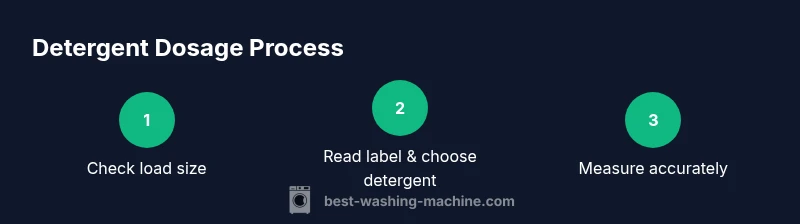
- Check the load size and soil level. 2) Read the detergent label for the appropriate dosage. 3) Confirm you’re using the correct detergent type for your machine. 4) Measure precisely with the provided cup or cap. 5) If your water is hard, consider a slight adjustment or a detergent formulated for hard water. 6) Run a quick test wash if you’re unsure, and adjust for future loads. 7) Store detergent properly and keep containers clean. Following this routine consistently will help you avoid overuse, protect fabrics, and keep your washing machine running smoothly.
Tools & Materials
- Detergent (liquid, powder, or pods)(Choose HE if your washer is high-efficiency; match dose to label guidance for your machine type.)
- Measuring cup or detergent cap(Use the marks on the cup or cap for accurate dosing.)
- Optional: water hardness test strip(Helpful to tailor dose for hard water areas.)
- Optional: load-size guide or scale(Helpful for precise dosing on unusual load weights.)
Steps
Estimated time: 5-15 minutes to measure and load, depending on cycle
- 1
Read label and machine manual
Before washing, check the detergent’s dosage guide and your washer’s manual for any machine-specific instructions (HE vs non-HE). This ensures you start from a correct baseline instead of guessing.
Tip: If you’re unsure about your model, start at the lower end and test a small load. - 2
Choose the detergent type for your machine
Select HE detergent if you have an HE washer to prevent excess suds; use the appropriate formula for front-load versus top-load models.
Tip: Avoid using regular detergent in HE machines—it can cause residue and rinse issues. - 3
Measure the right amount with the cup or cap
Pour or scoop the detergent exactly to the indicated level for your load size and soil level. For pods, place one unit in the dispenser or drum according to the label.
Tip: Level the cup and avoid packing powder into a small scoop. - 4
Adjust for load size and soil
Increase dose for heavily soiled or large loads, and decrease for small or lightly soiled loads. Do not simply add more; consider pre-treating stains.
Tip: Pre-treat stains with a small amount of detergent before washing. - 5
Consider water hardness and cycle choice
Hard water can reduce cleaning power; if you know your water is hard, adjust the dose slightly upward or use a hard-water-friendly formula.
Tip: If unsure, use a detergent designed for hard water or run an extra rinse. - 6
Run a test cycle and evaluate
Submit a test wash with a standard load to confirm cleanliness and lack of residue; adjust future loads based on results.
Tip: Clothes should come out clean without soapy residue.
FAQ
How do I adjust detergent dosage for a very large load?
For very large loads, increase within the label’s upper range rather than doubling the amount. If the load remains dirty, consider pretreating stains or running an extra rinse instead of adding more detergent.
For huge loads, stick to the label’s upper range and pre-treat heavy soils instead of doubling the dose.
Can I mix different detergent types in one load?
Do not mix detergents. Use one detergent type per load and follow the label’s guidance for that product. Mixing formulas can cause excessive suds and residue.
Avoid mixing detergents; use one product per load and follow its label.
Is it okay to run a cycle without detergent if the load is small?
Even small loads benefit from a small amount of detergent to lift soils and prevent residues. If you’re washing very lightly soiled items, you can use the minimum recommended dose.
Even small loads usually need at least a little detergent. Start with the minimum dose.
What happens if my clothes still have soap residue after washing?
Residue usually means overdosing, insufficient rinsing, or using the wrong detergent for your machine. Reduce the dose slightly and run an extra rinse or a rinse-only cycle.
If clothes look soapy, cut back the detergent a bit and run an extra rinse.
Do I need HE detergent for hard water, too?
Yes, HE detergent is recommended for HE machines regardless of water hardness, and you may also use formulas designed for hard water to improve cleaning.
Yes—use HE detergent in HE machines and consider hard-water formulas if your water is hard.
How often should I run a washing machine cleaning cycle to prevent buildup?
Run a maintenance or cleaning cycle every 1-2 months, using a small amount of detergent or a specialized washing machine cleaner to remove residue.
Every 1-2 months, do a maintenance cycle to keep things clean inside the machine.
Watch Video
The Essentials
- Measure by load size and soil level
- Read detergent label for dosage guidance
- Adjust for hard water if needed
- Use correct detergent type for your washer