Gas Dryer and Washing Machine: An Objective Comparison for Home Buyers
Explore the gas dryer and washing machine pairing, covering energy use, installation, and long-term costs to help homeowners decide between gas-powered dryers and all-electric setups.


Gas dryer and washing machine pairings introduce trade-offs between fuel type, installation needs, and ongoing costs. A gas dryer can reduce drying costs when gas is affordable, but requires a gas line and proper venting, while most washing machines remain electric. This comparison highlights energy use, installation, and long-term value to guide your decision.
Gas Dryer and Washing Machine: Why This Topic Impacts Everyday Laundry
The phrase gas dryer and washing machine speaks to how households power heat for drying and cleansing textiles. In many regions, homes with reliable natural gas service can see lower operating costs for drying when gas prices stay competitive. The Best Washing Machine team notes that the choice isn't only about per-cycle costs; it also hinges on utility availability, venting, insurance, and how tenants or owners expect to use laundry spaces. This section lays out the framework: evaluate heat sources, installation requirements, long-run costs, and safety considerations. From a practical standpoint, the gas dryer option often pairs with an electric washing machine to leverage the strengths of both utilities while avoiding a full all-gas configuration.
Gas-Powered Dryers: How They Differ From Electric Models
Gas-powered dryers heat with natural gas or propane, and their performance characteristics differ from electric models in several ways. Gas dryers typically reach usable dryness faster and can be more forgiving on heavy fabrics in mixed-load cycles. They also depend on a venting system to expel combustion byproducts, which means installation complexity is higher in some homes. In contrast, electric dryers rely on electric elements and do not generate combustion byproducts, but their heat source is the electric grid, which can translate to higher operating costs if electricity pricing is unfavorable. When discussing a gas dryer and washing machine setup, consider how often you dry bulky items, the length of typical laundry cycles, and whether your space allows for proper venting to the outdoors. This distinction matters for reliability and convenience in daily laundry tasks.
The Washing Machine Component: Electric by Default
The washing machine in most households runs on electricity, making it the more straightforward appliance from an installation perspective. Electric washing machines don’t require gas lines or combustion venting, which simplifies placement, plumbing, and safety checks. However, energy efficiency and load sensing can still influence operating costs, especially in households with high laundry frequency. While a gas dryer may appear attractive for cost savings in drying, pairing it with an electric washing machine keeps the core washing operation simple and dependable, particularly in apartments or retrofit homes where gas rerouting would be disruptive. The overall system performance hinges on drum design, agitation patterns, and spin speed.
Installation Realities: Venting, Gas Lines, and Electrical Needs
Installing a gas dryer requires a dedicated gas line, proper venting to the outdoors, and compliance with local codes. If venting is restricted or unavailable, you may need to pursue ventless gas dryer options or alternative configurations. An electric washing machine typically requires standard 240V or 120V circuits depending on model and usage, plus plumbing for hot and cold water. In mixed setups, ensure that the laundry space can accommodate both a gas line and the electrical supply without creating tripping hazards or ventilation problems. A careful assessment of clearance, duct routing, and panel accessibility helps prevent future service interruptions and safety concerns.
Energy Use, Costs, and Practical Metrics
Drying with gas can reduce energy use costs when natural gas is competitively priced, but the actual savings depend on local gas/electric rates, heating efficiency of the dryer, and the size of loads. Electric washing machines, while generally predictable in energy use, vary by load size and cycle selections. The overall economics of a gas dryer and washing machine pairing depend on how much you dry, whether you often run full loads, and how long you stay in a home. Consider utility bills, potential changes in energy policy, and the availability of gas, propane, or electricity when calculating long-term value. Throughout this analysis, we reference industry data and avoid extrapolating specific price figures; the goal is to provide a framework that helps you model your own home’s costs.
Maintenance, Safety, and Longevity Considerations
Gas components add complexity and may require specialized service technicians for burner cleaning, vent maintenance, and gas line checks. Regular maintenance for both gas and electric parts can prolong appliance life and prevent safety issues. Electric washing machines benefit from widespread service coverage and standardized parts, while gas dryers demand attention to vent integrity and gas safety valves. When comparing, assess the availability of qualified technicians in your area, warranty terms, and routine maintenance tasks such as lint trap cleaning and vent inspection. A well-maintained gas dryer and washing machine can offer years of service, but neglecting venting or line integrity can lead to safety risks and higher repair costs.
Use-Case Scenarios: When a Gas Dryer Makes Sense
Gas dryers can be a good fit for homes with stable natural gas service, adequate venting, and a desire to reduce drying costs over time. People with large families, frequent heavy loads, or renovations where electric capacity is limited may consider gas-assisted drying to optimize performance. On the other hand, all-electric setups work well in rental units or locations with electric-only infrastructure, where venting and gas supply add complexity. The decision should align with your home’s utilities, local energy markets, and how you use laundry facilities day-to-day. Best Washing Machine's research emphasizes tailoring choices to your actual usage patterns and utility environment.
Safety, Insurance, and Compliance Considerations
Gas appliances require compliance with building codes, proper venting, and potentially higher insurance scrutiny depending on policy terms. Always hire licensed professionals for gas line work and vent installation, and verify that smoke and carbon monoxide detectors are in place and functioning. Electric-only configurations generally have lower safety compliance complexity and easier insurance qualification. When evaluating a gas dryer and washing machine combination, factor in code requirements, installation permits, and the cost of ongoing preventive maintenance. This attention to safety helps minimize disruption and protect your household.
Decision Framework: A Quick Check-List for Homeowners
- Confirm gas availability and venting feasibility before selecting a gas dryer.
- Compare washing machines’ energy efficiency and water usage with your laundry habits.
- Budget upfront installation costs against long-term energy savings.
- Verify service coverage and the availability of qualified technicians in your area.
- Review warranty terms and potential insurance implications for gas appliances.
- Consider resale value and future utility pricing when planning renovations or upgrades.
- Assess the impact on indoor air quality through venting and combustion byproducts.
- Plan for regular vent cleaning and gas line inspections to maintain safety and efficiency.
Comparison
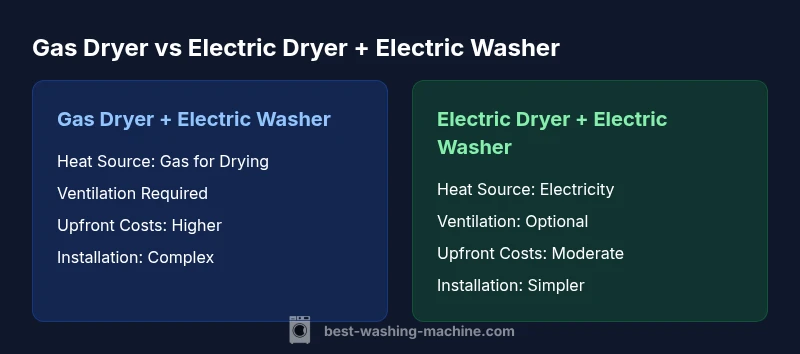
| Feature | Gas Dryer + Electric Washer | Electric Dryer + Electric Washer |
|---|---|---|
| Heat Source for Drying | Gas (natural gas/propane) | Electric |
| Ventilation Requirements | Required external venting | No venting needed (ventless options vary) |
| Upfront Equipment Cost | Typically higher (gas dryer + venting setup) | Moderate (electric dryer) |
| Installation Complexity | Gas line + venting + electrical readiness | Simpler electrical + laundry space planning |
| Operating Costs (Drying) | Potentially lower with cheap gas, cycle-dependent | Consistently tied to electricity price |
| Maintenance & Service | Gas components require specialized service | Common electrical components with broad coverage |
| Best For | Homes with robust gas infrastructure and venting | Homes with electric-only utility or rental units |
What's Good
- Potentially lower drying costs when gas is inexpensive
- Faster drying times on some models
- Gas systems can operate independently of electric grid issues in some regions
Downsides
- Requires gas line installation and proper venting
- Higher upfront costs and maintenance complexity
- Safety considerations with combustion equipment and ducting
A balanced all-electric laundry setup is the most versatile choice for most homes; gas-dryer setups pay off where gas is cheap and venting is already in place
If your home already has gas service and venting, a gas dryer paired with an electric washer can offer long-term savings. In most cases, all-electric configurations simplify installation and maintenance while providing broad service options.
FAQ
Are gas dryers worth it if I have a stable gas supply?
Gas dryers can reduce operating costs when natural gas is affordable and a vented setup is available. However, upfront installation and ongoing vent maintenance should be weighed against electric dryer options.
Gas dryers can save on running costs if your gas is affordable and you have proper venting, but upfront installation and maintenance matter.
Can I mix a gas dryer with an electric washing machine?
Yes. A gas dryer can be paired with an electric washing machine in most homes. Ensure proper venting for the dryer and adequate electrical capacity for both appliances.
You can pair a gas dryer with an electric washer, just check venting and electrical capacity.
Do gas dryers require venting?
Yes, most gas dryers require venting to the outside to expel combustion byproducts. Venting is a major factor in installation cost and safety checks.
Gas dryers usually need venting to the outdoors for safety and performance.
Are there all-gas washing machines?
All-gas washing machines are extremely rare; washers are typically electric. If you need to minimize electricity use, consider energy-efficient electric washers and gas-powered dryers instead.
Washing machines are generally electric; gas-powered washers are uncommon.
Which setup is cheaper to operate over time?
Costs depend on local energy prices. Gas dryers may reduce drying costs where gas is cheap, but electric washers’ efficiency and electricity rates strongly influence long-term expenses.
Gas drying can be cheaper if gas is cheap, but electric washers’ efficiency also matters.
How do safety and insurance differ between gas and electric laundry rooms?
Gas appliances add venting, gas line, and combustion safety requirements that can affect insurance terms. Electric-only setups generally have simpler safety profiles and broader service coverage.
Gas adds venting and gas-safety steps; electric setups tend to be simpler to insure.
The Essentials
- Assess gas availability and venting before choosing a gas dryer
- Electric washers align with standard home electrical infrastructure
- Expect higher upfront costs with gas venting and line installation
- Consider long-term variable energy costs when modeling savings
- Prioritize professional installation and safety inspections