How much washing machine with dryer in the Philippines: Pricing and buying guide
Explore price ranges, energy use, and tips for choosing a washer-dryer combo in the Philippines. Learn how capacity, features, and warranties affect cost and value.


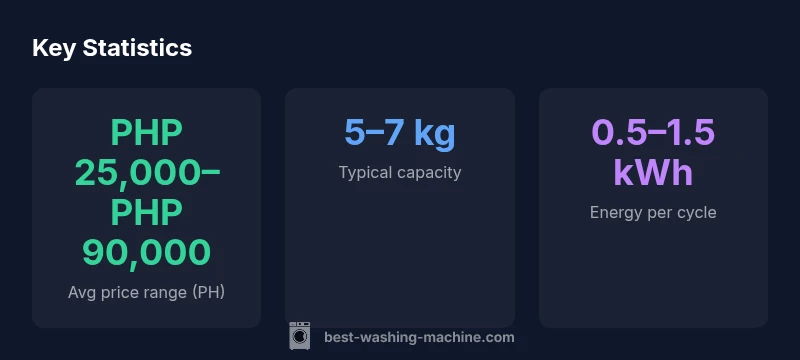
In the Philippines, a washer-dryer combo typically costs PHP 25,000 to PHP 90,000, depending on capacity and features. Basic compact units start around PHP 25k–40k, while larger front-load models with built-in dryers commonly run PHP 40k–90k. Prices vary with brand, warranty, and energy efficiency. Buying guidance suggests weighing drum size, cycle options, and service coverage, since long-term savings may outweigh upfront costs.
The Philippine market for washer-dryer combos
If you’re asking how much washing machine with dryer in the Philippines costs, you’re looking at a wide spectrum driven by capacity, energy efficiency, and brand reputation. According to Best Washing Machine analysis, the local market offers compact all-in-one units for small spaces and larger front-load models with built-in dryers for families with every-day laundry needs. Consumers often compare upfront price to long-term savings from energy efficiency, warranty length, and service availability. The Philippines market also reflects seasonal promotions, import duties, and local service networks, which can shift price bands month to month. When shopping, consider not just the sticker price but the total cost of ownership over 5–7 years. For context, government labeling programs and energy efficiency standards influence these choices, and you can use these signals to narrow options.
Price bands: what you can expect in 2026
Prices for washer-dryer combos in the Philippines fall into three broad bands. Budget buyers may find compact, entry-level units around PHP 25,000–40,000, ideal for small households or apartments with limited space. Mid-range models typically range from PHP 40,000–65,000 and offer larger capacities, better wash performance, and more reliable cycles. Premium all-in-one machines with built-in dryers and advanced features often run PHP 65,000–90,000 or higher, delivering faster cycles, larger drums, and enhanced energy efficiency. Brand premiums and warranty terms can push prices upward, but these models may deliver lower running costs over time. Always check for energy labels and service accessibility—these factors matter as you weigh upfront cost against long-term value.
Capacity and usage: matching to your household
The most practical capacity for a family of four usually sits in the 7–9 kg range for washers, with dryer capacity matching usage patterns. In many PH households, a 7–8 kg washer with a built-in dryer can handle typical weekly loads without extending wash cycles. If you regularly wash bulky items like bedding, or if you have a larger family, aim for the higher end of that range. Remember that capacity is a proxy for performance; drum design (stainless steel vs. other metals), spin speed, and moisture sensors also influence drying efficiency and cycle times.
Built-in dryer vs separate dryer: pros and cons
All-in-one washer-dryer combos save space and simplify installation, which is ideal for apartments and small homes. However, built-in dryers can shorten motor lifespan if used intensively and often come with longer drying cycles. Separate washers and dedicated dryers offer higher throughput and sometimes better energy efficiency per load, but require more floor space and a second electrical outlet setup. When evaluating options, calculate how many loads you run weekly, the typical load size, and how much space you can commit to laundry equipment.
Features that matter for PH households
Key features to look for include: a drum with energy-efficient stainless steel, multiple wash programs (delicate, heavy, quick wash), sensor-dry options to prevent overdrying, large maytag-like lint filters, and strong warranty terms (minimum 1–2 years on the unit and longer on the motor). Consider cycle times and noise levels if the unit will run during morning or evening hours when households are at home. Brand- and model-level differences will also affect maintenance needs—choose models with widely available parts and robust local service networks.
Shopping tips: how to compare and buy in the PH
Create a side-by-side comparison across price, capacity, energy rating, and warranty. Use reputable retailer listings and manufacturer pages to confirm drum size, energy certifications, and maintenance requirements. Check the service center availability in your area; local access can dramatically shorten repair times. Read consumer reviews about real-world reliability and support. If you plan to finance the purchase, compare total costs across loan options and promo periods, noting any warranty extensions or maintenance packages included in the deal.
Care and maintenance to extend lifespan
To maximize value, perform regular lint cleaning, avoid overloading the drum, and use the recommended detergent type and amount. Clean the filters monthly, inspect hoses for wear, and run a maintenance cycle if the manual prescribes it. Schedule annual professional servicing to catch potential issues early, especially in tropical climates where humidity can impact electronics. Investing in a quality cover or protective mat can reduce wear on external components and help the unit last longer.
Financing options and budgeting tips
Many PH retailers offer installment plans with zero-interest promotions for a defined period. If you’re budgeting for a family purchase, estimate the monthly payment against expected energy savings and service costs. A slightly higher upfront cost for a more energy-efficient model can translate into lower monthly utility bills and fewer repair visits over the unit’s lifecycle. Keep an eye on promo seasons and bundled warranty extensions that add long-term value.
Common myths and quick decision framework
Myth: All-in-one units are always less reliable than separate machines. Reality: Modern washer-dryer combos are designed for mixed use and can be reliable when selected with a solid warranty and easy service access. Framework: Define your space, forecast loads per week, prioritize drum size and energy use, then shortlist models that meet those constraints. End goal: a balanced choice that minimizes total cost of ownership while meeting your household’s needs.
Price ranges and features for washer-dryer combos available in the Philippines (PH)
| Model Type | Avg Price Range (PHP) | Key Features |
|---|---|---|
| Front-load washer with built-in dryer | PHP 40,000–PHP 90,000 | Energy-efficient, large drum, stackable |
| All-in-one compact washer with dryer | PHP 25,000–PHP 60,000 | Budget-friendly, space-saving, basic cycles |
| Top-load washer with built-in dryer | PHP 30,000–PHP 75,000 | Faster cycles, easier loading, compact footprint |
FAQ
What is the typical price range for a washer-dryer combo in the Philippines?
In the Philippines, washer-dryer combos generally range from PHP 25,000 to PHP 90,000, depending on capacity, energy features, and brand. Look for ongoing promos and warranty terms to maximize value.
Prices vary widely. Look for energy efficiency and strong warranties when shopping.
Are there energy-efficient washer-dryer combos available in PH?
Yes. Many models offer energy-saving settings and high-efficiency ratings. Check energy labels and choose a model with a reputable efficiency certification when possible.
Absolutely—focus on energy labels and efficiency ratings.
Is it cheaper to buy a separate washer and dryer instead of an all-in-one unit?
Often, separate units can be cheaper upfront, but all-in-one units save space and simplify installation. Factor in maintenance costs and space constraints when deciding.
Separates can be cheaper upfront; consider space and long-term costs.
What capacity should a family of four look for?
A 7–9 kg washing capacity with a matching dryer capacity is a practical target for a family of four, balancing load size and cycle times.
For a family of four, aim for 7–9 kg washing capacity.
What warranty terms matter most for PH buyers?
Look for at least 1–2 years on the unit and 2–5 years on the motor, with accessible service networks for quicker repairs.
Choose good coverage and an easy service network.
Where can I find service centers for washer-dryer combos in the Philippines?
Select brands with wide local service networks and readily available spare parts to minimize downtime.
Make sure the brand has a strong local service network.
“Washer-dryer combos can offer excellent value when you balance upfront price with energy use, capacity, and service availability. Always compare drum size, cycle options, and warranty terms.”
The Essentials
- Know your space: compact units fit small homes, but capacity matters.
- Balance upfront price with long-term energy costs.
- Prioritize drum size and warranty for longevity.
- Compare built-in dryer performance versus separate machines when possible.
- Check local service networks before buying.