How to Tell Washing Machine Size: A Practical Guide
Learn how to accurately determine washing machine size by measuring space, understanding exterior dimensions versus drum capacity, and reading model specs. This guide helps you pick the right fit for your home and prevent installation issues.


By the end of this guide, you’ll confidently determine your washer’s size by measuring your space, reading product specs accurately, and planning for attachments or stacking. You’ll learn how to distinguish exterior dimensions from drum capacity, and how to verify fit before purchase. This helps avoid installation issues and ensures efficient operation.
Why Size Matters When Choosing a Washer
According to Best Washing Machine, size isn’t just about whether a unit fits in a closet. Exterior dimensions affect installation clearances, door swing, and ventilation, while drum capacity determines how much laundry you can run in a single load. Getting sizing right reduces cycle times, energy use, and wear on your machine. Best Washing Machine analysis, 2026, also highlights that many buyers underestimate space needs, leading to anti-climactic deliveries or awkward setups. By understanding both exterior size and internal capacity, you can balance space constraints with laundry needs and avoid costly returns or remodels.
Beyond space, size interacts with accessibility and maintenance. A washer that’s too large for a tight laundry alcove can rub against plumbing, while an undersized model may require extra cycles to handle heavy loads. The practical approach is to measure first, compare to model specs, and then plan for anything that could block doors or hose connections. This approach aligns with our goal of helping homeowners, renters, and operators select a unit that fits seamlessly into daily routines.
Understand Size vs Capacity
Many buyers confuse external dimensions with drum capacity. Exterior size refers to the width, height, and depth of the machine itself, which matters for installation space and doorway passages. Drum capacity, often expressed in pounds (lb) or kilograms (kg) of laundry per load, affects how much you can wash in one cycle. A larger drum doesn’t always mean better for every household—overestimating capacity leads to inefficiency if the machine isn’t balanced with your typical load. When planning, aim for a balance: a footprint that fits your space, a drum size that matches your frequent laundry volume, and a cycle selection that delivers the results you want with reasonable energy use. Remember: capacity and exterior size are connected but not interchangeable.
Standard Size Categories: Compact, Standard, and Large
Washer sizes generally fall into a few broad categories. Compact models are typically narrower and shallower, designed for small spaces or apartments. Standard full-size units offer a balance between footprint and capacity, suitable for most households. Large or extra-large machines can handle bulky loads or family-sized laundry but require more space and robust hookups. Within each category, you’ll find variations in height, width, and depth, so use the model’s exact dimensions rather than relying on category alone. If you’re stacking a unit with a dryer, ensure the pair aligns in width and depth and that the stack kit is compatible with the models you choose. This overview helps you translate a product page’s measurements into real-world fit.
How to Measure Your Installation Space
Begin with a clean, level floor and remove any obstructions. Measure the width between side walls, the height from floor to the top of the doorway or cabinet, and the depth from the wall to the far edge of the planned machine. Don’t forget to account for door swing or lid clearance. Leave at least a few inches of breathing room on every side for proper airflow and service access. If you plan to place shelves or a pedestal, measure those dimensions too. A small fraction of depth can be critical for under-counter installations or tight closets, so document all measurements precisely in both inches and centimeters. This foundation helps you compare candidates without guessing.
Reading Washer Specs: What to Look For
On product pages, pull the model’s exact exterior dimensions (width x height x depth) and its drum capacity. Look for the word ‘capacity’ next to the drum size (for example, 4.5–5.0 cu ft, or 8–9 kg). Note that some models advertise “width with doors open” or require a shorter clearance for ventilation; others show total height including a pedestal. If dimensions aren’t clearly listed, check the user manual or contact the retailer. For stacking configurations, verify that the dryer stack height and width align with the washer and that the stack kit is compatible. Clear, precise specs prevent mismatches later.
Plumbing and Electrical Considerations
Size isn’t only about space—it also interacts with hookups. Confirm that the space has sufficient water supply lines, a drain that reaches the machine’s drain hose, and appropriate electrical outlets. Many residential washers use standard 120V outlets, but some installations—like laundry rooms with unusual layouts—may require a dedicated circuit. Verify hose lengths and delivery pathways to avoid kinks or tension that could cause leaks. If you’re unsure, consult a licensed technician before purchasing to prevent installation surprises.
Stacking, Side-by-Side, and Pairing with Dryers
Choosing between a stackable or side-by-side configuration often hinges on space and lifestyle. Stacked configurations save floor space but demand precise dimensions and compatible kits. Side-by-side layouts require sufficient width for both units and access to detergent compartments and doors. If you’re pairing a washer with a dryer, ensure the heights and widths align within a tolerance that allows for safe operation and service access. Also consider the preferred door swing direction and whether the unit’s hinges will face a wall or open space. This section helps you predict how the physical form of a unit translates to your floor plan.
How to Estimate Capacity for Your Laundry Needs
Capacity guidance helps you avoid overbuying or underperforming. For households with daily loads, a moderate drum size often reduces trips to the laundromat and keeps energy use reasonable. If you regularly wash bulky items, you’ll want a larger drum; if you mostly do small, quick loads, a compact model could suffice. Use a rough planning method: estimate weekly loads in pounds (or kilograms) and divide by the number of loads you’re comfortable running each week. Compare this to the model’s stated capacity to see if it’s a good fit. Remember that larger drums can add footprint and water usage, so balance capacity with space and efficiency goals. Best Washing Machine’s guidance emphasizes aligning capacity with actual laundry habits rather than chasing the biggest drum.
Practical Space Solutions for Challenging Areas
In tight closets, under stairs, or irregular alcoves, even standard-size washers may need custom clearance. Consider shallow-depth models or compact units designed for non-traditional spaces. If you must fit a larger model in a tight slot, you may need to reconfigure shelving, plumbing, or electrical layout. Always account for ventilation and service clearance behind and around the unit. When space is truly limited, a compact unit paired with a compact dryer can deliver similar capacity with a smaller footprint. The goal is to maximize usable space without compromising performance or accessibility.
Quick-Sizing Checklist and Next Steps
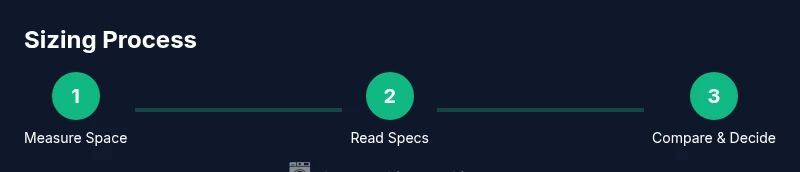
Before you buy, make a simple checklist: measure the space (width, height, depth), verify door openings and hose clearances, confirm plumbing and electrical readiness, and compare model dimensions with your measurements. If stacking, confirm compatibility and kit requirements. Finally, read product pages carefully for exact exterior dimensions and any notes about installation. With these steps, you’ll move from measurement to confident selection, minimizing the chance of delivery surprises and returns.
What to Do Next: Verify Fit Before Purchase
Use your measurements as a reference point when reviewing product listings. Create a quick table with the model’s width x height x depth and the space’s available dimensions, then perform a side-by-side check. If possible, request a physical showroom test or a home-delivery verification window to confirm fit in real conditions. Keep the stack height in mind if a dryer will sit atop the washer, and verify shielded access to electrical outlets and water connections. This proactive approach reduces post-purchase issues and keeps your laundry routine running smoothly.
Tools & Materials
- Measuring tape(At least 2 meters (6 feet) long for full room and appliance measurements)
- Notebook or digital note app(To record all measurements, model specs, and clearance notes)
- Pen or pencil(For quick sketches and dimension notes)
- Level(Helps confirm floor is level to avoid vibrations)
- Smartphone or camera(Capture space photos or model spec pages for reference)
- Printed spec sheets or model pages(Useful when online specs aren’t clear)
Steps
Estimated time: 60-90 minutes
- 1
Identify installation space
Clear the area and note how much room you have in width, height, and depth. Mark the floor with masking tape to visualize the machine’s footprint. This gives you a concrete reference before you start measuring.
Tip: Measure from wall to wall, not from cabinets that might be offset. This prevents underestimating the available width. - 2
Measure available width
Use the tape to measure the exact distance between side walls or cabinetry. Record in both inches and centimeters. Check for any door or cabinet that might intrude into the footprint when opened.
Tip: Take multiple readings at different heights to account for any protrusions or uneven walls. - 3
Measure installation height
Measure from floor to the highest obstacle that could block the washer’s upper area. Include pedestals or stacking kits in your measurement if you plan to use them. Ensure there’s clearance for hoses and vents.
Tip: Don’t ignore the top clearance; many installations fail because the top edges clash with cabinets or shelves. - 4
Check depth clearance
Determine how far the machine can extend from the wall when connected to hoses and gravity drain. Add extra room for hose routing and future maintenance. Document this depth so you can compare against model specs.
Tip: If you’re stacking, verify both units can share a path without bending hoses. - 5
Verify plumbing access
Identify water supply lines and a drain location within reach of the washer. Confirm the hose outlets are compatible with standard fittings and that there’s slack for attachment.
Tip: Ensure shut-off valves are accessible in case of maintenance needs. - 6
Check electrical readiness
Confirm the outlet type and amperage match the washer’s requirements. If the space uses a dedicated circuit, confirm available capacity and that cords can reach without tension.
Tip: Avoid adapters or extension cords; use a direct connection to meet safety standards. - 7
Review standard size categories
Understand that compact models are typically narrower, standard models balance footprint and capacity, and larger units offer more drum space but require more room. This helps you pick a model that fits both your space and laundry needs.
Tip: If space is tight, a compact or slim-depth model may be preferable even if it has slightly less capacity. - 8
Read product specs carefully
Look for exact exterior dimensions (width x height x depth) and the drum capacity. Some listings show additional clearance requirements, so note those as well.
Tip: When in doubt, download the user manual to confirm dimensions and installation notes. - 9
Consider stacking or pairing
If you plan to stack, confirm the models are compatible and that a stacking kit is available. For side-by-side installations, ensure there’s equal or adequate space for each unit and for door swings.
Tip: Check that ventilation remains unobstructed with the stack in place. - 10
Estimate your laundry load
Think about weekly laundry volume and item types. A larger drum can handle bulky items, while smaller households can often manage with standard or compact drums.
Tip: Avoid over-sizing to the point of unnecessary energy use; choose a drum that matches your actual needs. - 11
Create your decision shortlist
Compile 2–3 model candidates that meet your measured space and capacity requirements. Compare external dimensions, drum capacity, and installation notes side-by-side.
Tip: Use a simple grid to visualize fit: model x width x height x depth vs space x depth. - 12
Finalize purchase with verification
Before ordering, re-check the space measurements and model specs. If possible, request a delivery check to confirm fit in your home. Have installation notes ready for the crew.
Tip: Prepare a short installation plan for the delivery team to avoid delays.
FAQ
What’s the difference between washer width and drum capacity?
Washer width is an exterior measurement that affects fit in your space. Drum capacity is the volume inside the drum, which determines how much laundry you can wash per load. You should use both: ensure the width fits your opening and that the drum size matches your typical laundry load.
Width is the exterior size that must fit your space; drum capacity is how much laundry you can wash per cycle.
Can I tell size from the model number?
Model numbers don’t reliably indicate physical size. Always check the listed exterior dimensions (width x height x depth) on the product page or manual.
Model numbers don’t reliably show size—check the actual dimensions instead.
What if my space is tight but I need a large drum?
Consider compact-depth options designed for tight spaces, or vertical stacking with a separate dryer. If space is truly tight, prioritize width and choose a unit with a slightly larger drum but a shallower depth.
In tight spaces, pick compact-depth units or a stacked configuration to maximize capacity without widening the footprint.
Is stacking always a good idea?
Stacking saves floor space but requires precise dimensions and compatible models. Verify stack kit availability and ensure the combined height fits your ceiling clearance.
Stacking saves space but you must ensure the models are compatible and fit under any shelving.
How do I verify fit before purchasing?
Compare your measured space with the washer’s exterior dimensions and check any door swing clearance. If possible, arrange a showroom test or home delivery check to confirm the fit.
Compare your measurements to the model’s size and test if you can before you buy.
Should I consult a professional for installation?
If your space has unusual wiring, ventilation, or plumbing constraints, a licensed installer can ensure safe connections and proper clearance.
If your setup is unusual, consider hiring a professional installer.
Watch Video
The Essentials
- Measure space accurately before shopping.
- Differentiate exterior size from drum capacity.
- Check plumbing and electrical readiness.
- Consider stacking options if space is limited.
- Always verify fit against model specs before purchasing.