Should a Washing Machine Be in the Kitchen or Bathroom? A Practical Comparison
Explore practical placement guidance for a washing machine between kitchen and bathroom. Compare space use, plumbing access, moisture control, and noise to help homeowners, renters, and laundromats decide with confidence.


The short answer is that a dedicated laundry area is ideal, but if space dictates otherwise, place the washer where plumbing, electrical access, and noise are best managed. In tight homes, kitchen placement can fit compact layouts, whereas bathrooms offer moisture control and proximity to plumbing. The right choice aligns with your space, routines, and safety considerations.
Introduction: Should washing machine be in the kitchen or bathroom?
For many homeowners, renters, and small-house layouts, the question quickly becomes practical: should washing machine be in the kitchen or bathroom? This decision influences humidity exposure, maintenance needs, noise disruption, and how easily you can access utilities. According to Best Washing Machine, the optimal choice balances convenience with moisture management and code compliance. The ongoing conversation about washer placement is not merely about location; it affects daily workflows, appliance longevity, and even resale appeal. In this guide, we dissect the core trade-offs, present a decision framework, and offer actionable steps you can use to analyze your own space. Whether you’re remodeling, buying a home, or upgrading an apartment, understanding these dynamics is essential to making a smart, code-compliant choice that fits your lifestyle.
Key factors to consider when placing a washer
Placement decisions hinge on several interlocking factors: water supply proximity and drainage availability, electrical circuit capacity, and necessary venting where applicable. Moisture management is crucial in any bathroom setup, while kitchens demand careful planning to avoid splashes and maintain food-prep safety. Noise and vibration influence both comfort and timing (when to run cycles, especially in open-plan spaces). Space configuration, door swing, and proximity to shelving or cabinetry determine how easily you can load and unload laundry. Finally, local codes and insurance expectations matter; some jurisdictions discourage or restrict laundry installations in certain spaces. Best Washing Machine Analysis, 2026 emphasizes evaluating these factors in concert rather than in isolation.
Kitchen placement: advantages and drawbacks
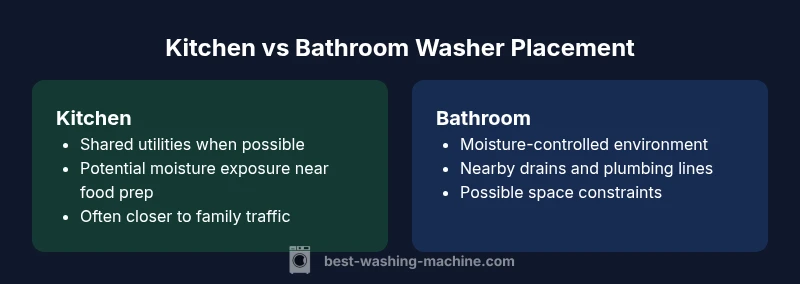
Pros of placing a washer in the kitchen often center on utilities being in close proximity—if the kitchen shares a wall with a sink or vent, retrofitting can be less invasive. The layout may support a compact, multi-use space, allowing a washer to tuck beneath counters or next to a pantry. However, drawbacks include higher risk of moisture exposure near food prep surfaces, potential heat and steam affecting nearby appliances, and the possibility of disrupting kitchen traffic flow. From a maintenance viewpoint, kitchen installations may require careful drainage planning to prevent countertop water intrusion, and some renters worry about spill risks near cooking areas. Overall, kitchen placement can work well in tight spaces when moisture, ventilation, and access are carefully managed.
Bathroom placement: advantages and drawbacks
Bathrooms offer a more controlled moisture environment with better venting and dehumidification potential, especially in newer homes with dedicated laundry outlets. Proximity to existing plumbing lines can simplify connections for cold and hot water supply and drainage. A downside is that bathrooms are often smaller, with limited space for shelving and detergents, so storage planning becomes critical. Noise considerations may also shift—bathrooms can be closer to bedrooms, making vibration more noticeable at night. Insurance and codes in some regions may require splash guards or moisture management measures. For many households, bathroom placement excels when moisture control and plumbing reliability are top priorities.
Hybrid options: dedicated laundry nook in kitchen or bathroom
In compact layouts, a dedicated laundry nook or compact cabinet setup within a kitchen or bathroom can offer a balanced solution. A recessed corner, stacked units, or under-counter configurations can minimize footprint while keeping utilities accessible. This approach often requires careful planning for plumbing access, drainage routing, electrical outlets, and secure mounting to damp-proof surfaces. Hybrid options benefit from thoughtful design details—water-resistant cabinetry, splash zones, and finished panels that blend with surrounding decor. The goal is to maximize usability while reducing moisture exposure and visual clutter.
Plumbing, drainage, and venting realities
The success of either placement depends on sound plumbing strategies. Kitchens and bathrooms depend on proper drainage slope, venting adequacy, and accessible water lines. In some homes, a shared wall with a sink can simplify both supply and drain connections; in others, an offset or dedicated line may be needed. Venting is especially important for certain washer models that vent to exterior walls or require a dry vent. When planning, review existing plumbing schematics, confirm trap distances, and ensure that the chosen location won’t require long runs that increase the risk of clogs or backups. A professional assessment can prevent costly reworks later.
Noise, vibration, and user experience
Load size, drain speed, and the washer’s mount type all influence noise and vibration levels. Kitchens placed near living or dining areas may experience more audible disruption, while bathrooms might be farther from social spaces but closer to bedrooms depending on the floor plan. Anti-vibration pads, solid mounting, and proper leveling can mitigate disturbances in either location. User experience matters: consider whether you prefer frequent short loads in a busy kitchen schedule or occasional laundry runs when family members are away from shared living spaces. Thoughtful placement reduces friction in daily routines.
Safety, electrical codes, and moisture management
Electrical safety requires dedicated circuits and GFCI protection in damp environments. Water supply must be secure from leaks, and drainage lines should be concealed to prevent accidental contact with detergents or clothes. In bathrooms, electrical outlets are often restricted to specific zones; kitchens may offer more flexible power layout but still require grounded outlets and proper clearance. Moisture management includes splash guards, moisture-resistant wallboards, and ventilation. Always consult local codes and a licensed plumber or electrician to validate the chosen location before installation.
Cost implications and long-term value
Cost considerations include installation complexity, potential retrofitting, and long-term maintenance. A kitchen placement may be cheaper if you can piggyback on existing sink and vent lines, but it can incur higher risk of water damage to surfaces used for cooking. Bathroom installations might entail higher initial costs due to space constraints and moisture protection requirements, yet they offer better moisture control and sometimes simpler drainage routing. Long-term value depends on how well the setup integrates with daily life, minimizes maintenance, and maintains appliance efficiency. Plan for durable, moisture-rated materials and accessible service routes to reduce lifecycle costs.
Decision framework and quick-start checklist
Start with a practical checklist: map available water supply and drainage points, verify circuit capacity, assess ventilation, and measure clearance around the planned location. Rate noise sensitivity in living spaces and consider whether nearby surfaces are moisture-prone. If you’re renting, confirm tenancy restrictions and insurance implications. Create a simple scoring rubric for space efficiency, moisture risk, and noise impact, then choose the option with the highest total score. A staged approach—test placement with temporary fixtures before final installation—can minimize costly mistakes.
Real-world scenarios and tuning advice
Scenario A: A compact city apartment with an open-plan kitchen uses a stacked washer-dryer unit, placed under a counter near a vented window to aid moisture removal. Scenario B: A family home with a large bathroom rooms allows a full-sized front-loading washer with a dedicated cabinet and splash zone, ensuring quiet operation away from the living room. Scenario C: A mid-century house with a converted kitchen uses a compact, ventless washer tucked into a laundry closet, with sound-dampening doors and a moisture barrier. For each scenario, key levers include proximity to utilities, storage availability, and how often you run full loads versus partial loads.
Comparison
| Feature | Kitchen installation | Bathroom installation |
|---|---|---|
| Space efficiency | Can be integrated with cabinetry in tight layouts | Requires dedicated space near plumbing, may reduce kitchen storage |
| Moisture exposure | Higher humidity risk near prep surfaces; plan splash zones | Moisture control is easier with ventilation and damp-proof systems |
| Noise impact | Potential noise near dining/living areas | Typically farther from social spaces, but timing matters |
| Plumbing access | Often adjacent to sink lines; drain routing can be reused | Near existing bathroom drains; may simplify vent routing |
| Storage and accessibility | Under-counter placement can free floor space | Cabinet space may be limited; plan detergents nearby |
| Installation complexity | May be simpler with shared utilities | Can require extra framing or waterproofing |
What's Good
- Can leverage existing plumbing/electrical lines to simplify retrofit
- Useful in compact spaces when designed as a built-in
- Encourages efficient household routines by locating laundry near daily activities
Downsides
- Moisture and heat exposure can affect nearby surfaces and finishes
- Noise and vibration can disrupt nearby living spaces
- Non-traditional setups may raise code, warranty, or insurance concerns
- Unconventional placement can affect resale value if layout is unusual
Dedicated laundry space is the preferred option; if not feasible, kitchen placement suits compact layouts and bathroom placement favors moisture control.
Choose a dedicated laundry area when possible to optimize moisture control, noise management, and convenience. If space constraints require compromise, prioritize kitchen placement in tight layouts and bathroom placement when moisture control and proximity to plumbing are the dominant factors; align with local codes and insurance considerations.
FAQ
Is it legal to place a washing machine in a kitchen or bathroom in my area?
Legality varies by jurisdiction and building type. In many homes, both kitchen and bathroom placements are permitted, provided plumbing, electrical, and moisture safety requirements are met. Always consult local codes and a licensed professional if you’re unsure.
Legality varies by area; check your local codes and consult a pro if you’re unsure.
What are the most important factors when deciding between kitchen and bathroom placement?
Key factors include proximity to water supply and drainage, electrical capacity, moisture control, ventilation, noise impact, and available storage. The space’s layout and your daily routines should guide the final choice.
Consider plumbing, moisture, noise, and how you’ll use the space daily.
Will a washer in the bathroom cause moisture damage to fixtures?
Moisture is a concern in bathrooms, but it can be mitigated with proper ventilation, moisture-rated materials, and splash guards. Regular maintenance helps prevent mold and corrosion.
Moisture can be managed with good ventilation and proper materials.
Can I vent a washer in a kitchen location?
Vent requirements depend on model and local codes. Some washers vent externally; others are ventless. If venting is needed, route it toward an exterior wall with professional guidance to avoid condensation and mold.
Vent routing should follow code and be done by a pro.
What are space-saving tips for small apartments?
Use stacked units or under-counter configurations, door-proximate storage, and compact shelving. Choose units with slim profiles and moisture-resistant finishes to maximize usability without compromising space.
Stacked units and smart storage save valuable space.
Does the washer location affect warranty coverage?
Warranty coverage can be influenced by installation methods and adherence to local codes. Use certified professionals and approved installation practices to protect warranty and insurance eligibility.
Follow certified installation to protect warranty.
The Essentials
- Prioritize proximity to water and drainage first
- Control moisture with ventilation in bathrooms
- Minimize noise by locating laundry away from bedrooms
- Use built-in solutions to save space in small homes
- Check local codes and insurance implications before installation