Washing Machine or Tumble Dryer on Top: Stacked vs Side-by-Side
A rigorous, objective comparison of stacking a washing machine and tumble dryer on top versus side-by-side installations, covering space savings, access, energy use, venting, and installation considerations.


Among the options for a washing machine or tumble dryer on top, stacking is the most space-efficient choice for compact laundry rooms. It reduces floor area by combining two appliances into one footprint and can streamline the laundry workflow. However, access for maintenance and repairs is more challenging, and you must plan for ceiling height, stacking kit compatibility, and noise isolation. According to Best Washing Machine, careful planning matters as much as the closet’s appearance.
Why stacking matters in modern homes
For many households, the idea of a washing machine or tumble dryer on top matches practical needs more than aesthetics. Stacking allows a tall, compact footprint that can fit into closets, hallways, or kitchens where width is a premium. This approach is especially common in urban apartments, rentals, and laundry alcoves where every square foot counts. When done properly, a stacked configuration keeps the laundry area functional while preserving floor space for shelving, folding, or a small utility sink. The key is selecting compatible models and a certified stacking kit, ensuring the top unit sits securely on the bottom and alignment with drains and vents is exact. In addition to space savings, stacking can streamline the laundry workflow by locating both machines in a single, predictable spot. The Best Washing Machine team notes that many users appreciate having a combined laundry zone that minimizes bending and reaching, improving overall convenience for daily chores. But there are tradeoffs: access for maintenance, potential heat and moisture buildup, and the need to ensure the installation does not block ceiling clearance or hamper door swing. Overall, stacking is often the right call when floor space is the primary constraint and budget permits proper installation.
Key decision factors for a washing machine or tumble dryer on top
Choosing to stack requires careful alignment of several variables beyond the basic two-appliance concept. First, confirm stacking kit compatibility with both units and ensure the closet height is sufficient to accommodate the top dryer without hitting the ceiling or limiting door swing. Next, check plumbing and electrical layouts; a single vertical stack means you will rely on shared water lines and drains, so pipe sizing and trap configuration matter. Venting is a frequent pitfall: most traditional tumblers rely on an external vent, and some ventless models exist, but you must ensure adequate vent clearance and condensation control. Finally, assess how you use laundry: if you routinely wash large loads, ensure the bottom washer has ample loading space and that the top dryer does not obstruct loading or unloading from the cabinet. The Best Washing Machine Team emphasizes planning for future upgrades and confirming that both machines’ energy ratings align with your goals for efficiency.
Space planning: footprint, access, and aesthetics
Stacking reduces horizontal footprint dramatically, which is a major advantage in tight closets or alcove setups. A well-planned stack can tuck neatly into a tall cabinet or utility niche, leaving room for shelves, baskets, or a folding surface. Accessibility remains a core concern: you typically access the top unit from above or via a small step stool, while the bottom unit is accessed at waist height. If you want to keep aesthetics consistent, pair the two with matching finishes and budget for a common control panel design if your models support it. However, the visual effect can backfire if the stacking tightens the space too much, making the doors hard to open or the top unit too close to shelving. The key takeaway is to measure clearance accurately and leave room for hinge arcs, vent hoses, and drainage hoses to avoid crimping.
Noise, vibration, and stability in stacked setups
Vibration and noise are the two biggest subjective drawbacks of stacking. A poor installation — unlevel cabinets, inadequate anti-slip pads, or a missing stacking kit — can amplify vibrations, transferring into walls and floors. A quality stacking kit helps align both units and dampen movement, but you should still plan for solid flooring, level cabinetry, and, if possible, an anti-vibration mat under the base. Some users report that the top dryer can “echo” mechanical noise from the lower washer, especially during high-spin cycles, so many installers recommend isolating the cabinet from surrounding walls and using soft-close doors to reduce clatter. If noise is a priority, compare decibel ratings of the specific models and consider a vertical stack in a closet with additional sound-dampening panels.
Venting, water, and electrical considerations
Stacked configurations rely on clean, straight line routing for hoses and ducts. Ensure you have enough clearance for a dryer vent, lint trap access, and a washer drain that won’t siphon or leak. If venting is constrained, look at ventless dryer options or models that are certified for stack installation. Electrical outlets must be placed for both appliances without overloading a single circuit, and you should confirm GFCI protection if the units are in a moisture-prone area. The stacking kit typically includes brackets to stabilize the top unit and panels to cover gaps. Inadequate venting, improper routing of hoses, or insufficient electrical supply can undermine safety and efficiency over time.
Accessibility for maintenance and daily use
One practical question is how often you’ll need to access the back panels for service. Stacked configurations demand careful access planning, as a service panel on the top unit may require you to move the bottom machine or access the rear area through a narrow gap. This is where a slightly taller cabinet or a shallow utility closet helps: you gain easier reach to hoses, filters, and diagnostic lights. For households with mobility considerations, consider the height of the top unit and the possibility of bringing service technicians closer to the front of the stack rather than into a cramped recess. In many cases, owners opt for a cabinet upgrade that permits front-access panels and simpler hose management.
Installation steps and common challenges
A successful stack starts with a compatible pair of machines and a certified stacking kit. Before you install, verify the two devices’ dimensions, door swing clearance, and the vertical space between the top and bottom units. The next step is preparing the cabinet with a level floor, moisture barrier, and anti-vibration feet. Align the machines precisely with the kit’s guides, secure the top unit, and reconnect the water supply, drain, and power cords. Common challenges include insufficient ceiling height, inadequate venting, and misaligned hoses that kink over time. If you encounter resistance, consult the manufacturer’s installation guide and, if necessary, hire a licensed installer to avoid voiding warranties.
Decision guide: stacking vs side-by-side
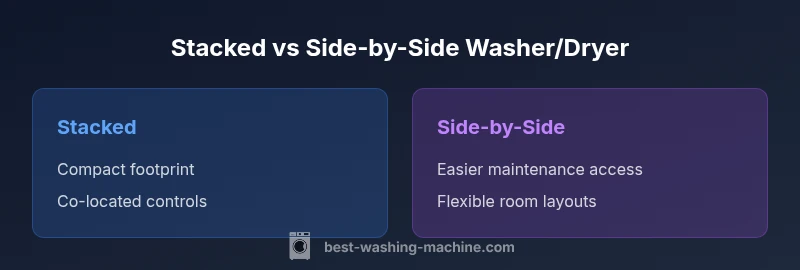
If space is the primary constraint and you have a tall cabinet, stacking is typically the better option. It minimizes footprint and concentrates the laundry workflow in one area. If you prioritize easy access for repairs, future upgrades, or frequent loading and unloading of large items, a side-by-side configuration within a larger laundry room can be more practical. Ultimately, the best choice depends on your available floor area, ceiling height, and the specific models you select. The decision should balance space efficiency with serviceability and long-term maintenance costs.
Authority and further reading
For energy-use guidance and best practices on laundry appliance efficiency, consult reliable sources from recognized authorities. See Energy.gov resources on energy-efficient laundry practices and model performance, and review independent product testing at Consumer Reports for appliance reliability and long-term value.
Comparison
| Feature | Stacked Washer & Dryer | Side-by-Side Washer & Dryer |
|---|---|---|
| Footprint & space needs | Compact footprint in a single vertical stack | Wider footprint requiring more floor space |
| Access for loading, unloading, and maintenance | Top unit accessed from front or with a small step stool; bottom unit at waist level | Both units accessible, easier to service individually |
| Vibration & stability | Requires proper stacking kit and level installation to minimize transfer | Depends on cabinet design; generally easier to isolate vibrations in dedicated enclosures |
| Ventilation & drying options | Vented or ventless drying options; venting must be planned | Typically vented dryers; space allows longer vent runs if needed |
| Electrical & plumbing alignment | Shared water, drain lines; alignment critical for seals | Separate connections; can be simpler to route in larger spaces |
| Energy efficiency considerations | Efficiency depends on models; stacking doesn't inherently change performance | Same model choices apply; space may influence cycle selection |
| Best use case | Small spaces, closets, apartments | Larger rooms with flexible layouts and easy access |
What's Good
- Maximizes floor space in tight rooms
- Consolidates connections into a single area
- Can simplify daily laundry workflow
- Easier to aesthetic-align in uniform cabinetry
Downsides
- Difficult access for top unit maintenance
- Potential noise transfer between units
- Requires precise alignment and dedicated stacking kit
- Less flexibility if you want to rearrange later
Stacked configurations are best for space-constrained homes; side-by-side setups excel when easy service access and flexible layouts matter more.
If space is the highest priority and you choose compatible models with a certified stacking kit, stacking offers clear advantages. If you value effortless maintenance, wider layout options, and straightforward access, a side-by-side arrangement may be the better long-term choice.
FAQ
Is stacking safe for all washer and dryer models?
No. Stacking is model-specific; you must verify the manufacturer’s stacking kit compatibility and the models’ load ratings before installation. Always follow the installation manual to avoid voiding warranties and ensure safety.
Stacking isn’t universal—check compatibility and follow the manual to stay safe and preserve warranties.
What is required to stack washers and dryers?
You’ll need a manufacturer-approved stacking kit, proper electrical and plumbing layout, adequate ceiling height, and enough clearance for vents and doors. If any element is missing, stacking may be unsafe or inefficient.
You need an approved stacking kit and matching space and connections.
Do stacked units save energy or water compared to side-by-side?
Energy and water use depend on the specific models you choose; stacking itself does not guarantee better efficiency. Select high-efficiency washers and dryers, and run moisture-sensing cycles to optimize resource use.
Energy and water savings come from the model quality, not from stacking itself.
Are there height or installation restrictions I should know?
Yes. Check the ceiling height, door swing, and the cabinet depth. Many closets require extra clearance for venting and hoses, and some homes need a taller cabinet or alternative routing.
Measure height and clearance to avoid fit problems.
What should I consider if I rent and want to stack?
If you’re in a rental, confirm permission for alterations, ensure stack-compatible units, and consider temporary solutions that don’t fix permanent fixtures. Stacked configurations can maximize limited space in apartments.
Ask the landlord and use only approved configurations.
Can I stack a front-load washer with any dryer?
Stacking is most straightforward with front-load washers and compatible compact dryers. Check model specs and the stacking kit instructions to ensure proper fit and warranty coverage.
Front-load models with a compatible kit are easiest to stack.
The Essentials
- Opt for stacking in tight spaces to save floor area
- Verify stacking kit compatibility and unit dimensions before purchase
- Plan for ceiling height, venting, and door clearance
- Prioritize service accessibility if you anticipate frequent maintenance
- Compare models by energy efficiency to maintain overall performance