Washing Machine Shop Guide: Buy, Compare & Repair Today
A practical, step-by-step guide to evaluating a washing machine shop for buying or repairing appliances, with checklists, tips, and expert insights from Best Washing Machine.


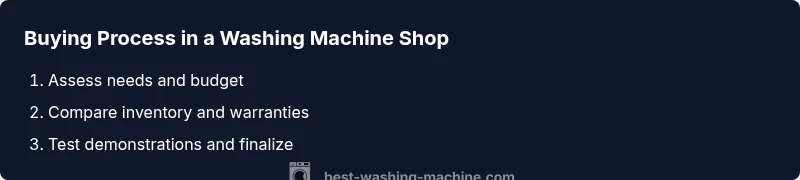
By the end of this guide, you'll know how to evaluate a washing machine shop for purchase or repair needs, compare inventory, warranties, and service quality, and pick the best fit for your home or business. Prepare a budget, a list of must-have features, and a quick checklist to assess reliability on-site.
Understanding the Washing Machine Shop Landscape
A washing machine shop isn't just a storefront; it's a hub for selection, support, and after-sales care. According to Best Washing Machine, the right shop should balance variety with expertise, giving you options across brands, capacities, energy ratings, and price points. When homeowners, renters, and laundromat operators walk into a shop that focuses on the needs of everyday laundry, they find value in practical demos, transparent pricing, and honest guidance. This section lays out what to expect from a modern washing machine shop and how to set your criteria before you visit. You’ll learn how to differentiate between a showroom that simply sells units and a trusted partner that helps you optimize your laundry routine over years, not just months. The goal is to identify a shop that makes it easy to compare top-loading, front-loading, high-efficiency, and compact models under one roof, with staff who can translate specs into real-world results.
How to Evaluate Inventory and Selection
A robust washing machine shop will display a wide range of capacities, configurations, and energy-efficiency classes. Look for front-load and top-load models, compact apartments sizes, stacked washer-dryer combinations, and specialty machines (like high-capacity units for large households). The shop should also stock a mix of new and refurbished items with clear labeling about condition and warranty. A transparent inventory process helps you quickly compare key specs: drum volume, spin speed, cycle options, water usage, and noise levels. In addition, pay attention to brands represented, availability of replacement parts, and the ability to demo units in-store. Finally, ask about seasonal promotions or bundle deals that can improve total ownership cost without compromising reliability.
Warranties, Repairs, and After-Sales Service
Warranties are a critical part of any washing machine shop experience. A reputable shop will provide both a manufacturer warranty on new units and a credible service plan or extended warranty option. Clarify what is covered (parts, labor, travel), the duration, and whether there are any caps on claims. For refurbished or open-box units, insist on a documented warranty that mirrors full-price offerings as closely as possible. Check the service process: response times, on-site repair capabilities, and how service issues are escalated if they arise. A good shop will also offer maintenance reminders, door-to-door pickup options for repairs, and clear guidance on seasonal tune-ups to extend machine life.
Buying New, Refurbished, or Used: What to Consider
Choosing between new, refurbished, or used washers depends on budget, risk tolerance, and the intended use. New units deliver peak efficiency and full factory warranties but carry higher upfront costs. Refurbished machines can provide excellent value when certified by the shop and backed by a solid warranty, but verify their history and performance tests. Used models bought from a shop may be cheaper upfront but often come with limited guarantees. Use a simple decision framework: maximum acceptable total cost of ownership, minimum warranty duration, and whether the shop will support the unit with future parts availability. If you frequently run large loads or need quiet operation, prioritize models with higher energy efficiency ratings and better sound-dampening features.
In-Store Demonstrations: What to Look For
A live demonstration helps you gauge real-world performance. Ask to see how the machine handles a typical load, including bulky items and mixed fabrics. Note the spin speed in action and watch for excessive vibrations or noise on the floor. Check accessibility of detergent compartments, control panel legibility, and the ease of setting cycles. If a test run isn’t possible, request a video demonstration or a shop-run test with your own items. Throughout, ensure that the salesperson explains the maintenance steps that accompany the unit, such as filter cleaning, drum inspection, and seal checks.
Building a Relationship with a Local Shop
Developing a long-term relationship with a trusted washing machine shop pays off. Start with transparent budgeting, clear feature priorities, and a willingness to compare multiple models side by side. Schedule follow-up visits to review new inventory or promotions and keep notes on each model’s pros and cons. A reliable shop will offer ongoing support, timely parts availability, and flexible financing or leasing options if applicable. Cultivate a rapport with a dedicated service tech or salesperson; when you know who to call, issues get resolved faster and with less stress.
Digital Tools to Extend Your Shop Experience
Even a great physical shop benefits from digital tools. Use the shop’s online catalog to shortlist candidates before visiting; cross-check prices with independent reviews and energy guides. Many shops provide virtual tours, side-by-side comparison dashboards, and downloadable checklists that you can print. Maintain a personal "watertight" feature list: capacity, energy consumption per cycle, estimated annual energy cost, water usage per cycle, noise ratings, and warranty details. Finally, if you’re evaluating multiple shops, keep a central comparison document to track model numbers, pricing, and in-store availability. The best washing machine shop experience blends in-person demos with robust online resources.
Common Pitfalls to Avoid
Avoid chasing the lowest price without considering total cost of ownership. Beware shops that pressure you into extended warranties that duplicate coverage you already have. Don’t accept vague return policies or unclear service terms. Insist on printed quotes, itemized warranties, and the shop’s official policy. Lastly, avoid skipping a test run for a large, heavy machine; weight and vibration issues may not be obvious in a static display.
Tools & Materials
- Budget range (your target price for purchase or repair)(Outline a realistic ceiling and a preferred target within it)
- Notepad and pen(Jot model numbers, pros/cons, and warranty terms)
- Smartphone with camera(Capture labels, serial numbers, and in-store demos)
- Measuring tape(Check space dimensions for stackable setups)
- Model-spec worksheet(Pre-fill key specs: capacity, spin speed, energy use, noise)
Steps
Estimated time: 60-120 minutes
- 1
Define needs and budget
List your laundry habits, load sizes, and preferred configuration (front- vs top-loading). Establish a maximum budget and a target price range for both purchase and ongoing maintenance. Having clear criteria prevents impulse purchases.
Tip: Write down your must-have features (capacity, energy rating) and nice-to-have improvements (quiet operation). - 2
Research local shops and cross-check reputations
Identify shops with broad inventory and transparent warranty terms. Read customer reviews, ask friends for recommendations, and verify service capabilities. Shortlist 3–5 shops to visit.
Tip: Prefer shops that publish service contact lanes and technician availability. - 3
Inspect showroom and demo units
Visit the showroom during peak hours to see real demonstrations. Compare models side by side, note build quality, and test cycle variety. If possible, bring your own items for a test run.
Tip: Test spin speeds and listen for vibrations—these reveal early wear or poor installation potential. - 4
Check warranties and return policies
Ask for written warranty terms covering parts and labor, duration, and any exclusions. Confirm return policies and restocking fees, and ensure service support is available in your area.
Tip: Get the warranty in printed form; avoid verbal assurances. - 5
Compare price vs total ownership
Evaluate upfront price alongside long-term costs: energy consumption, water use, maintenance, and potential repair costs. Use a simple total cost of ownership calculator if available from the shop.
Tip: Don’t over-prioritize upfront price—the cheapest unit may cost more over time. - 6
Make a decision and finalize purchase
Choose the model that best fits your criteria with reliable availability of parts and service. Review the final quote for any add-ons, and confirm delivery or installation options.
Tip: Ask for a written delivery window and installation checklist.
FAQ
What is a washing machine shop?
A washing machine shop sells washers and often provides service, repairs, and guidance on installation and maintenance.
A washer shop sells machines and offers service, repairs, and setup guidance.
How can I tell if a shop is reputable?
Look for clear warranty terms, transparent pricing, trained staff, and verifiable customer reviews. A reputable shop should readily provide printed quotes and service details.
Check warranties, pricing clarity, and staff knowledge; read reviews for trustworthiness.
New vs refurbished: which should I buy?
New units offer peak reliability and full warranties, while refurbished units can provide excellent value if certified and backed by a solid warranty. Assess the shop’s certification and return terms.
New units are more reliable with full warranties; refurbished can save money if certified.
What should I bring to the showroom?
Bring a list of must-have features, your budget, room dimensions, and any space constraints. This helps the staff tailor options to your setup.
Bring your budget, space measurements, and feature requirements.
How do warranties typically work for shop-purchased machines?
Warranties usually cover parts and labor for a fixed period. Confirm what is excluded, what counts as coverage, and whether there’s an on-site service option.
Warranties cover parts and labor for a set time; verify coverage details.
Can I test a machine in-store before buying?
Yes, ask for a live demo or a shop-run test with typical loads. If not possible, request a video demonstration and a written comparison of cycles.
Ask for a live demo or a video demonstration if in-store testing isn’t possible.
Watch Video
The Essentials
- Define needs and budget before visiting any shop.
- Prioritize warranties and service options as much as price.
- Test performance with real loads during demos.
- Compare total cost of ownership, not just upfront price.
- Build a relationship with a reputable shop for ongoing support.