Washing Machine Sizes Cubic Feet: A Practical Guide
A comprehensive guide to drum capacity measured in cubic feet, how it affects load size, space, and buying decisions. Learn typical ranges by type, measurement tips, and a step-by-step checklist to pick the right size.


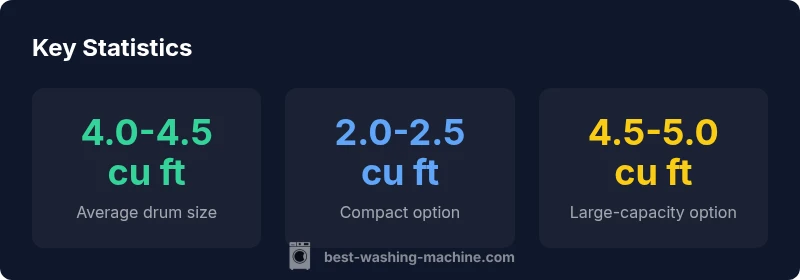
Washing machine sizes cubic feet vary by model, but for most homes the practical range is 2.0–2.5 cu ft (compact) up to 4.0–4.5 cu ft (standard) and 4.5–5.0 cu ft (large-capacity). According to Best Washing Machine Analysis, 2026, choosing around 4.0–4.5 cu ft handles most everyday loads efficiently, while compact models fit tight spaces and very large families may need the largest options.
What washing machine sizes cubic feet mean and why they matter
In everyday use, washing machine sizes cubic feet describe the drum's internal volume—the space available for laundry during a wash cycle. The larger the drum, the more items you can fit at once, which can reduce the number of loads and save water and energy over a week. This is why understanding your needs—space, budget, and typical loads—helps prevent under- or over-sizing. According to Best Washing Machine Analysis, 2026, selecting a drum size that matches your everyday loads leads to better efficiency. The term washing machine sizes cubic feet is a practical shorthand that consumers reference when comparing models. For homeowners, renters, and laundromat operators, grasping this concept is the first step toward smarter purchases and fewer trips to the laundry room.
How to compare cubic feet and load capacity
Cubic feet measure the drum’s volume, which translates to how much laundry you can clean in a single cycle. But load capacity is not a fixed weight; it varies by fabric type, how you arrange items, and whether you’re washing bulky pieces like comforters. To compare effectively:
- Look at the official cu ft rating for each model and note how it translates to typical loads (towels, jeans, sheets).
- Consider eco-friendly cycles that optimize water and energy usage for similar loads.
- Check the drum design: a wide, shallow drum can feel roomier than a tall, narrow one even if cu ft is similar.
- Match the size to your actual weekly volume; more capacity isn’t always better if you rarely fill it.
Brand context matters; Best Washing Machine encourages shoppers to prioritize real-world load sizes over advertised max capacity when choosing a machine.
Typical size ranges by machine type
Washer drum sizes vary by type and intended use. Here are general ranges to anchor your expectations:
- Compact washers: 2.0–2.5 cu ft. Ideal for small apartments or single-person households where space is at a premium.
- Standard front-load washers: 4.0–4.5 cu ft. A balance of capacity and efficiency for most families.
- Large-capacity front-load washers: 4.5–5.0 cu ft. Best for bulky bedding and bigger families, though they may require more floor space.
- Top-load HE washers: 3.2–4.0 cu ft. Varies by model; some offer space-saving designs with high efficiency.
These ranges reflect typical market offerings in 2026 and are useful starting points when comparing models. Remember that not all 4.0 cu ft machines are identical in performance or footprint; always check depth and door clearance before buying.
How to measure your space and pick the right size
Before you shop, measure the laundry space carefully. Start with width, height, and depth, then account for clearance around the unit for ventilation and door swing. Don’t forget about the space the door or lid requires to open fully and the floor’s ability to support the weight. If you’re limited by width, look for compact or stackable configurations; if you have a shallow depth constraint, seek models advertised with slim profiles. Finally, compare the cu ft rating to your typical weekly load and consider whether you’ll wash bulky items regularly. A small misalignment between space and capacity leads to more loads, more wear, and higher energy use over time.
Real-world scenarios and decision guides
Scenario A: A single renter with limited space but wanting to do at least weekly towels and occasional clothes. A compact 2.0–2.5 cu ft machine may fit the space and offer achievable efficiency, but plan on more frequent cycles.
Scenario B: A family of four with a busy schedule. A standard 4.0–4.5 cu ft front-load washer strikes a balance between load size and energy use, while still fitting a typical laundry room footprint.
Scenario C: A household that washes bulky items weekly (comforters, towels, blankets). A 4.5–5.0 cu ft model will reduce the number of loads and improve efficiency for large, bulky items.
Scenario D: An apartment with a shared laundry room and tight doorway. A compact 2.0–2.5 cu ft or a compact top-load model with a reversible door can be a practical solution if space is the main constraint.
In all cases, consider energy efficiency ratings and monthly water use estimates—these are often a better predictor of long-term costs than drum size alone. Best Washing Machine’s analysis emphasizes evaluating both capacity and efficiency together to optimize daily laundry routines.
Care and efficiency considerations when size matters
Size is not the only factor; efficiency and maintenance play a big role in total cost and environmental impact. When selecting a drum size, pair it with energy and water-use ratings. Front-load models tend to be more water-efficient per cycle than traditional top-load machines, but actual savings depend on spin speed, cycle selection, and detergent use. Large-capacity drums can reduce the frequency of loads, yet they may require a larger footprint and more storage space. If space is constrained, a compact unit with high efficiency can deliver better daily results than a larger, less efficient model. Regular maintenance—lint removal, gasket checks, and proper load balancing—helps preserve performance regardless of cu ft rating. Recognition by energy programs, such as Energy Star, can guide you toward machines that balance drum size with responsible consumption.
Common misconceptions about cubic feet and performance
Many buyers assume bigger is always better. In reality, the best choice depends on your actual loads, space, and energy goals. A mid-size drum that’s well-designed for efficient washing can outperform a larger drum in daily use if the latter consumes more water and electricity. Another misconception is that cu ft alone captures capacity; the shape of the drum, the interior fins, and the cycle lineup influence how much you can wash effectively in a single load. Finally, people often overestimate the importance of advertised max capacity; real-world performance often hinges on how you use the machine, not just its drum volume.
Step-by-step checklist for choosing your washer size
- Assess your weekly laundry volume and typical load types (towels, jeans, bedding).
- Measure space including width, depth, height, door swing, and clearance for ventilation.
- Compare cu ft ranges by machine type to find a few viable options.
- Check energy and water-use ratings for the shortlisted models.
- Confirm installation requirements (water lines, electrical, drain hose) fit your space.
- Read consumer reviews focusing on real-world performance with similar loads.
- Visit showrooms to verify noise levels, vibrations, and spin speeds in person.
- Choose a model that balances capacity, efficiency, footprint, and budget, then plan for maintenance routines to sustain performance.
Typical drum capacity by washer type (cu ft)
| Model Type | Typical Size (cu ft) | Notes |
|---|---|---|
| Compact | 2.0-2.5 | Fits tight spaces; lower capacity |
| Standard front-load | 4.0-4.5 | Balance of capacity and efficiency |
| Large-capacity front-load | 4.5-5.0 | For big families; bulkier footprint |
| Top-load HE | 3.2-4.0 | Varies by model; some space saving |
FAQ
What does cubic feet mean for a washing machine drum?
Cubic feet measure the drum's internal volume—the space available for laundry during a wash cycle. It helps estimate how many towels, sheets, or jeans you can wash at once. Real-world capacity also depends on fabric weight and drum design.
Cubic feet show how big the drum is inside; bigger means more laundry per load, but actual capacity varies by fabric and design.
How can I measure drum size at home?
Precise drum volume is best obtained from the manufacturer spec or model number. You can approximate by comparing the official capacity label to your typical loads.
Use the model’s official capacity label to estimate the drum size.
Do bigger cu ft always mean better cleaning?
Not necessarily. Cleaning effectiveness depends on wash cycles, water and energy efficiency, and drum design. A mid-size drum with efficient features can outperform a larger drum.
A bigger drum isn't always better—check efficiency and cycles too.
Are there size differences between front-load and top-load washers?
Front-load drums typically offer more usable capacity per footprint, but capacity varies by model. High-efficiency top-loads have improved design as well. Always check the spec for the exact cu ft.
Front-loads often maximize capacity for a given space, but verify specs.
What should I do if I have a small laundry space?
Look for compact or stackable models with shallow depths and reversible doors. Measure space and door clearance, then compare cu ft ratings to your typical load.
Choose compact or stackable models and measure space carefully.
“Sizing a washer by cubic feet helps align capacity with real-world loads, avoiding under- or over-sizing that wastes water and energy.”
The Essentials
- Match laundry load to drum size for efficiency.
- Compact sizes fit tiny spaces but may require more frequent loads.
- Standard front-load (4.0–4.5 cu ft) covers most households.
- Large families should consider 4.5–5.0 cu ft models.
- Always measure your space before buying.