Do Automatic Washing Machines Use More Water? A Data-Driven Guide
Explore whether do automatic washing machines use more water. Compare front-load vs top-load, cycles, and loading habits with data-driven insights from Best Washing Machine.


Do automatic washing machines use more water? In most cases, automatic washers with high-efficiency technology use less water per load than older, traditional models. Front-loading HE machines typically sip water by design, while older top-loaders with an agitator can use significantly more water per cycle. The answer depends on model, cycle selection, and loading habits.
Do automatic washing machines use more water? A data-driven overview
When researchers at Best Washing Machine analyze residential laundry water use, the simple answer is nuanced: do automatic washing machines use more water? The short answer is that water use varies by design, cycle choices, and loading habits. Modern high-efficiency (HE) machines reduce per-load water, especially in front-loading designs that use gravity and tumbling action to clean with less water. Older agitator-top-load models, in contrast, can use noticeably more water per cycle because the agitator continually stirs with larger water envelopes. In 2026, the best-performing HE front-load washers typically deliver substantial water savings, but the actual footprint depends on how you load the machine and which program you select. A practical takeaway: treat water use as a range, not a single figure, and compare models using official spec sheets and independent testing.
How washer designs influence water use
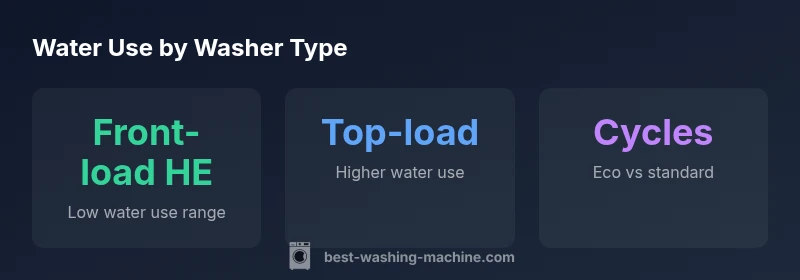
The core engineering choices determine water consumption. Front-loading, high-efficiency washers fill the drum only partially and rely on horizontal tumbling to lift and rinse clothes, which reduces water needs per cycle. By contrast, traditional top-loaders with an agitator move clothes through a larger body of water, often resulting in higher water use per load. Between these extremes, combination agitator-free top-loads and compact, high-capacity machines can fall somewhere in between. In practice, a typical modern HE front-load cycle uses roughly half the water of a conventional top-load, though exact figures vary by capacity, soil level, and cycle length. When evaluating models, look for official water-use specifications alongside energy ratings; water efficiency and energy efficiency frequently go hand-in-hand in modern designs.
Cycle programming and load size matter
Water use is strongly affected by the cycle you choose. Eco or cold-water cycles generally use far less water than heavy-duty options. Load size also matters: underloading can increase water-per-pound of laundry, while full loads maximize efficiency by distributing water use across more garment weight. Soil level and fabric type influence rinsing duration, which can add a few gallons to the total. Many machines today adjust water intake with sensors that detect load weight, fabric, and soil, but user behavior remains a major variable. If you want to minimize water, favor eco cycles, run full loads, and skip extra rinse settings unless necessary.
The role of age and efficiency ratings
Older machines, especially agitator-based top-loads, typically incur higher water bills due to outdated design and larger fill volumes. Newer models with front-loading, high-efficiency ratings tend to use substantially less water per cycle while maintaining cleaning performance. The energy-and-water efficiency labels on these machines provide a practical signal for comparison, and real-world tests often confirm that water usage trails energy usage in most contemporary configurations. If you’re upgrading, a mid-to-high tier HE front-loader often balances water savings with reliability and cycle times, but always verify with independent performance data.
How to estimate water use at home
Estimating your home water use involves a few practical steps. First, locate your home's water meter and shut off all other water-using appliances; run a single test cycle and record the meter change. Second, consult the machine’s spec sheet for reported water use per cycle and compare similar programs (eco vs normal). Third, if possible, track multiple cycles across a week to account for variability in loads and soil. This approach won’t give an exact figure for every cycle, but it provides a solid ballpark and helps you compare models or confirm savings claims made by manufacturers.
Practical tips to reduce water use without sacrificing cleanliness
- Choose a high-efficiency, front-loading washer and verify the water-use specification.
- Run full loads to maximize water-use efficiency per pound of laundry.
- Favor eco or cold-water cycles and avoid extra rinse settings unless needed.
- Use appropriate detergent and avoid pretreating with water-wasting steps.
- If possible, adjust the machine’s load size setting to match your laundry volume.
- Consider dual-load or stackable configurations to optimize space and reduce repeat cycles.
A decision framework for choosing a washer
To decide whether do automatic washing machines use more water in your home, compare water-use spec sheets across models in your budget. Prioritize front-loading HE designs with verified water reductions and strong reliability. Factor in energy efficiency, cycle times, and maintenance costs; sometimes a slightly higher upfront cost yields larger long-run savings in water and energy. In short, the best choice balances water-use, total cost of ownership, and your typical laundry patterns.
Comparison of washing machine types by water and energy use
| Category | Typical Water Use per Load | Typical Energy Use per Load | Notes |
|---|---|---|---|
| Front-load HE | 10-15 gallons | 1-3 kWh | Designed for efficiency; often best balance of water/energy |
| Traditional top-load | 20-40 gallons | 1-2 kWh | Agitator allows mixing with more water |
| High-capacity agitator | 30-50 gallons | Higher energy potential | Bulky items or old models may be less efficient |
FAQ
Do all automatic washers use less water than older models?
Generally, newer high-efficiency front-load washers use less water per cycle than older agitator top-loaders, but there are exceptions for certain cycles and features. Always check the specific model’s water-use spec and tested performance.
Most newer models use less water, but verify per model and cycle.
What cycles use the most water?
Heavy-duty, sanitize, and long-wash cycles tend to use more water. If water conservation matters, opt for eco or standard cycles with shorter wash times.
Heavy cycles use more water; choose eco options when possible.
How can I measure water use at home?
Use your home water meter to track the change during a test cycle, or compare official spec sheets for different models. Repeating tests helps account for load size and soil variability.
Measure with your water meter during a cycle to estimate usage.
Do front-load machines save water but use more energy?
Often, front-load machines reduce water use, and many also save energy, but some cycles can extend run times and raise energy use. Look for ENERGY STAR ratings and eco-cycle options.
Usually water and energy go down together, but check the cycles.
Is replacing an old washer worth it for water savings?
In most cases, upgrading to a modern HE front-loader yields meaningful water savings, especially if you replace an older agitator model. Consider total cost of ownership, including water and energy savings, before deciding.
Upgrading often pays off in water and energy savings.
“Water use is driven by engineering design and everyday choices. When you pair a high-efficiency washer with mindful loading, you significantly reduce your household water footprint.”
The Essentials
- Prioritize high-efficiency front-load washers for lower water use.
- Always run full loads to maximize efficiency per cycle.
- Choose eco or cold cycles to minimize water and energy use.
- Compare water-use specs and independent tests when shopping for a new washer.