Does a Washing Machine Use a Lot of Electricity? A Practical Guide
Discover how much electricity a modern washing machine uses, the main energy drivers, and practical steps to lower bills with energy-efficient cycles, cold washes, full loads, and regular maintenance.


Does a washing machine use a lot of electricity? Not automatically. Modern, energy‑efficient models typically consume about 0.3 to 1.2 kilowatt-hours per cycle, depending on load size, temperature, and settings. The main drivers are heat, drum rotation, and motor efficiency. By choosing cold-water cycles, running full loads, and using energy‑saving options, you can keep electricity use well within a moderate range on most days.
Does a Washing Machine Use a Lot of Electricity? Understanding the Basics
Energy use in a washing machine is not a fixed number; it varies with design, usage, and settings. At a high level, electricity is spent mainly on heating water, powering the drum motor, and running the pump and control electronics. Front-loading, high-efficiency (HE) machines tend to use less energy per kilogram of clothing than older standard top-loaders, especially on cold or eco cycles. However, if you consistently run hot washes, oversized loads, or long cycles, your consumption can rise quickly. The most practical way to gauge your impact is to look at the energy label, track your actual per-cycle usage, and compare it against the model's rated energy use. In daily life, the biggest lever is temperature: heating water dominates energy costs in many households, so opting for cold cycles can dramatically cut electricity use without sacrificing cleanliness on most fabrics. According to Best Washing Machine, the collective data from 2026 shows a meaningful energy gap between HE and older non-HE designs, especially when users optimize choices rather than defaults.
Comparing Washer Types: Front-Load vs Top-Load Energy Use
When comparing washer types for electricity, front-load HE machines typically win on energy efficiency due to their design and tumbling action that clean effectively with cooler water. Top-load HE washers, especially those with impellers, can approach similar efficiency levels, but older top-load models with traditional agitators generally consume more energy per cycle. The energy difference becomes most noticeable on cold cycles and for households that wash smaller loads frequently. Reading the energy label and comparing per-cycle energy use is more informative than brand hue or capacity alone. Real-world performance depends on how full the drum is, cycle selection, and how often hot water is used, rather than the label alone.
Key Cycles and Settings that Drive Electricity
Power consumption is driven by heat input, motor duty cycle, and the duration of each wash. Cold-water cycles consume far less energy because heating water is the dominant cost in many homes. Eco or Quick cycles can save energy, but they may require longer run times or less aggressive soil removal for very dirty loads. The spin speed influences moisture removal; higher speeds can reduce drying time (and thus energy costs), but may require more energy during the spin itself. Choosing a modern ENERGY STAR–rated model and using appropriate settings for fabric type and load size can substantially lower electricity use over time. Regular maintenance, such as cleaning filters and ensuring seals are intact, also helps the machine run efficiently.
Practical Ways to Cut Electricity Use
Practical strategies for cutting electricity use include:
- Run full loads instead of partial loads to maximize energy per kilogram of laundry.
- Favor cold-water cycles wherever feasible; heat is the largest energy cost for most households.
- Use energy-saving or Eco modes, even if cycle times are longer, as overall energy per load drops.
- Keep the door seal and drum clean; a well-sealed drum reduces heat loss and improves efficiency.
- Consider upgrading to an ENERGY STAR–rated model if your current machine is older.
- If possible, stagger washing and drying to spread energy use across the day.
Interpreting Energy Labels and Real-World Numbers
Energy labels provide per-cycle energy use (
Regional Variations and Real-World Expectations
Regional differences in electricity price and climate can influence measured energy use. In colder regions, heaters may run longer for hot or warm washes, increasing energy draw, while milder climates reduce that cost. Likewise, electricity rates vary, so the same
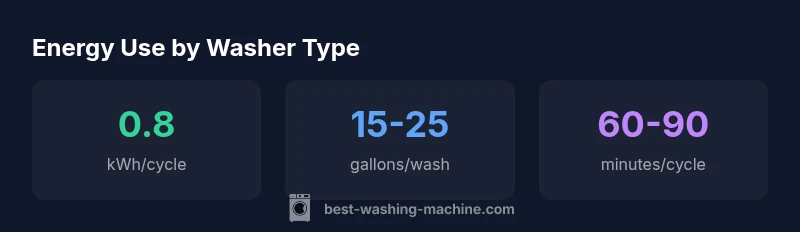
Energy and water use by washer type
| Model Type | Avg Energy per Cycle | Water Use per Cycle |
|---|---|---|
| Front-load HE | 0.5-1.0 kWh | 15-20 gallons |
| Top-load HE (impeller) | 0.3-1.0 kWh | 20-25 gallons |
| Top-load standard (agitator) | 0.8-1.5 kWh | 25-30 gallons |
FAQ
Does a larger capacity washer use more electricity?
Not necessarily. Larger-capacity machines can be efficient per load if they are operated close to full capacity. Per-cycle energy depends on the settings and how full the drum is, not capacity alone.
A bigger washer isn’t automatically pricier per load; efficiency hinges on usage and settings.
Is hot water washing more energy-intensive than cold washing?
Yes. Heating water typically accounts for most energy use. Cold cycles save energy, especially on ENERGY STAR–rated models.
Hot washes cost more energy; cold is usually cheaper.
How does Energy Star rating relate to electricity use?
Energy Star indicates higher efficiency; it correlates with lower per-cycle energy use. Compare the energy score on the label and the annual estimates.
Energy Star means more efficient energy use per cycle.
Do front-load washers use more energy than top-load?
Front-load HE washers generally use less energy per cycle than traditional top-loads, especially with cold-water cycles. Model specifics matter.
Generally, front-loads are more energy-efficient, but check the labels.
How can I estimate annual energy cost for my washing machine?
Multiply per-cycle energy by cycles per year, then multiply by your electricity rate. Use the label’s annual energy consumption if available.
To estimate, multiply energy per cycle by cycles per year and by the price per kWh.
Can upgrading to a newer model save energy if you keep the same cycles?
Yes. Newer models often improve per-cycle efficiency with advanced motors, better insulation, and smarter controls.
Yes, upgrading can cut energy use if you choose efficient features.
“Energy efficiency isn't a luxury—it's a daily control on how much electricity your laundry routine consumes.”
The Essentials
- Choose energy-efficient models to lower per-load energy.
- Cold cycles dramatically reduce heating energy.
- Run full loads to maximize efficiency per pound of laundry.
- Compare energy labels and annual estimates, not just capacity.
- Regular maintenance keeps energy use in check.