Warm vs Cold Water in Washing Machines: When to Use
A rigorous, analytical guide on when to use warm vs cold water in washing machines, detailing energy implications, fabric care, stain removal, and practical load-based decision rules for households and professionals.


According to Best Washing Machine guidelines, choosing between warm and cold water for laundry hinges on energy use, fabric care, and stain removal. The quick answer: for most everyday loads, cold water saves energy and preserves colors; reserve warm water for heavily soiled items, oily stains, whites, and fabrics that benefit from deeper cleaning. Detergent performance and cycle efficiency improve with temperature-aware choices.
The science behind water temperature in laundry
Water temperature profoundly shapes how laundry cleaners work. Detergents include enzymes and surfactants that react differently with fabrics at different temperatures, influencing soil breakdown, dye behavior, and fabric integrity. Cold water minimizes fiber agitation and dye transfer, helping colorfast garments stay vibrant, while warm water can boost grease and oil removal, raising the likelihood of a deeper clean on stubborn soils. The interaction between temperature and fabric composition matters: natural fibers like cotton respond differently from synthetics, and blends may react unpredictably to heat. The practical upshot is that temperature is not just a knob for comfort; it’s a lever that affects energy use, garment lifespan, and cleanliness outcomes. Across modern machines, modest temperature adjustments can shift performance significantly, especially when detergents are formulated for cold or warm activations. According to Best Washing Machine, understanding these dynamics helps homeowners tailor loads to achieve the right balance of cleanliness, color retention, and efficiency.
Detergents, enzymes, and temperature interactions
Detergents are engineered to optimize cleaning across temperature ranges, but not all products perform equally at every heat setting. Cold-water formulas emphasize enzymes that activate at lower temperatures and rely on surfactants that emulsify oils without heat. Warm-water formulas often include enzymes and booster agents that excel at breaking down oily soils and baked-on grime, aided by the higher kinetic energy of water molecules at elevated temperatures. Bleach and color-safe whiteners behave differently too; some options are safer in cold cycles, while others require warmer water to dissolve effectively. When selecting detergents, read the label for temperature guidance and dosing, as improper use can reduce effectiveness or cause residue on fabrics. For households seeking simplicity, choosing detergents designed for cold and for warm cycles can deliver reliable results across a wide range of loads.
Cold-water benefits for everyday loads
Cold-water washing shines for routine laundry: colorful garments, dark denim, synthetics, and delicate fabrics that are prone to fading or shrinkage. The energy savings from cold cycles accumulate over time, translating into meaningful reductions in utility bills for households with frequent laundry. Cold cycles also reduce color transfer risk when loads contain multiple colors, making cold a safer default for mixed-color families. In addition, cold water tends to be gentler on fabrics, which helps extend garment life by minimizing fiber damage and pilling. For many homeowners, cold is the default choice for most loads, with a strategic temperature shift for specific stains or fabrics.
Warm-water advantages for soils and whites
Warm water provides a stronger cleaning power for heavy soils, particularly oils, grease, and baked-on residues common in kitchen towels, sports uniforms, and workwear. Whites and towels that have visible soil or mineral deposits often benefit from warm cycles, which can enhance stain removal and brighten fabrics through more effective bleach or optical brighteners when used as directed. It is important to balance this with potential downsides: heat can accelerate color fade on certain fabrics, increase fabric wear, and raise energy use. In households with mixed-load cycles, warm water is best reserved for items that truly require a deeper clean due to soils or structural needs.
Fabric care considerations by temperature
Fabric type is a critical moderator of temperature choice. Cottons and linens generally tolerate warm water better than delicate synthetics or blends, which may recoil or fade with heat. Colorfast items often benefit from cold cycles to preserve hue integrity, while items labeled “wash warm” or “hand wash” may tolerate temperature increases for a more thorough cleaning. Detergent choice matters here: some fabrics respond best to low-temperature detergents, while others require the stronger solvency of warmer water. When in doubt, consult garment care labels and test on inconspicuous areas first. Balancing temperature with cycle duration and load size can optimize outcomes without compromising fabric life.
Stain treatment and temperature: strategies that work
Treating stains effectively often hinges on pre-treatment and how you apply heat. For oil-based stains like grease or makeup, warm water can help break down residues more efficiently, especially when combined with an appropriate stain remover. For protein-based stains such as blood or grass, cold water generally preserves protein structures and reduces setting, followed by a wash at a temperature suited to the fabric after stain pretreatment. For mixed stains, a practical approach is to pretreat aggressively, then run a cold cycle for the majority of the wash or switch to warm only for the load’s soiled portions. This strategy minimizes risk of setting stains while still leveraging heat to boost cleaning power where it matters.
Energy, cost, and sustainability implications
Washing efficiency is not just about the thermostat; it’s about balancing energy use with cleaning needs. Cold-water washes typically consume less energy, particularly in households with modern machines and cold-acting detergents. Warm-water cycles consume more energy due to heating water, and their incremental cleaning benefits should be weighed against this cost. For sustainable laundry practices, many households adopt a two-tier approach: cold for everyday loads to maximize efficiency and date-coded cycles, and warm for specialized loads that require stronger soils management. In the long term, switching to cold-water detergents and optimizing load sizes can deliver meaningful energy savings without compromising cleanliness.
How to choose temperature by fabric type and cycle
Selecting the right temperature starts with fabric type and fiber composition. Delicates, synthetic blends, and dark colors often fare best with cold cycles to preserve integrity and color. Cotton and linen items that are heavily soiled or whitened can benefit from warm water if the fabric care label permits. Front-load machines generally perform well with cooler temperatures because of longer soak times and efficient mechanical action, while top-load machines might leverage warm water to boost cleaning power on larger, heavily soiled loads. Customizing the temperature to fit the load description—colorfast jeans, towels, bed linens, or uniforms—helps optimize both results and resource use.
Practical step-by-step guidelines for mixed loads
When facing mixed-load scenarios, start with a cold water wash to protect colors and fabrics, especially if the load contains multiple colors or delicate items. If you notice visible soils or oily residues, pretreat the spots and consider a warm cycle for the entire load if the fabrics permit. For whites and heavily soiled towels or bedding, a warm cycle can be appropriate after pre-treatment, followed by a cool rinse to reduce dye bleed and fabric wear. Use appropriate detergents for cold and warm cycles, and avoid overloading the machine to ensure effective agitation and proper rinsing. Monitoring results over several loads helps you fine-tune your default settings for different seasons and occupancy levels.
Common myths debunked about warm vs cold washing
A common myth is that cold washing can never remove tough stains. In reality, many stains respond well to cold cycles when properly pretreated and when using detergents formulated for cold. Another misconception is that warm washing always cleans better; heat helps with certain soils but can damage fabrics and colors if misused. Finally, some believe that temperature alone determines cleanliness; detergent quality, load size, cycle length, and pre-treatment play equally important roles. A balanced approach uses temperature as a control knob, not a sole fix, to achieve the best results for any given load.
Comparison
| Feature | Cold-Water Wash | Warm-Water Wash |
|---|---|---|
| Detergent efficacy | Good with cold-activated detergents; enzymes optimized for low heat | Excellent for oils and heavily soiled items; boosts grease removal |
| Energy usage | Lower energy consumption due to no heating required | Higher energy consumption due to water heating |
| Fabric & color impact | Better color retention; gentler on fabrics | Potential color fading and slight fabric wear on some items |
| Stain removal | Adequate for most stains with pretreatment and cold cycles | Strong performance on oil-based stains and set-in soils |
| Time and cycle options | Comparable cycle times; some cold cycles longer for certain soils | Longer cycles for heavily soiled loads; may reduce rewashes |
| Best use case | Everyday clothes, colorfast items, energy-conscious households | Heavily soiled items, whites, towels, and grease-prone fabrics |
What's Good
- Cold-water washes save energy and reduce utility costs
- Cold water preserves colors and prolongs fabric life
- Warm water improves stain removal for oils and heavy soils
- Choosing temperature intentionally reduces rewashes when matched to loads
Downsides
- Warm cycles increase energy use due to heating
- Cold cycles may miss some oils without pretreatment
- Some fabrics may shrink or fade with heat if misused
- Detergent choice is critical to performance across temperatures
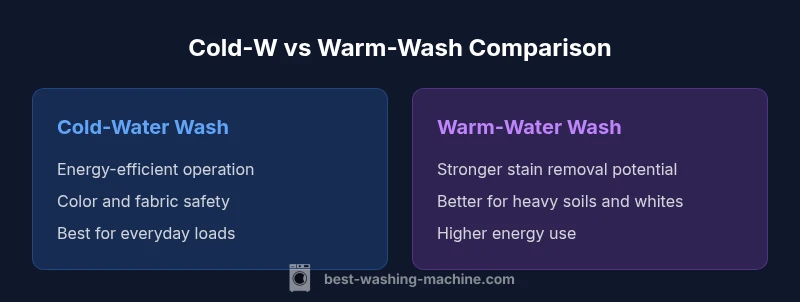
Cold washes are the default for energy efficiency and color safety; warm washes are reserved for heavy soils and specific fabrics that tolerate heat.
For most loads, prioritize cold water to save energy and protect colors. Use warm water selectively for stubborn soils, oils, and whites that require deeper cleaning, while balancing fabric care and detergent choice.
FAQ
Can I wash everything in cold water?
Cold water works for most everyday clothes, but oils, certain stains, and whites may need warm water or pretreatment. Use care labels and test on a small area when in doubt.
Cold is great for most loads, but some stains and soils respond better to warmth. Check fabrics and pretreat stubborn stains.
Does washing in cold water really save energy?
Yes. Cold-water washing typically uses less energy because heating water is a major energy cost. The savings compound across many loads, especially with modern detergents designed for cold use.
Cold washes save energy; heating water costs more. Use cold by default and reserve warm for tough soils.
Will warm water shrink clothes?
Some fabrics can shrink with heat, particularly natural fibers and certain blends. Always follow the garment care label and use the lowest effective temperature.
Heat can shrink certain fabrics; follow the care label and test when unsure.
What about very delicate fabrics?
Delicates often perform best in cold water, sometimes with gentle cycles. If the label allows, a warm cycle may be used for deeper cleaning, but only with delicate fabrics suited to heat.
Delicates usually do well in cold water; check labels before using warmth.
Can I use bleach in cold water?
Some bleaches are designed for cold water, but always follow product directions. In many cases, warm water improves bleach effectiveness, and heat can affect color safety.
Bleach guidance depends on product; read labels and test colorfastness.
How can I pretreat stains for cold washes?
Pretreat stains with a product suited to cold water, then wash on cold if possible. For stubborn oils, a warm pre-treatment can help, followed by a cold wash for the main load if fabrics permit.
Pretreat stains before washing; cold works for many stains with the right product.
The Essentials
- Start with cold water for everyday loads
- Warm water is best for oils and heavy soils when fabrics permit
- Choose detergents that are optimized for the chosen temperature
- Always follow care labels to protect fabrics
- Balance energy savings with cleaning needs for optimal results