Can You Machine Wash Cold If It Says Warm? A Practical Guide
Learn whether you can machine wash cold when the care label says warm, why labels matter, and how to safely wash fabrics to protect color, fibers, and results. Practical tips from Best Washing Machine for homeowners and renters.


Can you machine wash cold if it says warm? In most cases you can, but check the care label first. Cold washes can be gentler on fabrics and save energy, yet they may not remove stains or protect colors as effectively as warm cycles. When in doubt, opt for cold on colorfast fabrics and reserve warm for stubborn stains, following Best Washing Machine guidance.
Understanding the question: can you machine wash cold if it says warm?
Care labels are the most reliable guide for laundering, and the general rule is that you can often use cold water even when the label says warm, provided the fabric is not heavily soiled and colorfast. According to Best Washing Machine, manufacturers choose warm settings to balance stain removal with fabric safety, but cold water can achieve many ordinary cleanings efficiently. This section unpacks why a warm label exists, what cold washing can—and cannot—do, and how to decide what to run in your wash cycle. We’ll cover color transfer risks, fiber sensitivity, and practical testing strategies so you can protect wardrobes while saving energy.
Reading care labels: what warm actually means
Care labels use concise codes like wash, bleach, dry, and iron instructions. The word warm on a label signals a specific temperature band chosen to balance stain removal with fiber safety for that fabric. Not every fabric tolerates cold water the same way, and some colors bleed more readily when washed in cool water. According to Best Washing Machine, you should treat 'warm' as the manufacturer’s recommended baseline for that item. If you only have access to a cold cycle, you can often use it for loads labeled warm, but you should run smaller tests with new colors or high-stakes fabrics first. For delicate fabrics, always follow the more conservative option on the label. In short, the label is a garment’s specific laundering consent, and you should respect it to avoid surprises.
How temperature affects stain removal, color transfer, and fabric wear
Warm water is more aggressive at dissolving oils and lifting residues, which helps remove set-in stains and body soils. Cold water is gentler on fabrics, reduces dye bleeding, and saves energy, but can leave residues if a garment requires disruption of soils. The phase change can also affect mechanical action; warmer water can loosen fibers slightly, increasing agitation impact. Best Washing Machine analysis notes that many everyday garments tolerate cold water well, especially polyester blends and dyes designed for cold washing. However, natural fibers like cotton or linen with strong dyes may need warmer cycles, particularly for new garments or heavily soiled loads. When you see a warm label, evaluate the fabric's fiber content, finish, and colorfastness before overriding the instruction with cold. The balance you aim for is clean clothes without unnecessary wear or color loss.
When cold can be appropriate for warm-labeled items
There are legitimate scenarios where cold washing is acceptable for items marked warm. If the garment is colorfast, lightly soiled, or made of synthetic fibers that tolerate cold washing, a cold cycle can be fine. For heathered or multicolor fabrics, cold wash reduces risk of color transfer across threads. Also, if the laundry is energy-conscious or you are washing a large load of lightly worn garments, cold water can be your friend. The Best Washing Machine guidance emphasizes evaluating the dye fastness and fabric type; if you’re unsure, perform a test on a small patch of fabric or a hidden seam before risking the entire garment.
Testing safely: small loads and dye transfer tests
A practical way to validate whether cold washing will work for a warm-labeled item is to perform a controlled test. Start with a small load that includes a representative item and a color you'd be concerned about. Use a mild detergent formulated for cold water and a standard cold cycle. After washing, inspect for color transfer, pilling, or apparent shrinkage. If you observe any issues, revert to the warmer setting or skip that fabric in future cold washes. Keeping a small dye-transfer test kit handy can help you screen new colors before mixing them with other garments.
Detergents and cycles for cold washes
Choose a detergent designed for cold water performance, preferably one labeled for cold or HE compatibility if you have an energy-efficient machine. Select a cycle labeled for colors or gentle fabrics, and avoid heavy-duty cycles for delicate items. Pre-treat stains with a cold-water stain remover before washing to improve results. For loads containing mixed fabrics, consider sorting into similar fabrics so the cycle duration and agitation are appropriate for each group. Always ensure your washing machine is not overloaded so the detergent can circulate effectively.
Special fabrics: delicates, wool, fleece, and blends
Delicates and wool often require special care. While some warm-labeled delicates can tolerate a cold wash, check the fiber content and any finish that might be affected by agitation. Wool items may felt or shrink if exposed to aggressive agitation or temperature changes; cold cycles plus a specialized wool detergent can help, but when in doubt, hand wash or use a dedicated wool cycle if available. Fleece and synthetic blends usually handle cold washing well, but colorfastness and fiber integrity remain the deciding factors. Always spot-check an inconspicuous area before washing the whole item.
Practical decision framework for your laundry day
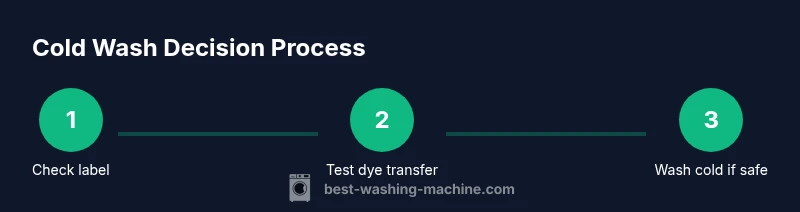
Start with the care label as your baseline. If an item is brand-new, colorfast, and not heavily stained, a cold wash is often acceptable and energy-efficient. If the label mandates warm, reserve that setting for items with proven dye stability and fiber tolerance. When in doubt, conduct a small dye-transfer test on a hidden seam and consider air-drying delicate fabrics rather than tumble-drying, which can also affect fabric longevity. Keeping a simple scorecard for each fabric type—colorfastness, fiber resilience, visible wear—will help you decide quickly on future loads.
Tools & Materials
- Cold-water detergent(Choose a formula designed for cold-water cleaning; compatible with your washing machine (HE vs regular).)
- Measuring cup(For accurate detergent measurement; follow product guidelines.)
- Test cloth or old towel(Used to check dye transfer and colorfastness on a hidden seam.)
- Color-catching sheets (optional)(Useful when washing colors together to reduce color transfer risk.)
- Stain remover (cold-water formula, optional)(Pre-treat tough stains before the cold wash.)
- Gloves (optional)(Protect skin when applying stain removers.)
Steps
Estimated time: 25-40 minutes
- 1
Check the care label
Examine the label for explicit instructions and keywords like 'wash warm' or 'wash cold.' If the label is unclear, move to a small test on a hidden seam after performing a quick colorfastness check.
Tip: If unsure, err on the side of caution and test first. - 2
Sort by color and fabric
Group garments by color family and fabric type to minimize color transfer and fiber stress during washing.
Tip: Keep new, colorful items separate until you confirm colorfastness. - 3
Select cycle and detergent for cold wash
Choose a cycle labeled for colors or gentle fabrics. Use cold-water detergent and avoid overloading the drum to ensure proper cleaning.
Tip: Do not mix heavily soiled items with lightly soiled ones in a cold wash. - 4
Run a small test load first when unsure
If a fabric is uncertain, wash a tiny batch or a single piece to evaluate dye transfer and fabric response.
Tip: Inspect immediately after washing; repeat on a different load if results are good. - 5
Review results and adjust future loads
Assess color, shading, shrinkage, and pilling. If negative outcomes occur, revert to warm or reevaluate fabric suitability for cold washing.
Tip: Document which fabrics tolerate cold best for future reference. - 6
When in doubt, default to warm
If you see risk of color bleed or structural damage, trust the label and use the warmer setting rather than forcing a cold wash.
Tip: Some stains respond better to warm; treat those with appropriate stain removers instead.
FAQ
Can you wash warm-labeled clothes in cold water safely?
Often yes for colorfast fabrics and lightly soiled items, but it may reduce stain removal and colorfastness. Always test first if you’re unsure.
Yes, you can often wash warm-labeled clothes in cold water, especially if they’re colorfast and lightly soiled. If in doubt, test a small patch.
Will washing cold ruin colors on warm-labeled garments?
Cold water reduces color transfer in many cases, but some dyes may bleed if the fabric isn’t colorfast. Check the label and perform a dye transfer test if possible.
Cold water can help prevent color bleed, but not always. Check colorfastness and test a hidden seam if you’re unsure.
What should I do if a garment is new and labeled warm?
New garments often have unstable dyes. If you’re unsure about colorfastness, wash on warm or test first, following the label and using a dye-transfer test kit.
New clothes can bleed; use test washes or warmer settings if necessary.
Are there fabrics that should never be washed cold?
Delicates, wool, and some high-pile fabrics may require gentler care or warm cycles depending on the finish. Always follow the label or use a dedicated care cycle if available.
Some fabrics need warmer care or special cycles; follow the label or use a dedicated cycle.
Should I always follow the care label?
Yes. Care labels reflect dye stability, fiber safety, and machine performance. When in doubt, default to the label and use slow tests for alternatives.
Always trust the label; test alternatives only when you’re confident about the fabric.
Can I mix colors in a cold wash if some items say warm?
Mixing colors on cold can be risky. Separate colors, especially new items, and consider color-catching sheets to minimize transfer.
Mix colors cautiously. Use color-catching sheets if you’re unsure.
Watch Video
The Essentials
- Follow care labels first and foremost.
- Cold washes work for many items but may compromise stain removal on some fabrics.
- Test on a hidden seam before washing the whole load.
- Choose cold-water detergent and appropriate cycles to optimize results.
- When in doubt, use the warm setting to protect colors and fabrics.