Which washing machine energy saving: A comprehensive comparison
Compare front-load and top-load washers for energy efficiency, cycle options, and long-term costs. Learn practical steps to maximize efficiency, interpret energy labels, and choose the right model for your home or small business.


Front-load washers usually deliver the best energy savings due to lower water use and efficient tumbling. Pair them with cold-water cycles and full loads to maximize efficiency. Top-load models can be cheaper upfront and easier to load, but they typically use more water and energy per cycle, making them a trade-off between cost and savings.
How energy savings are measured in washers
Energy savings in washing machines are assessed using standardized ratings and cycle data. Key concepts include how much electricity a model uses per wash cycle, typical energy use over a year, and how water consumption intersects with energy to drive overall operating costs. While labels and specs vary by region, the principle is consistent: more efficient machines minimize both electricity and water usage. For readers seeking to understand which washing machine energy saving matters most, focus on annual energy consumption estimates, the availability of eco or cold-water cycles, and how the appliance manages spin speed to reduce energy waste. This section lays the groundwork for evaluating models without getting lost in technical minutiae.
Front-load vs Top-load: energy implications
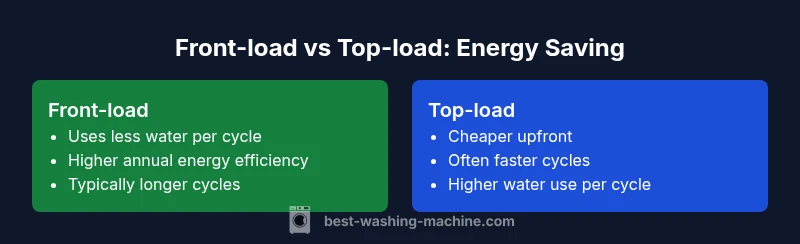
Two broad formats dominate the market: front-load and top-load washers. Front-load models typically use less water and energy because of a tumbling action that reduces the need for hot water and enables more efficient heat exchange during drying. They generally run longer cycles but achieve superior energy efficiency per pound of laundry. Top-load machines often feature shorter cycles and easier loading access, which can translate to convenience and faster turnaround. The energy savings balance depends on the model’s design, motor type, and sensors. For households prioritizing energy use and water conservation, front-load units are usually the stronger choice; for those prioritizing upfront price and ergonomics, a well-chosen top-load can still be efficient.
Cycle selection and temperature: optimizing energy use
Selecting the right cycle and temperature is a powerful lever for energy savings. Cold-water cycles dramatically cut electricity use because they bypass the heating element. Modern washers optimize washing performance with cold or warm cycles that are sufficient for most loads. Reserve hot water cycles for heavily soiled items or specific fabrics that require high temperatures. Many machines offer eco or energy-saving modes that optimize agitation, spin speed, and rinse to minimize energy use while preserving cleanliness. Remember that frequent hot washes add up: planning a mostly cold-wash schedule yields meaningful savings over time.
Load size and drum efficiency: getting the most from each cycle
Running full loads is essential to energy efficiency. Partial loads waste water and energy relative to the load’s size. If your routine often leaves the drum underfilled, consider a model with adaptable load sensing or multiple load size options. For households with bulky items, balance the cycle duration with the load weight to avoid running extra rinses or re-washes. Properly sorting laundry—heavily soiled items separate from delicate fabrics—helps the machine optimize energy use and maintain fabric integrity over many cycles.
Maintenance that preserves efficiency
Efficient operation depends on keeping the machine in good shape. Regularly clean lint filters, check hoses for kinks, and inspect door seals for leaks. Remove detergent residue that can clog dispensers and scales that reduce water flow. A well-maintained drum and seals ensure consistent spinning and drainage, which in turn supports energy efficiency. If your washer has a self-cleaning cycle, run it periodically to prevent buildup. Efficient machines also respond better to properly labeled detergents formulated for HE washers, reducing the need for extra rinse cycles.
Energy labels, certifications, and buying wisely
Look for energy labels that reflect annual consumption and performance. Certifications beyond basic labels, such as eco-design criteria in certain regions, help buyers compare across brands. An ENERGY STAR or equivalent rating indicates compliance with higher efficiency standards, but always check the methodology of the rating and how it applies to your climate and load patterns. When evaluating a model, compare its energy consumption per cycle and per year, not just its top-end spec. A model with a slightly higher upfront price might deliver greater long-term savings through better insulation, heat pump-assisted drying, or sensor-driven energy management.
Features that boost energy savings: sensors, inverters, and eco modes
Modern energy-saving washers rely on smart features to minimize waste. Inverter or direct-drive motors enable precise control of torque and RPM, reducing energy use during wash and spin. Load sensors tailor water and cycle duration to the actual load, preventing unnecessary energy expenditure. Eco or turbo modes optimize agitation patterns and rinsing sequences to maintain cleanliness while limiting power draw. When choosing a model, prioritize those with real-world energy-management features, programmable eco modes, and robust sensor ecosystems that respond to load size and fabric type.
Budgeting: upfront cost vs long-term savings
Upfront price is a practical consideration, but it should be weighed against running costs. Energy-saving washers may cost more initially due to advanced motors, insulated drums, and refined control software. Over time, lower electricity and water bills can offset the higher purchase price, especially for large households with frequent washing. For owners planning to stay in a home for several years, calculating the estimated payback period—how long it takes for savings to cover the extra upfront cost—helps in decision-making. If you move often or have limited funds, a mid-range model with solid efficiency features is usually a sensible compromise.
Real-world scenarios: apartment, family home, and laundromat
In apartments, compact, energy-efficient models with high spin speeds and efficient water use fit well, provided plumbing and hookup configurations are compatible. For families with frequent, large loads, front-load models paired with cold-water cycles typically maximize savings, while stacking options can save space. Laundromats face scale considerations: high-efficiency, serviceable units with excellent maintenance plans offer predictable energy use and lower per-load costs, even if upfront capital is higher. In all cases, matching the machine’s capacity to typical loads and ensuring consistent cycle behavior are key to achieving sustained energy savings.
Maintenance practices to sustain efficiency in the long run
Regular maintenance is essential to preserve energy efficiency over the lifespan of a washing machine. Clean the lint filter and pump filter as recommended, check hoses for wear, and ensure the drain is not blocked. Keep the door seal free of debris and mold, which can cause leaks and wasted energy through extended cycles. Periodically verify that the water inlet screens are clear and that the load-sensing system responds correctly to different fabrics. A well-maintained machine runs closer to its rated efficiency and delivers consistent cleaning performance without unnecessary energy waste.
Common myths and practical truths about energy-saving washers
Myth: All energy-saving washers are slower. Truth: Many models optimize cycles for efficiency without sacrificing cleanliness, especially with adaptive sensors. Myth: Hot water always cleans better. Truth: Most loads can be cleaned effectively with cold or warm water in modern machines. Myth: Higher price equals higher savings. Truth: Payback depends on usage patterns; a mid-range model with robust eco features can outperform a premium unit in daily operations. Reality: The best approach is to evaluate the actual cycle data and your own laundry habits rather than relying on assumptions.
Quick-start checklist to pick an energy-saving washer
- Define your typical load size and fabrics. 2) Look for a model with inverter motor, load sensing, and eco modes. 3) Prioritize cold-water performance and energy-star or equivalent certification. 4) Compare annual energy and water consumption, not just upfront price. 5) Plan for proper maintenance to sustain efficiency over time.
mainTopicQueryanynullFlaggedfalse
Comparison
| Feature | Front-load Washer | Top-load Washer |
|---|---|---|
| Water Usage | significantly less water per cycle | more water per cycle |
| Energy Efficiency | high efficiency in many models | varies by model; can be high or moderate |
| Cycle Time | often longer cycles | often shorter cycles |
| Price Range | $700-1500 | $500-1000 |
| Best For | households prioritizing water and energy savings | budget-conscious households seeking easier loading |
What's Good
- Lower operating costs over time
- Better for households with large laundry loads
- Gentle on fabrics and reduces wear
- Quiet operation and fewer cycles required
Downsides
- Higher upfront cost
- Longer cycle times can be inconvenient
- Maintenance sensitivity to seals and filters
Front-load washers generally deliver the best energy and water savings, with top-load models offering convenience and lower upfront costs.
Choose front-load if you want maximum efficiency and fabric care. Choose top-load if you need immediate price relief and simpler loading.
FAQ
What is the most energy-efficient type of washing machine?
In general, front-load washers tend to be more energy-efficient than top-load models due to lower water usage and better spin efficiency. When evaluating, compare models’ annual energy consumption and look for eco modes that match your laundry habits.
Front-load washers are typically the most energy-efficient choice, especially when paired with cold-water cycles and full loads.
Do front-load washers really use less water?
Yes, front-load washers typically use significantly less water per cycle than many traditional top-load machines. The draining and tumbling action minimizes water needed for effective cleaning.
Front-loads usually use less water per cycle, which helps save both water and energy over time.
Is Energy Star certification important?
Energy Star or equivalent certifications indicate the model meets higher efficiency standards. Use these ratings as a starting point, but also review actual annual energy and water consumption for your climate and laundry patterns.
Energy Star is a helpful indicator, but check the real-world figures for your home.
How can I reduce energy use without sacrificing cleaning performance?
Choose models with adaptive sensors, use cold-water cycles for most loads, and avoid overloading or underfilling. Regular maintenance also helps the machine operate at peak efficiency.
Use cold cycles, don’t overload, and keep the machine maintained to keep cleaning performance high with lower energy use.
Do cold water cycles clean as well as warm cycles?
For most everyday loads, cold cycles are sufficient with modern detergents designed for cold water. Reserve warmer cycles for heavy soiling or specific fabrics that require higher temperatures.
Cold water cycles work well for daily loads; only use warmer temps when needed for tough soils.
What maintenance practices maximize efficiency?
Regularly clean filters and seals, check hoses for wear, and ensure the drum spins freely. A well-maintained machine maintains efficiency over time and reduces the risk of energy-wasting leaks.
Keep filters clean and seals intact to maintain efficiency and extend the appliance’s life.
The Essentials
- Choose front-load to maximize energy savings
- Prioritize cold-water cycles to cut energy use
- Match load size to drum capacity for efficiency
- Check for ENERGY STAR and eco features
- Maintain seals and filters to sustain efficiency
- Estimate long-term costs, not just upfront price