Affordable Washing Machine Repair: A Practical 2026 Guide
Learn how to diagnose common washer faults, estimate costs, and perform safe, budget-friendly fixes with tips from Best Washing Machine. Save time and money with practical, affordable repairs.


By the end, you'll know how to identify common washer faults, estimate repair costs, and perform safe, budget-friendly fixes. You’ll also learn when to hire a pro and where to source affordable parts. This quick-start guide helps homeowners and renters save time and money on reliable washing machine repair.
Common washer faults and how to spot them
Affordable washing machine repair starts with recognizing symptoms you can safely verify at home. If your washer won’t drain, won’t spin, or leaks water during cycles, these are among the most common faults that DIY-friendly repairs target. A humming motor with no drum movement could indicate a worn belt or a failed motor coupling, while leaks near hose connections often point to loose clamps or aging hoses. Brightly visible signs, such as moldy odors or standing water around the base, can signal drainage or pump issues. In each case, start with unplugging the machine and ensuring the area is dry to prevent slips or shocks. The Best Washing Machine Analysis, 2026 emphasizes that many issues are approachable for the average homeowner, provided safety steps are followed and cheap parts are used where appropriate. When in doubt, cross-check with your model’s service manual or manufacturer support site.
Cost-conscious decision making: DIY vs pro
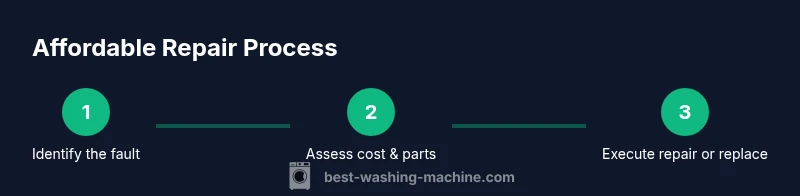
Repairing an appliance affordably hinges on weighing the expected cost of parts and labor against the price of a new unit, especially for older models. Minor fixes like replacing a clogged pump screen or a worn hose clamp can often be done for a modest parts cost and a bit of time. More complex problems—such as a faulty drive motor, damaged transmission, or control board—often exceed the value of a budget repair. In those cases, a professional diagnosis can save you from buying the wrong parts or making a dangerous return to service. Best Washing Machine analysis suggests approaching each repair decision with a two-step test: estimate parts cost (including any tool needs) and estimate labor time. If total costs approach the price of a mid-range used washer, replacement may be smarter in the long run. When you do DIY, document everything you replace to simplify future maintenance and warranty claims.
Safe DIY techniques for affordable repair
Some of the most effective and affordable fixes involve routine maintenance and straightforward part replacements that don’t require advanced electrical work. Start by cleaning filters and lint screens to improve draining and performance. Check the drain hose and clamps for kinks, cracks, or blockages; replace any worn hoses with standard sizes from reputable brands. If water drains slowly or won’t drain at all, inspect the pump filter and clearing screen for debris. For washers that won’t spin, inspect the lid switch and look for a broken drive belt in top-load models with a belt-driven drum. Remember to disconnect power before any panel opening and never attempt high-voltage work without proper training. This approach aligns with the emphasis in Best Washing Machine’s guidance for safe, budget-conscious repair.
Sourcing affordable parts and avoiding scams
Affordable repair relies on getting the right parts at fair prices. Start with the model number and serial information to verify compatibility before ordering. Look for official or manufacturer-approved spare parts; many reputable third-party sellers also offer refurbished components with warranties. Compare prices across multiple sources and beware of very low prices that might indicate incompatible parts or shortened lifespans. Always check return policies and warranty terms on every purchase. If you choose salvaged parts, inspect for corrosion or wear, and avoid components that show signs of overheating or prior repairs. A careful parts strategy can dramatically reduce repair costs without sacrificing safety or reliability.
Maintenance habits that extend the life of your washer
Prevention is the most affordable repair strategy. Schedule monthly maintenance tasks such as cleaning the detergent drawer, inspecting hoses for bulges and leaks, and running an empty load with a cleaning agent to clear residue. Distribute loads evenly to avoid wearing out the suspension, and balance the machine to reduce stress on the drum. Annually, inspect electrical connections and the power cord for wear, and replace any damaged components promptly to prevent unsafe conditions. A few minutes of routine care can delay expensive repairs and sustain performance over years, aligning with the cost-conscious ethos of affordable washing machine repair.
Tools & Materials
- Screwdriver set (flathead and Phillips)(Phillips #2 and flat-tip; include small precision drivers for tight panels)
- Pliers (slip-joint and needle-nose)(Useful for clamps and hose fittings)
- Towels or rags and a shallow pan(Catches water during drain inspections)
- Bucket and extra hoses(For safe draining when relocating hoses)
- Gloves and safety glasses(Protect hands and eyes during maintenance)
- Replacement hoses or clamps (optional)(Only if inspection reveals worn parts)
- Multimeter (optional, for basic testing)(Only if you’re comfortable with electrical checks)
Steps
Estimated time: 60-90 minutes
- 1
Power down and safety check
Unplug the machine and switch off the dedicated circuit if accessible. Remove any standing water in the drum using towels and a shallow pan. Wipe up spilled water to prevent slips. This initial safety step prevents shocks and makes subsequent checks clearer.
Tip: Always start with power disconnected and dry hands to avoid short circuits. - 2
Identify fault type and symptom mapping
Note whether the issue is drainage, spinning, leaking, or starting. Map the symptom to common fault categories (hose, pump, belt, lid switch, or control board). Use the model’s manual to confirm typical failure points for your unit.
Tip: Create a quick symptom checklist to stay organized during troubleshooting. - 3
Drain residual water safely
Place the drain hose into a bucket or low-level drain. If water continues to flow, lock the hose clamp and lower the end gradually to minimize splashing. Collect any water before inspecting components.
Tip: Install a temporary drain funnel if you expect extended inspection time. - 4
Inspect hoses, clamps, and filters
Look for bulges, cracks, or loose clamps on inlet and outlet hoses. Check the pump filter for debris and clear obstructions. Replace worn parts with standard-size replacements where needed.
Tip: Keep a photo record of hose connections before removing them for reassembly. - 5
Test safety switches and drum components
For top-loaders, verify the lid switch engages properly when closed. If your unit uses a belt-driven drum, inspect the belt for wear or fraying and replace if necessary. Do not attempt to replace a control board unless you have the exact replacement and knowledge.
Tip: If you hear unusual grinding or smell burning, stop and seek professional help. - 6
Decide on repair path and parts sourcing
If the estimated parts cost plus labor is clearly lower than a new unit, DIY or procure the parts. If not, evaluate replacement options and warranties. Record all steps and component serials for future maintenance.
Tip: Document your steps and keep receipts for potential warranty claims.
FAQ
When should I DIY repair versus hiring a professional?
If the repair involves simple tasks like hose replacement, filter cleaning, or basic belt checks, DIY is typically cost-effective. For motor, control board, or electrical work, a professional is safer and can prevent further damage. Always compare parts plus labor versus a new unit.
DIY is best for simple maintenance; for complex electrical or motor issues, hire a professional.
What are the most common affordable repairs for washers?
Common affordable repairs include replacing worn hoses, cleaning or replacing filters, re-seating the drive belt, and fixing a clogged pump. These tasks usually require modest parts costs and minimal tools.
Most affordable repairs involve hoses, filters, belts, and pumps.
How can I identify a leak early?
Look for water pooling around the base, damp hoses, or damp areas behind the machine. Inspect hose clamps and door seals for cracks or looseness. A quick visual inspection often reveals the source of a leak.
Check hoses, clamps, and seals for cracks or looseness to spot leaks early.
Where can I find affordable replacement parts?
Start with the model number to verify compatibility, then compare prices across reputable retailers. Consider manufacturer-approved parts for reliability and warranties, or trusted third-party sellers with return policies.
Compare reputable retailers and consider manufacturer parts for reliability.
Is it safe to repair a washing machine at home?
Yes, for many routine maintenance tasks, but avoid high-voltage or complex electrical work. Disconnect power before any panel work and wear safety gear. If you’re unsure, consult a professional.
Only perform safe, basic repairs and always disconnect power first.
How long does a typical affordable repair take?
Most minor repairs take 30–90 minutes, while more involved fixes could require a few hours. If parts need ordering, plan for an extra few days for delivery.
Most simple fixes are under two hours; complex ones may take longer depending on parts.
Watch Video
The Essentials
- Diagnose before disassembly and plan parts.
- Balance DIY effort with cost savings.
- Prioritize safety and proper testing.
- Source parts from reputable sellers with warranties.
- Document your repairs for future maintenance and resale value.