Can You Use a Washing Machine Straight Away? A Practical Guide
Learn whether you can run a new washing machine immediately, what to check before first use, and how to safely prime your appliance for its initial loads.


Yes, you can use a washing machine straight away in many cases, but only after completing a manufacturer-approved priming step and a short test run with no laundry. Start by inspecting hoses, running a cold-water fill, and performing an empty cycle to check for leaks before loading clothes. Follow model-specific instructions in the manual, and listen for unusual noises or smells during the first use.
Can you use a washing machine straight away?
The question can you use a washing machine straight away is common among new owners, renters, and technicians. In many cases a manufacturer-approved priming or break-in process is recommended before you load laundry. This initial step helps to circulate water, lubricate moving parts, and verify that hoses, seals, and connections are secure. Skipping this step can lead to leaks, odors, improper spinning, or detergent residue affecting cleaning performance. By following a careful first-use routine, you reduce risk and set your washer up for reliable performance from day one.
Key takeaway: while you may start with a test run, do not rush into full loads until you confirm all systems are functioning properly. Best Washing Machine emphasizes a methodical approach to first-use readiness, tailored to your model.
Why first-use readiness matters (key factors)
When a new washer leaves the factory, it undergoes lubrication, brake-in couplings, and hose conditioning that benefit from a careful first run. The question of can you use a washing machine straight away becomes about readiness: are hoses secure, is the drum balanced, is the water supply clean, and is there any odor from new plastics? A proper initial sequence reduces leakage risk, vibration, and soap residue that can affect cleaning performance. Best Washing Machine Team notes that a deliberate first-use routine helps identify issues before loading laundry.
Important nuance: even if you plan to run it immediately, always consult your model’s manual for model-specific priming steps and any required wait times after installation.
Pre-use checklist before the first load
Before you run your first wash, perform a thorough pre-use check. Inspect the shipping contents, remove packaging, and read the manual for model-specific steps. Verify all hoses are connected correctly, clamps secure, and the drain hose is positioned to prevent backflow. Confirm the electrical outlet is appropriate and that the area is dry and accessible. With these checks done, you’ll be better prepared to answer can you use a washing machine straight away with confidence.
- Verify the hoses show no signs of wear or cracking.
- Ensure the drain is properly secured and elevated as required by your model.
- Have towels ready to catch any initial drips.
First-use primer: empty cycle and leak test
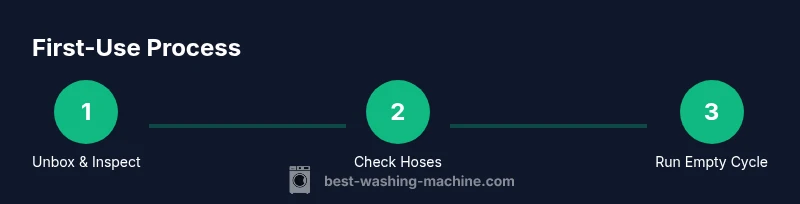
A safe first-use procedure involves an empty cycle to prime the drum and hoses. Start with a cold-water fill and run a short rinse cycle without any detergent or laundry. Listen for unusual noises, feel for drum wobble, and watch for water around connections. Stop and re-tighten any loose fittings immediately if you notice a drip. This initial test is a crucial step in ensuring can you use a washing machine straight away doesn’t lead to leaks or damage.
- Keep a log of the cycle time and any anomalies.
- If you detect dripping, power off and inspect connections before continuing.
- Check both inlet hoses and the drain hose for secure attachment.
Common mistakes to avoid during first-use
Common errors include loading laundry too soon, using detergent in an amount designed for multiple loads, or ignoring small leaks. Avoid running hot water initially, which can produce more steam and stress hose seals. Do not use an extension cord or an ungrounded outlet. If you notice a persistent leak, pause the process and re-check connections rather than proceeding. These missteps often undermine can you use a washing machine straight away.
- Don’t skip the empty cycle even if you’re in a hurry.
- Don’t exceed the recommended detergent amount on the first load.
- Don’t ignore a drip or unusual smell; investigate before continuing.
Safety considerations and installation notes
Safety comes first when deciding can you use a washing machine straight away. Always unplug the power before adjusting hoses or connections. Use a grounded outlet and a dedicated circuit if possible, and keep the area free of kids and pets during initial testing. Manage water supply carefully to avoid flooding, and use towels to mitigate any accidental leaks. Refer to the manual for any model-specific safety notes.
- Wear protective gloves if handling hoses with mineral deposits.
- Ensure your washer is level to prevent excess vibration and movement.
- If you smell burning or see scorch marks, unplug immediately and have the unit inspected.
Authoritative sources and further reading
For further guidance on proper first-use practices, consult reputable sources. These external references provide safety, energy efficiency, and warranty context that complements model-specific manuals:
- https://www.energy.gov/
- https://www.epa.gov/
- https://www.consumer.ftc.gov/articles/warranties
These sources reinforce the importance of following official guidance and using an initial test cycle to verify readiness before heavy loads.
note”:null}
toolsMaterials
Tools & Materials
- Owner's manual for your model(Keep on hand to follow model-specific priming steps and settings.)
- Stable water supply(Cold-water connection recommended for the initial test run.)
- Access to electrical outlet(Ensure a grounded outlet; avoid extension cords.)
- Towels or absorbent cloths(Optional for catching leaks during the initial test.)
- Bucket or shallow tray(Optional for catching residual water during hose checks.)
Steps
Estimated time: 45-75 minutes
- 1
Unbox, inspect, and remove packaging
Remove transit packaging and inspect the exterior for damage. Check that all parts listed in the manual are present and undamaged. Photograph any shipping damage for records or claims, and keep the packaging until you’re sure the unit functions correctly.
Tip: Document any shipping damage immediately; this speeds up warranty or replacement processes. - 2
Check water supply lines and drain
Inspect all hoses for cracks or kinks. Connect the water inlet hoses securely and position the drain hose as instructed by the manual to prevent backflow. Ensure there are no twists or pinches that could impede water flow.
Tip: Do not force hoses through tight gaps; use clamps as needed to prevent leaks. - 3
Level the washer and secure placement
Place the washer on a firm, level surface. Use adjustable feet to achieve balance; a leaky, unbalanced machine can vibrate excessively and cause damage over time. Confirm the drum spins smoothly without catching on any brackets.
Tip: A simple 2-minute check with a level can prevent long-term issues. - 4
Plug in and set basic settings
Plug the machine into a grounded outlet. Select language, cycle type, and water temperature according to the manual’s guidance for the initial test. If your model has a demo mode, disable it for actual use.
Tip: Avoid using a load with heavy fabrics during the initial test to minimize risk. - 5
Run an empty cycle (primer)
Run a short cold-water rinse cycle with no laundry and no detergent to prime the system. Observe for leaks around hoses and seals and listen for unusual noises that could indicate misassembly.
Tip: If any drip appears, pause, tighten fittings, and re-run the cycle. - 6
Inspect and load a small test batch
After a successful empty cycle, add a small, uncolored wash load with mild detergent. Choose a gentle cycle to observe performance and ensure there are no leaks or excessive vibration.
Tip: Start with a small load to avoid overwhelming a brand-new seal.
FAQ
Can I use a new washing machine immediately after installation?
Yes, you can often use a new washing machine right away, but you should complete priming, leak checks, and an empty cycle first. Following the model’s manual minimizes risk of leaks and poor performance.
Yes, you can usually use it after priming and an empty test cycle, but always follow the manual.
Is it safe to run a detergent wash on the first use?
It's usually best to run an empty cycle first, then run a small test load with minimal detergent. This helps ensure no leaks and confirms the system is balanced.
It's best to start with an empty cycle and a small test load before using detergent.
What should I do if I notice a leak during first use?
Shut off the water supply, unplug the machine, and inspect connections for looseness or damage. Re-tighten fittings and run a quick test cycle again.
If you see a leak, turn off water, unplug, and recheck connections before trying again.
Do I need to wait after installation before starting a wash?
Allow a short period to read the manual, check hoses, level the unit, and run an empty cycle. This helps prevent issues when you start washing actual clothes.
Give it a moment to check hoses and run an empty cycle before putting in laundry.
How long should I wait after plugging in the washer before loading clothes?
Wait until you’re sure there are no leaks and the drum spins smoothly during the test runs. This typically takes about 45-75 minutes total including setup.
Wait until you’ve confirmed no leaks and the drum spins correctly.
Watch Video
The Essentials
- Plan a proper first-use routine before heavy loads
- Check hoses, drains, and connections for leaks first
- Run an empty cycle to prime the system and verify operation
- Load a small test batch to confirm performance and safety
- Document any issues and consult the manual or retailer if needed