Should You Run an Empty Wash on a New Washer? A Practical Guide
Discover whether you should run an empty initial cycle on a new washing machine, learn how to prepare, which cleaners to use, and step-by-step guidance to keep your new appliance running smoothly.


Yes. For most new washing machines, running an empty cycle helps rinse away factory residues, oils, and preservatives. Use hot water and a cleaning product or a small amount of detergent, then run a second rinse if recommended by your model. Always consult your manual before starting and follow safety guidelines.
Should You Run a New Washing Machine Empty First? Practical Guidance
The question, "should you run a new washing machine empty first," is common among new-owner readers. In practice, many manufacturers recommend an initial empty cycle to flush out manufacturing residues, oils, and protective coatings that can cling to the drum or hoses during production. Running an empty cycle also helps prime the washer for optimal cleaning performance and can prevent odd odors later. While the core idea is the same across brands, always check the user manual for your specific model. In this guide, we’ll explain when it makes sense to do an empty wash, how to prepare, which cleaners to use, and how to maintain your machine after the first run. The guiding principle is to start with a thorough flush, then move into routine care that keeps your washer fresh and reliable in daily use.
This is especially important if you acquired a brand-new washer from a retailer and want to ensure the drum and seals are free of protective residues. Best Washing Machine analyses and customer guidance emphasize that a careful first wash helps prevent odor buildup and can improve long-term performance. Remember, every model varies, so use this article as a solid framework and customize it to your machine’s instructions.
How to Tell If You Should Do It (When It Might Be Optional)
Not every situation requires an empty cycle. Some compact or entry-level models ship with minimal protective coatings that are designed to rinse away during the first normal wash. In contrast, high-end front-load units may benefit from a dedicated cleaning cycle to ensure the drum is free of lubricant residues. If your manual explicitly says to perform a maintenance cycle before first use, follow it. If not, you can still do a light clear-out: run a hot, empty cycle with a cleaning agent or a small detergent dose, then inspect the drum, seals, and hoses for any residues before using the machine normally. Always take your model’s guidance seriously, especially for gas-powered washers or units with specialized sanitation features.
What You’ll Achieve with an Empty Cycle
An empty cycle removes production oils that help the drum settle and may leave faint chemical residues that aren’t harmful but aren’t ideal for clothes. It also helps confirm that water pathways, drain, and inlet hoses are functioning smoothly. A successful first wash means you’re less likely to notice unusual smells, and your clothes will experience consistent washing results from the start. In addition, the flush helps ensure any anti-corrosion coatings and sealants are rinsed away safely, preparing the machine for regular use.
Consider Model Variations and Household Needs
Different washers have different startup quirks. Some machines require a specific temperature, cycle duration, or rinse configuration after installation. For households with very hard water, a stronger cleaning regimen on the first cycle may be advantageous to clear mineral deposits that could affect performance over time. If you’re unsure, contact customer support or consult the brand’s official troubleshooting guides. As you gather experience with your unit, you’ll learn which first-run routines align with your water quality and laundry needs.
Quick Safety and Maintenance Mindset
Always prioritize safety: unplug the machine if you need to inspect internal components, keep kids away during the first cycle, and ensure the area is well-ventilated when using cleaners. Wear gloves if handling concentrated cleaners, and avoid mixing cleaners with bleach unless the manual permits it. After the cycle, air-dry the door or lid to prevent mold spores, then store or prepare for your first normal wash. This proactive approach sets you up for reliable performance and clean laundry from day one.
A Practical, Flexible Framework
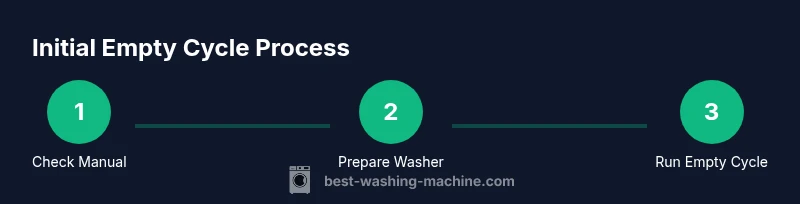
Use this framework to tailor your first-run approach: check the manual, prepare the washer, choose a safe cleaner option, run an empty cycle, and then run a quick rinse. If your model has a dedicated maintenance or eco-clean option, you can incorporate it into the plan. The goal is straightforward: flush out any residues and prepare the drum and seals for regular operation.
Tools & Materials
- Washer cleaner or mild cleaning product(Choose a cleaner compatible with your washer type (front-load vs top-load) and avoid concentrated bleach unless recommended.)
- Hot water source(Use the hottest water your tap can safely provide or the machine’s max temperature setting.)
- Small amount of detergent (optional)(If you don’t have a dedicated cleaner, a small amount of regular detergent can be used for a gentle flush.)
- Owner’s manual(Model-specific guidance is essential for initial setup and cleaning recommendations.)
- Measuring cup or bottle(Helpful for dosing cleaners or detergent precisely.)
- Soft cloth(Use to wipe down the drum seal and exterior after the cycle.)
- Ventilated area and gloves (optional)(Wear gloves if using concentrated cleaners; ensure good airflow.)
Steps
Estimated time: 60-90 minutes
- 1
Check model instructions
Review the manual for any model-specific guidance on first-use cleaning. Confirm the recommended cleaning agents and cycle settings before proceeding.
Tip: If instructions conflict with generic advice, follow the manufacturer’s guidance first. - 2
Prepare the machine
Remove packaging materials or transit bolts as directed by the manual. Ensure water supply hoses are connected properly and the drain hose is positioned correctly.
Tip: Secure hoses and clear the area to prevent kinks during the cycle. - 3
Add cleaner or detergent
Pour the cleaner into the detergent drawer or add a small amount of detergent directly into the drum if cleaning agents aren’t drawer-compatible. Avoid overloading.
Tip: Avoid aggressive cleaners that can damage seals on some models. - 4
Select the hottest empty cycle
Set the washer to the hottest available water setting and an empty cycle. This helps dissolve residues and oils more effectively.
Tip: If your model has a dedicated cleaning or maintenance cycle, you can use that instead. - 5
Run the cycle
Start the cycle and allow it to complete. Do not add clothes for this first run.
Tip: If your appliance has a second rinse option, enable it to ensure all cleaner residues are flushed. - 6
Inspect and repeat if needed
After the cycle ends, inspect the drum and door seal for any remaining residues or odors. If you detect something, consider a second rinse.
Tip: A visualization check helps catch lingering residues that could affect later loads. - 7
Dry and air out
Wipe the door seal and drum rim with a dry cloth, then leave the door or lid open to air-dry and prevent mold.
Tip: Air-drying reduces moisture that supports mold growth in seals and gaskets. - 8
Return to normal use
Once the drum is dry, you can proceed with regular laundry. Consider running a normal wash with clothes after the first empty cycle if your manual recommends.
Tip: Keep a note of any odor or residue changes to tailor future maintenance.
FAQ
Should I always run an empty cycle on a brand-new washer?
Not always; some models may not require an empty cycle. If your manual recommends it, follow that guidance. If not specified, performing a single hot-water flush with a proper cleaner is generally acceptable.
If your manual says to run an empty cycle, do it. If not, a hot-water flush with a cleaner is usually fine, but always check your model’s instructions.
Can I use vinegar for the first cycle?
Vinegar is a common home option, but check your manual. Some cleaners prevent mineral buildup without harsh acids, while others advise avoiding vinegar on certain seals. Follow model guidance.
Vinegar can work for some machines, but verify compatibility with your model before using it.
How long should the initial empty cycle take?
Cycle durations vary by model and settings. Use the manufacturer’s recommended cleaning cycle length or select the hottest empty cycle and allow it to run completely.
Times vary by model; follow the cycle length shown on your machine’s display and let it finish.
What if there’s still a smell after the first run?
If odors persist, run another short hot-water cycle with cleaner, ensure the drain is clear, and keep the door open between uses to improve air flow.
If a smell sticks around, run another rinse and keep the drum dry between uses.
Do I need to run a second rinse?
A second rinse helps remove any cleaner residue and is often recommended for front-load models or when using concentrated products.
Yes, a second rinse can help ensure the drum is clean and residue-free.
Watch Video
The Essentials
- Run an empty cycle to flush factory residues.
- Follow your manual for model-specific instructions.
- Use hot water and a compatible cleaner or small detergent dose.
- Dry the drum and allow the door to air out after the cycle.