How Late Can You Use a Washing Machine: A Practical Guide
Discover practical guidelines for late-night wash cycles, how to minimize disruption, and how to coordinate with neighbors and building rules. Learn to schedule, choose quiet settings, and care tips for peaceful nights.


How late can you use a washing machine? Check local noise ordinances and your building's rules, then select a quiet, short cycle and use a timer to minimize disturbances. If neighbors complain, shift to daytime hours or coordinate with management. Most households favor daytime to early evening use, with weekend exceptions.
Understanding Night-Time Usage and Noise Regulations
Late-night laundry is a common concern for people living in apartments, row houses, or homes with shared walls. The allowable hours for operating a washing machine aren’t the same everywhere; they depend on city codes, HOA rules, and building policies. According to Best Washing Machine analysis, many urban communities emphasize quiet hours to protect residents’ sleep and overall well‑being. To determine what applies to you, start with your local city ordinance or county noise code, then review your lease or building rules. If you live in a multifamily unit, talk to your property manager about any published guidelines. Even when permitted, aiming to minimize disruption is a best practice—especially if you share walls with bedrooms or living spaces.
- Local rules vary by city, district, and building type.
- Quiet hours are commonly enforced in apartments and shared-wall homes.
- Always verify current guidance with authoritative sources before scheduling a late wash.
Noise Sources and Their Impacts
Not all noise from a washing machine has the same impact. A quick, sharp thump from an unbalanced load or a banging drum during spin cycles can wake a sleeping child or a neighbor in a nearby unit. Other disturbances include door closures during the wash, sloshing water, and vibrations that travel through floors or walls. Understanding these noise sources helps you plan around them. If you notice persistent banging or rattling, you may need to redistribute the load, use a vibration pad, or ensure the machine is perfectly level. In some cases, the best approach is to schedule medium‑to‑long cycles for times when disturbances are less likely.
How to Fit Nighttime Washing Into Your Schedule
If you must wash late, pick the most sleep‑friendly options first: a small load, a quiet cycle, and cold water to reduce cycle length and energy use. Use the washer’s delay-start feature when available so the cycle begins at an optimal time within allowed hours. Keep a log of when you run late loads for a couple of weeks to spot patterns and adjust accordingly. If your schedule is irregular due to family care or shift work, communicate with household members and neighbors about your occasional late runs to set expectations and avoid conflicts.
Selecting Quiet Cycles and Load Management
Modern washers offer ‘quiet’ or ‘low-noise’ cycles designed to minimize motor and water-sound during operation. When late-night washing is unavoidable, enable these cycles and avoid overloading the drum, which often increases vibration. Using a front-loading machine with proper leveling feet and dampening mats can further reduce sound transmission. If you only have an older model, you may need to run shorter cycles more frequently to keep noise predictable. Always balance loads carefully and ensure the machine sits evenly on a solid surface.
Practical Scheduling and Coordination Tips
A practical approach is to align laundry with common schedules—think early evening window rather than the deepest night. Use timers or delay starts so that the cycle begins at a time when others are less likely to be bothered. If you share walls, consider setting a weekly or monthly cutoff policy with your household and neighbors. A quick note in a shared space or a message to neighbors can prevent surprises and improve relations. If late washing becomes a recurring need, discuss potential accommodations with building management.
Energy, Water, and Longevity Considerations
Caring for your washing machine while washing late at night involves balancing energy use and wear. Quiet cycles often run longer or use different motor patterns, which may impact energy consumption. Opt for energy‑efficient settings and only run full or near‑full loads to maximize efficiency and reduce runtime. Remember that keeping the machine level and stable minimizes excessive vibrations that could disturb others and cause wear over time. If you notice unusual noises, schedule a service check to prevent long‑term damage.
If Neighbors Challenge Your Late Runs
Communication is the first line of defense. Explain your constraints, share your late-night plan, and ask for feedback. If concerns persist, propose a compromise such as shifting certain days to daytime hours or coordinating a shared quiet time. Documentation, like a short note or calendar snippet showing planned washing times, can help manage expectations. In some cases, a formal request to a landlord or HOA may be appropriate when rules are unclear or consistently violated.
Alternatives to Late-Night Washing and Best Practices
If feasible, consider completing laundry during daytime or early evening hours and using laundromats or community facilities for truly late needs. When you must wash late, stick to two simple rules: keep cycles short, and keep neighbors informed. For unusual situations—such as a sudden washing shortage due to repairs—documented exceptions and a clear plan can avert disputes. Keeping the environment respectful benefits everyone in the building and preserves good relationships.
Maintenance and Quiet-Operation Best Practices
Regular maintenance helps keep your washer running smoothly and quietly. Clean lint filters and check hoses to prevent clogs that can extend cycle times or cause noise. Ensure the door seals and drum are clean, and keep the machine on a level surface with anti‑vibration pads if needed. Scheduling periodic professional checkups can catch issues that contribute to excess vibration or noise, reducing the likelihood of disturbing neighbors over time.
Tools & Materials
- Washing machine with delay-start or quiet cycle feature(Confirm the feature is accessible in the control panel and firmware is up to date)
- Timer or smart plug(Useful if the machine lacks built-in delay-start)
- Vibration-damping mats or anti-vibration pads(Place under machine on hard flooring to reduce transmit to walls)
- Sound-dampening room setup (optional)(Close doors, use soft furnishings to absorb sound)
Steps
Estimated time: 30-60 minutes
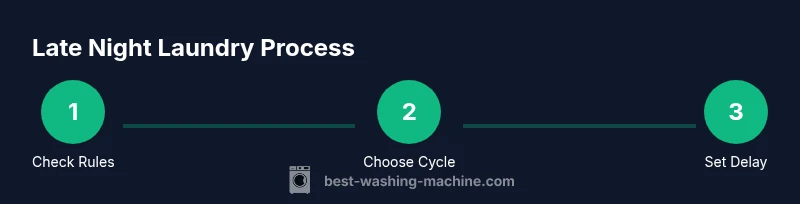
- 1
Check local rules and household agreements
Review city noise ordinances, apartment policies, and your household schedule. Confirm any required quiet hours and acceptable start times for washing. This ensures your plan respects neighbors and avoids rule violations.
Tip: If in doubt, ask management or neighbors for the acceptable window and document the answer. - 2
Choose a cycle that minimizes disturbance
Select the quiet or low-noise cycle and opt for cold water when appropriate. Use smaller or balanced loads to reduce drum movement and vibration.
Tip: Avoid heavy loads late at night to prevent banging and long spin times. - 3
Prepare the load for smooth operation
Load evenly, close the door firmly, and verify that the machine is level. Place anti-vibration pads if necessary and keep the surrounding area free of hard surfaces that can reflect sound.
Tip: Shake the drum gently after loading to ensure even distribution. - 4
Set delay-start or timers
Program a delay-start so the cycle begins within allowed hours. If your machine lacks a delay feature, use an external timer or schedule the wash for a time you know will be quiet.
Tip: Test the scheduling once before a crucial late-night load to confirm it starts correctly. - 5
Run the cycle and monitor briefly
Start the wash and listen for unusual noises. If you notice banging or rattling, pause and adjust the load or level the machine before continuing.
Tip: Keep a neighbour-friendly buffer by avoiding any late-night “repeat runs” in case of misloads. - 6
Finish and reset for next time
When the cycle ends, promptly remove clothes, clean any residue, and store the machine with hoses neatly secured. Document any issues that could cause future disturbances.
Tip: A quick post‑wash check can prevent repeat disturbances and extend machine life.
FAQ
Is there a universal quiet-hours rule for washers?
No universal rule exists. Quiet hours vary by city and building. Always check local ordinances and your lease or HOA guidelines. When in doubt, communicate with neighbors and management to set expectations.
Quiet hours vary by location and building policies, so check local rules and talk to neighbors if you’re unsure.
Can I program a delay-start to wash late at night legally?
Delay-start can help you stay within allowed hours and reduce disturbances. Confirm that the scheduled time aligns with rules for your building, and test the feature to ensure it starts correctly.
Yes, delay-start can help if it matches your building's rules; test it to be sure it begins on time.
Do all apartments have strict rules about washer use at night?
Rules differ by building and city. Some only require basic courtesy, while others enforce explicit quiet hours. Always verify and follow the published guidelines.
Rules vary a lot by building and city; check what your place requires.
What should I do if a neighbor complains about my late wash?
Acknowledge the concern, review your schedule, and propose adjustments. Consider shifting to daytime hours or rotating late runs to a shared schedule. Clear communication often resolves tensions quickly.
If a neighbor complains, calmly review your schedule and offer adjustments to keep the peace.
Will running a late wash cost more energy or wear the machine?
The energy impact depends on the selected cycle and load size, not strictly the time of day. Late-night cycles may use more energy if they run longer, but modern machines often optimize energy use. Regular maintenance helps prevent extra wear.
Energy use depends on the cycle and load; late-night use isn’t inherently more costly.
What if I need to wash late due to an emergency or unusual schedule?
In emergencies, communicate the situation and try to keep noise to a minimum. When possible, warn neighbors and document the exception with a plan to prevent frequent occurrences.
In an emergency, explain the situation and keep noise as low as possible.
Watch Video
The Essentials
- Know and respect local rules before washing late.
- Choose quiet cycles and balance loads for minimal noise.
- Coordinate with neighbors to prevent conflicts.
- Use delay-start and timers to control start times.
- Maintain your machine to reduce operational noise.