How Long to Leave Washing Machine Door Open: Best Practices
Discover how long to leave washing machine door open after use to prevent moisture, odors, and mold. Practical guidance for front-load and top-load washers, in various spaces, with maintenance tips from Best Washing Machine.


Leaving the washing machine door open after cycles helps air out the drum, reduce moisture, and cut mold risk. The exact duration depends on your space and humidity, but aim for a thorough airing until the interior feels dry and smells fresh. According to Best Washing Machine, this simple habit also supports longer-lasting seals and cleaner laundry.
Why leaving the door open matters
Leaving the washing machine door open after cycles is a simple but powerful habit to reduce residual moisture that can lead to mold and musty odors. When a washer finishes, warm, humid air can get trapped inside the drum, gasket, and hoses. Airing the interior helps evaporation and dries surfaces more completely. According to Best Washing Machine, routine airing is a practical, low-cost approach that supports a longer-lasting machine and cleaner laundry day. In this guide, we address the core question: how long to leave washing machine door open, and how to tailor the timing to your space, climate, and washing pattern. The guidance below covers both front-load and top-load designs, as well as tips for apartments, garages, and basements. Remember that every home is different, and you should adapt the habit to your environment and comfort level.
Front-load vs top-load: moisture dynamics
Front-loading washers typically seal tighter around the drum and rely more on rubber gaskets, which can trap moisture after a cycle. This means door opening becomes especially important to prevent damp pockets that foster mildew. Top-load machines generally vent more openly, so the moisture management impact is slightly different, but airing after use still helps reduce odors and keeps seals flexible. Regardless of design, opening the door after a cycle starts the air-drying process and lowers the chance of odor-bearing moisture lingering in hard-to-dry areas.
Environment matters: humidity and ventilation
Humidity, room airflow, and the size of the laundry area affect how quickly a drum dries after a cycle. In tightly sealed interiors, moisture can take longer to dissipate, which increases mold risk if the door stays shut. In breezier spaces or rooms with a fan, the drum will air out more rapidly. Best Washing Machine Analysis, 2026 highlights that environmental factors drive air-out timing, so adapt airing duration to your climate, space, and how often you use the washer. If you notice lingering dampness or musty odors, extend the airing window or increase ventilation with a fan or window.
Practical airing routines for different spaces
In small apartments with limited ventilation, a practical approach is to keep the door open for a comfortable period after each cycle, using a small, quiet fan to move air. In a garage or basement, a dehumidifier can speed up drying and reduce condensation on cold surfaces. For homes with kids or pets, place a safe spacer (a small prop or stand) to prevent the door from closing inadvertently, ensuring consistent airflow. The goal is to create a natural airflow pattern that dries the drum without creating a cold draft around the living space.
Gasket care and odor prevention
Mold and mildew often begin at the door gasket. After airing, wipe the gasket and the door seal with a microfiber cloth to remove moisture and any residue. Periodically inspect the gasket for signs of wear or cracking, and clean it with a mild cleaner to prevent odor build-up. Keeping the gasket dry reduces the likelihood of musty smells transferring to clothes. A little routine maintenance goes a long way toward preserving the washer's interior surfaces and extending their life.
Safety considerations and when to adjust the habit
Do not leave the door ajar if there is a risk of small children or pets getting trapped or if it could create a tripping hazard in the living space. If your laundry area is extremely humid or poorly ventilated, consider a small dehumidifier or additional fans to facilitate drying. If odors persist despite airing and cleaning, recheck for leaks, drain issues, or standing water around the drum that may require professional attention.
Authority sources
For evidence-based guidance on moisture, mold, and indoor air quality, refer to external resources:
- CDC Mold and Dampness guidelines – https://www.cdc.gov/mold/index.html
- EPA Mold guidelines – https://www.epa.gov/mold
- OSHA Mold resources – https://www.osha.gov/molds
These sources support the principle that moisture control and ventilation reduce mold risk in homes and laundry areas.
Tools & Materials
- Microfiber cloth(Use for wiping gasket, door seal, and drum interior)
- Non-abrasive cleaner(Gentle spray suitable for rubber surfaces)
- Soft brush or old toothbrush(Detail cleaning of gasket folds)
- Fan or small portable vent(Speeds up air-out in humid spaces)
- Dehumidifier (optional)(Helpful in very damp areas)
Steps
Estimated time: about twenty minutes
- 1
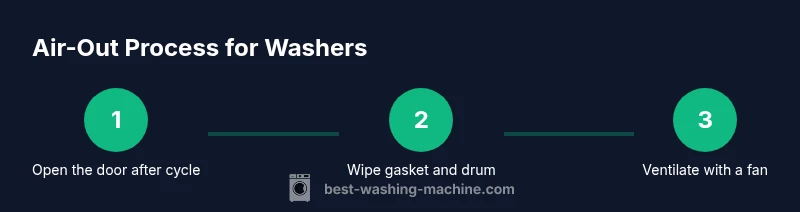
Open the door immediately after the cycle ends
As soon as the wash cycle finishes, open the door fully to begin airflow. This single action Kick-starts the drying process and reduces surface moisture.
Tip: Avoid slamming the door; a gentle, complete opening works best. - 2
Wipe the door seal and gasket
Before air can fully circulate, wipe away any moisture from the door seal and gasket. This prevents moisture pockets that can lead to mold growth.
Tip: Pay attention to folds and creases where water tends to collect. - 3
Wipe the drum interior
Use a microfiber cloth to wipe the drum cavity to remove residual water. Dry surfaces dry faster and stay cleaner over time.
Tip: If you notice residue or odor, consider a mild cleaner and rinse with a quick water spray. - 4
Prop the door to maintain airflow
If possible, prop the door slightly ajar to maintain a continuous air path. A small gap can dramatically improve drying compared to a closed door.
Tip: Ensure the prop is stable and won’t fall into the machine. - 5
Ventilate the surrounding area
Turn on a fan or open a window to increase room airflow. Faster air exchange helps moisture escape from the cabinet and surrounding surfaces.
Tip: Aim the airflow toward the washer to pull damp air away efficiently. - 6
Inspect and maintain the gasket monthly
Regularly check the gasket for wear, cracks, or odor buildup and clean it as part of a routine maintenance schedule.
Tip: A clean gasket last longer and helps prevent odor transfer. - 7
Create a simple airing schedule
Set a small reminder to air out after each cycle. Consistency is key for preventing moisture buildup over time.
Tip: Keep the reminder visible near the laundry area. - 8
If humidity remains high, add dehumidification
In very damp spaces, complement airing with a dehumidifier to reduce ambient moisture around the washer.
Tip: Choose a device with auto-shutoff to avoid excess dryness.
FAQ
Should I leave the washing machine door open after every cycle?
In most homes, yes, especially in humid spaces, to allow air to circulate and dry the drum. If you have small children or pets, ensure the door opening is protected and won't pose a hazard.
Yes, generally you should leave the door open after each cycle to air out the drum and prevent odors, while keeping safety in mind for kids and pets.
Does leaving the door open affect clothes drying times?
Airing the drum after washing primarily targets moisture in the washer itself, not the clothes in the next cycle. It helps prevent lingering moisture and odors from transferring to laundry.
Air-out the drum after washing helps with the washer’s moisture, not the drying time of the next load.
Is it safe to leave the door open at night?
It is generally safe, but assess safety for children and pets and ensure the door won’t cause a fall or obstruction. If the laundry space is shared, consider a partial opening instead of a full gap.
Usually safe, but keep doors from becoming a hazard for kids or pets.
What about odor issues with a front-load washer?
If odors persist, combine airing with gasket cleaning and occasional drum cleaning. A quick wipe-down after air-out reduces moisture pockets that cause smells.
Air-out plus gasket cleaning helps with persistent odors.
Can I leave the door open in a small apartment?
Yes. Use a partial opening with a small fan to maintain airflow without dominating the room. This approach balances ventilation and space constraints.
Absolutely, just use a small fan and a partial opening.
How long should the door stay open in humid climates?
There isn’t a universal duration. Air out until surfaces feel dry and odor-free, adjusting for humidity. If needed, extend airing with added ventilation.
Air out until it feels dry, adjusting for humidity.
Watch Video
The Essentials
- Air out after each cycle to reduce moisture and mold risk.
- Ventilation and humidity are the main drivers of drying time.
- Regular gasket cleaning protects against odors and leaks.
- Establish a simple airing routine for consistency and washer health.