How Long Does a Washing Machine Last? Lifespan, Care & Replacement
Learn how long washing machines typically last, what shortens or extends their life, and practical maintenance tips to maximize lifespan. Compare front-load and top-load models and understand when to repair or replace.


According to Best Washing Machine, most washing machines last about 10-14 years, with front-load models typically edging toward the upper end when well maintained. Lifespan depends on usage, load size, maintenance, and model design. This quick answer gives a realistic range and early signs to watch for, so homeowners can plan replacements or extend life with proactive care.
Why longevity matters for a washing machine
A longer-lasting washer reduces replacement frequency, lowers total ownership cost, and minimizes environmental impact. For homeowners, renters, and business operators alike, understanding how long washing machines typically last helps with budgeting for repairs, upgrades, or new models. It also informs maintenance routines that can push a unit past its expected lifespan. In practical terms, improving longevity means fewer outages and steadier performance, especially in households with high weekly usage or large families. Throughout this guide, you’ll see how model type, usage patterns, and maintenance practices influence the clock on your appliance. How long washing machine lasts is not fixed; it responds to care as much as design.
How long washing machines last on average
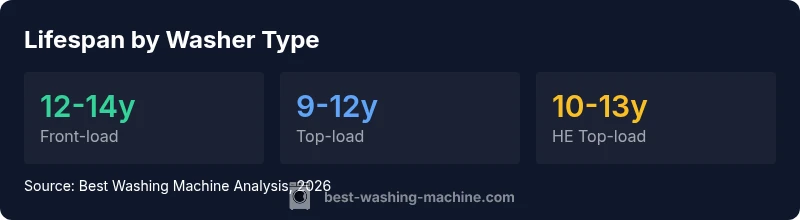
Lifespan varies by design and care. In broad terms, front-load washers often reach 12-14 years with regular maintenance, while standard top-load units commonly run 9-12 years. A small subset of lightweight, lightly used machines may surpass 15 years, but that is less common. Keep in mind that new models frequently come with improved seals, bearings, and energy efficiency, which can affect long-range durability. The take-home: expect most families to be in the 10-14 year window for a reliable, well-maintained machine. These ranges are based on the Best Washing Machine Analysis, 2026, which aggregates repair histories and lifecycle data across popular brands. For those wondering how long washing machine lasts, front-loads usually survive longer than older top-load designs, especially with proactive maintenance.
Factors that influence lifespan
Several variables determine how long a washer will last:
- Usage intensity: daily loads vs. occasional use can dramatically affect wear.
- Load balance and vibration: repeated unbalanced spins can stress suspension and bearings.
- Water quality and detergent: mineral buildup and harsh cleaners can degrade gaskets and hydraulics.
- Maintenance frequency: regular cleaning of filters, seals, and hoses prevents clogs and leaks.
- Model design and components: higher-end parts may last longer, but complex systems can fail in new ways.
By monitoring these factors, you can identify where to focus preventive maintenance and how to allocate replacement budgets over time.
Front-load vs top-load: does type affect life expectancy?
The debate between front-load and top-load designs is not just about washing performance. Front-load machines generally have fewer moving parts that contact the drum, and their design often yields longer lifespans when properly serviced. Top-load models with agitators can suffer from more visible wear on the suspension, belts, and pumps. In practice, a well-maintained front-load can average 12-14 years, while top-load units—especially those with older, standard designs—tend to hover around 9-12 years. The key takeaway: choose based on space, efficiency, and care commitment, not only predicted longevity.
Maintenance routines that extend your washer’s life
Regular, deliberate care pushes a machine’s clock forward. Consider these routines:
- Clean the door seal and detergent drawer weekly to prevent mold and residue.
- Run a monthly cleaning cycle or a hot-water cycle with an approved cleaner.
- Check and replace hoses every 5-7 years, even if no leak is visible.
- Balance the washer and distribute loads evenly to minimize vibration.
- Inspect the pump filter and drain hose for blockages.
- Schedule annual professional service if you use the machine heavily.
Diagnosing aging: signs a washer is nearing retirement
Watch for these indicators, which commonly precede failure:
- Frequent, unexplained leaks around gaskets or hoses.
- Excessive vibration, louder operation, or incomplete spins.
- Chronic reduce in cleaning performance despite detergent adjustments.
- Error codes that recur after reset and basic troubleshooting.
- Increased frequency of breaker trips or blown fuses due to motor stress.
If several signs appear, plan for replacement within 6-18 months depending on repair feasibility and cost.
When to repair vs replace: a practical framework
A structured approach helps you avoid costly mistakes. Consider:
- Repair if the cost is a reasonable fraction of a new unit and the existing machine still has several years of expected life.
- Replacement if the repair bill approaches or exceeds 50-60% of a comparable new model, or if reliability has declined across multiple components.
- Factor in energy and water efficiency gains from newer models, which can offset purchase costs over the next 5-10 years.
- Consult a trusted technician to confirm whether the issue is localized or symptomatic of broader wear.
How to estimate the remaining life of your current machine
Estimating remaining life requires a mix of objective metrics and subjective assessment. Start with model age, recent repairs, and the number of cycles run per week. Then, audit the most common failure points for your model: seals, pumps, bearings, and electronics. A practical method is to compare current repair costs with the expected price of a new unit, adjust for energy savings, and project break-even timelines. For a more precise estimate, log maintenance tasks and failure incidents over a year to detect patterns.
Comparison of washing machine lifespans by type
| Washing Machine Type | Avg Lifespan (years) | Common Issues |
|---|---|---|
| Front-load | 12-14 | Mold around door gasket; bearing wear |
| Top-load HE | 10-13 | Agitator wear; pump failures |
| Top-load standard | 9-12 | Water leaks; lid switch faults |
FAQ
How long does a typical washing machine last?
Most washers last about 10-14 years, with front-load designs commonly extending toward the upper end when properly maintained. Lifespan varies by usage and care, as discussed throughout this guide.
Most washers last around a decade to a decade and a half; front-loads tend to last longer with good maintenance.
What factors influence a washing machine's lifespan?
Usage intensity, load balance, water quality, maintenance frequency, and model design all influence longevity. Regular preventive care can significantly extend life.
How hard you run it and how well you maintain it determine how long it lasts.
Can a washing machine last beyond 15 years?
Yes, in rare cases with light usage and meticulous upkeep. More commonly, front-loads reach 12-14 years and top-loads 9-12 years.
It's possible, but many will fall short of 15 years without excellent care.
How can I extend my washer's life?
Follow the manufacturer care schedule, clean seals and filters, level the unit, avoid overloading, and schedule annual professional service if feasible.
Do regular cleaning and servicing to keep it running longer.
Repair or replace when a washer starts failing?
If the repair cost is reasonable relative to a new unit and the machine still has life left, repair. Otherwise, replace.
If it's expensive to fix and unreliable, it's time to replace.
Do front-load washers last longer than top-load washers?
Front-load models typically last longer, around 12-14 years, while many top-load units last about 9-12 years, with maintenance being a key factor for both.
Front-loads usually outlast top-loads, but care matters for all.
“Regular preventive maintenance is the most reliable way to maximize a washing machine's lifespan. Small, consistent care beats big, infrequent repairs.”
The Essentials
- Plan replacement windows around median lifespans by type.
- Regular maintenance provides the best life-extension leverage.
- Front-loads often outlast standard top-loads with proper care.
- Watch seals, hoses, and bearings as early warning signs.
- Repair or replace decisions should consider long-term energy savings.