Samsung Washing Machine Cleaning Cycle: A Complete How-To
Learn how to use the Samsung washing machine cleaning cycle effectively. Our step-by-step guide covers when to clean, what cleaners to use, and how to maintain drum hygiene for peak performance.


By following this guide, you will learn how to run the Samsung washing machine cleaning cycle effectively, including when to clean, what products to use, and how to maintain drum hygiene. The steps apply to Samsung models with a built-in cleaning option and help prevent odors and residue buildup. According to Best Washing Machine, a regular cleaning cycle is a smart maintenance habit.
What the Samsung washing machine cleaning cycle does and why it matters
The cleaning cycle is designed to remove soap scum, mineral deposits, and biofilm from the drum, gasket, and interior components. Over time, detergent residue and standing water can create odors and reduce cleaning performance. Running the cleaning cycle regularly helps restore drum freshness, protect fabrics, and extend the life of your washer. Best Washing Machine analysis shows that users who perform routine cleanings report fewer odor complaints and smoother operation. The cycle uses hot water and a cleaning agent to dissolve residues and circulate them out of the drum. On most Samsung models, the option is labeled Self Clean, Drum Clean, or Eco Drum Clean. If your model lacks a dedicated cycle, you can simulate a cleaning run by using the hottest wash with an empty drum and a recommended cleaner.
For homeowners, renters, and small-business laundries, mastering this cycle means fewer service calls and better fabric care. By keeping the drum free of mineral buildup and mold, you protect the machine’s sensors and hoses, which translates into more consistent performance and fewer repairs over time. Remember that the goal is to refresh the drum, not to wash clothes during this cycle.
This article uses a practical, appliance-agnostic approach while highlighting the Samsung cleaning cycle specifics. If you own multiple models, you’ll still benefit from the core ideas: use hot water, choose an approved cleaner, and complete the cycle with the drum dry.
When to run the cleaning cycle
Frequency is influenced by usage, water hardness, and household odors. In busy households with frequent washing, running the cleaning cycle every month or after several consecutive heavy-load days helps prevent soap scum buildup. For light-use households, quarterly cleanings can suffice. Best Washing Machine guidance emphasizes aligning cleaning with odor checks and noticeable residue, not a rigid timetable. Always consult your model’s manual because some Samsung models display a Self Clean or Drum Clean option after a certain number of loads. If you notice musty or sour smells, start a cleaning cycle immediately rather than delaying. A proactive approach reduces the likelihood of recurring odor issues and improves overall washer performance.
When scheduling, consider your water heater temperature and energy usage. A warm or hot cleaning cycle can be more effective for dissolving oils and mineral deposits but may use more energy. If your home has hard water, you may see mineral deposits more quickly, which reinforces the case for periodic cleanings. Remember that cleanliness is a maintenance habit, not a one-off task.
Cleaning agents: what to use and what to avoid
Use manufacturer-approved washing machine cleaners or a hot-water cleaning solution designed for automatic washers. Tablets or powders labeled for drum cleaning are typically safest and most effective. If you prefer alternative cleaners, choose products without chlorine bleach and avoid undiluted vinegar in most Samsung cycles, as it can degrade seals over time and create excessive foaming in some models. Always follow product directions for dosage and duration. For homes with sensitive fabrics or catchment concerns, a no-residue cleaner may be preferable to avoid buildup in the dispenser and tubing. The goal is to dissolve residue without causing foam overflow or damaging components.
In all cases, never mix cleaners with bleach or other chemicals. Some users attempt DIY methods, but dedicated cleaners are formulated to work with the machine’s sensors and cycle logic. Stick to trusted products and consult your manual if you’re unsure about a particular cleaner’s compatibility with your Samsung model.
If your washer manual specifies a specific cleaner brand, consider using it to ensure full compatibility with the cycle and warranty terms. Consistency in product choice helps maintain predictable results across maintenance cycles.
How to prepare your washer before a cleaning cycle
Preparation is essential for an effective cleaning cycle. Start by removing all clothes from the drum and ensuring the detergent drawer is empty. Wipe around the door seal and gasket with a dry microfiber cloth to remove trapped lint and moisture that can harbor mold. If your model has a removable filter, take a few moments to clean it and inspect for obstructions. Close all doors and ensure the machine is level to prevent water from pooling in unexpected places during the cycle. Clear the surrounding area of clutter to avoid accidental spills.
Have your cleaning agent ready and confirm the cycle label on your model (Self Clean, Drum Clean, Eco Drum Clean, etc.). If your model requires a pre-clean step, follow those instructions. Once you start the cycle, avoid adding clothes, as this early stage is meant to purify the interior rather than launder textiles. A small towel nearby can catch any overflow.
Document any unusual noises or error codes you notice during preparation; addressing early warnings can prevent a second service visit and help maintain system integrity. Proper preparation reduces the risk of spills and ensures a thorough clean.
Common mistakes and how to avoid them
Common mistakes include using too much cleaner, not running the cycle hot enough, and forgetting to wipe the gasket after the cycle. Excess cleaner can foam excessively, leading to leaks or overflow that wastes water and time. Another frequent error is starting the cycle with laundry still inside the drum, which can dilute the cleaner and reduce cleaning effectiveness. Always run the cycle empty, then inspect after completion to ensure the interior is free of residue. If the drum remains damp, give the interior a quick wipe and leave the lid or door open to air-dry.
To maximize results, don’t skip the post-cycle dry-off. Residual moisture can foster mold and odors, so ensure the drum is completely dry before the next load. If your water is high in minerals, consider a periodic mineral-control cleaning plan to prevent rapid buildup. Finally, never substitute household chemicals not approved for washing machines; such substitutions can void warranties or cause damage over time.
Maintenance between cycles: keep the drum fresh longer
Between cleaning cycles, implement small habits that keep your washer fresh. Wipe the door gasket weekly to remove moisture and residue. Leave the door slightly open after a load to promote air-drying, especially in humid climates. Run a quick rinse cycle with hot water after heavily soiled loads to minimize residue buildup. If your model includes a drainage filter or lint trap, clean it according to the manual to prevent clogs that can impact performance. Consider using a monthly or bi-monthly short cleaning cycle to maintain interior hygiene, particularly if you frequently wash towels, underwear, or other items that generate more residue.
Another practical habit is to regularly inspect hoses for signs of wear and replace if necessary. While cleaning cycles help, preventive maintenance saves time and money in the long run. A clean washer runs more efficiently, uses less energy, and reduces the likelihood of odors or mechanical issues.
Troubleshooting odors after cleaning: what to do next
If odors persist after a cleaning cycle, revisit the door gasket, drum interior, and dispenser drawers for hidden residue. Sometimes, mineral buildup or residue can remain in hard-to-reach areas, causing odors despite a clean drum. Run a secondary cleaning cycle with a different cleaner or perform a manual wipe-down of the seal and drum using a mild detergent. Ensure the laundry does not sit in the drum after cycles; transfer them promptly to avoid mold growth in damp fabrics. Check the home's plumbing for any drainage issues that could contribute to humidity around the washer. If odors persist after repeated cleanings, contact a service professional to inspect the venting, drum bearings, or seals.
For ongoing odor control, consider using a maintenance cleaner every few months and ensure proper ventilation in the laundry area. Regular cleaning cycles, combined with routine wipe-downs, can dramatically improve odor control and extend your washer’s life.
Model-specific notes: Samsung models and Self Clean / Drum Clean options
Samsung models vary in how they label and access the cleaning cycle. Some models use Self Clean, Drum Clean, or Eco Drum Clean as the official option, while others may require navigating through a settings menu to locate a Cleaning or Maintenance cycle. If your model doesn’t show a dedicated cleaning option, check the user manual for model-specific instructions or use a hot water wash with a trusted cleaner as a substitute. In some cases, models with front-loading drums have more accessible gaskets and may benefit from more frequent gasket checks.
For households with multiple Samsung models, create a simple maintenance calendar and tailor it to the most demanding model. Documentation and model numbers help you quickly find the right cycle in the manual, reducing the risk of using the wrong settings. If you rely on a service technician for maintenance, provide your model number and any observed symptoms to expedite diagnosis and repair.
How to verify the cycle worked: testing and signs of success
A successful cleaning cycle will leave the drum and gasket dry and free of odors. After the cycle completes, inspect the drum and door seal for any visible residue and ensure the interior looks and smells fresh. Run a quick clothes load to test that no residues are left in the drum and that fabrics come out clean and odor-free. If you detect lingering smells or visible residue, repeat the cycle with a different cleaner or perform a manual wipe-down to remove stubborn deposits. Periodic odor checks can help you catch issues early and maintain washer performance over time.
Final notes for long-term care and best practices
A proactive maintenance routine saves time and extends the life of your Samsung washer. Keep the area around the machine dry and free from dust; maintain a habit of cleaning the gasket and dispenser drawers. Pair cleaning cycles with routine lint trap and filter checks to prevent clogs and ensure efficient drainage. Record your maintenance dates to build a predictable schedule and adjust based on usage and water quality. By adopting a steady maintenance rhythm, you can enjoy consistently clean clothes, improved energy efficiency, and fewer unexpected service needs.
About Best Washing Machine and model-agnostic guidance
Best Washing Machine advocates integrating a cleaning cycle into a regular maintenance schedule for washers. The guidance provided here focuses on universal steps and model-specific notes to help you apply the idea across a range of Samsung models. The emphasis is on using approved cleaners, following cycle directions, and maintaining a dry, clean interior. For the most accurate steps, always refer to your dishwasher’s owner manual and consult the Samsung support site for model-specific instructions.
Tools & Materials
- Manufacturer-approved washing machine cleaner (tablet or powder)(Follow label directions for dosage and cycle type.)
- Hot water or the hottest wash setting(Use when the cleaner directions specify; max temperature varies by model.)
- Owner's manual or model-specific instructions(Helps identify the exact cycle label on your Samsung model.)
- Microfiber cloth or soft towel(For wiping the gasket and drum interior after the cycle.)
- Bucket or towels(To catch any initial overflow during cleaning, if needed.)
Steps
Estimated time: 60-90 minutes
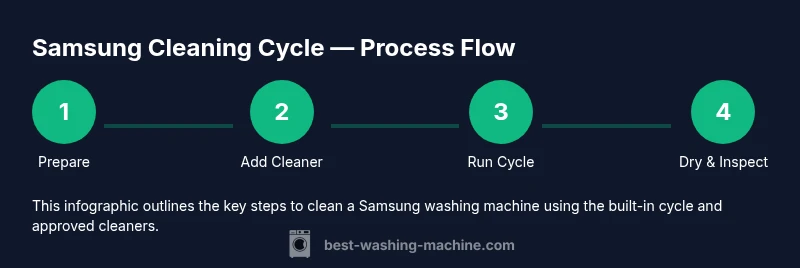
- 1
Prepare the washer
Ensure the drum is empty of laundry and the detergent drawer is clear. Wipe the door gasket to remove moisture and potential mold. This prevents residues from interfering with the cycle and helps you observe a true interior clean.
Tip: Having a dry gasket makes it easier to spot signs of moisture after the cycle. - 2
Add the cleaning agent
Place the recommended cleaning tablet or cleaner into the drum. If your cleaner is powder, pour it into the drum as directed. Avoid adding detergents or fabric softeners during this cycle.
Tip: Always follow the cleaner’s label for dosage to avoid excessive foam. - 3
Set the cycle and heat
Choose the Samsung cleaning cycle (Self Clean / Drum Clean / Eco Drum Clean) and set the hottest option available. This helps dissolve grease and mineral buildup effectively.
Tip: If your model lacks a dedicated cycle, use the hottest regular wash with the cleaner. - 4
Start the cycle and wait
Start the cleaning cycle and let it complete uninterrupted. Do not add clothes during this run since the goal is interior cleansing and residue removal.
Tip: Avoid pausing or opening the door mid-cycle to prevent interrupting the cleaning process. - 5
Inspect and wipe after cycle
Once finished, wipe the drum interior and gasket, then run a quick rinse if you observe any remaining residue. Check for odors and ensure the interior looks fresh.
Tip: A second quick wipe can remove stubborn spots that a single pass misses. - 6
Dry and finish
Leave the door ajar for air-drying or wipe dry with a towel. Proper drying reduces the chance of mold formation and odors between cycles.
Tip: Keep the area around the washer dry, especially in humid environments.
FAQ
How often should I run the Samsung cleaning cycle?
Run the cycle on a regular basis based on usage and odors. Heavier use or hard water may necessitate more frequent cleanings.
Run the cleaning cycle regularly based on usage and any odors you notice.
Can I use vinegar or bleach in the cleaning cycle?
Avoid pure vinegar in most Samsung cycles and never mix cleaners with bleach. Use manufacturer-approved cleaners designed for drum cleaning.
Avoid vinegar and bleach in the cleaning cycle; use approved cleaning products instead.
What if my model doesn’t show a Self Clean option?
If your model lacks a Self Clean option, run the hottest wash with a cleaner and empty drum, or consult the manual for model-specific instructions.
If you don’t see Self Clean, run the hottest cycle with a cleaner and empty drum, or check the manual.
Will a cleaning cycle damage clothes if run accidentally with laundry inside?
Running a cleaning cycle with clothes is not recommended and can reduce cleaning effectiveness. If it happens, run an empty cycle again afterward.
Don’t run the cleaner with clothes inside. If it happens, run another empty cycle afterward.
My washer has a strange odor after cleaning; what should I do?
If odors persist, re-check the gasket and drum for hidden residue, wipe thoroughly, and consider a second cleaning cycle with a different cleaner. Ensure proper drying between cycles.
Odors after cleaning can be fixed by re-checking the gasket, wiping the drum, and running another cycle with a fresh cleaner.
Watch Video
The Essentials
- Choose the right cleaner and follow label directions.
- Run the cycle with an empty drum for full interior cleansing.
- Wipe the gasket and dry the interior after each cycle.
- Schedule maintenance in line with usage and water quality.
- Verify effectiveness by odor checks and visible residues.