Slippers in Washing Machine: A Practical Guide
A practical, step-by-step guide on washing slippers in a washing machine, including material safety, cycle choices, detergents, drying tips, and maintenance to protect footwear and your appliance.


You can safely wash many slippers in a washing machine by using a gentle cycle, cold water, and a mesh laundry bag to protect both the slippers and the drum. Avoid leather or glue-heavy styles, never run on high heat, and air-dry completely afterward. This guide covers when it’s safe, what to use, and how to minimize wear.
Why Slippers in Washing Machine Safety Matters
Washing slippers in a machine can seem straightforward, but it carries risks for both footwear and your appliance. Slippers often blend fabric uppers with foam, rubber soles, glue, and decorative elements. Aggressive agitation, heat, and unbalanced loads can cause soles to detach, color to bleed, or fabric to pill. For households, these problems translate into wasted money and unnecessary repairs. A careful approach helps protect slippers and the washer drum, seals, and filters. The Best Washing Machine team emphasizes thoughtful preparation and sensible cycles to extend slipper life and keep laundry routines efficient. If you treat slippers in washing machine with care, you’ll reduce damage and preserve comfort.
Before You Start: Assess Your Slippers
Start by checking care labels and material composition. Cotton, terry, fleece, and some knits tolerate machine washing on cold or warm cycles, while leather or glued embellishments often do not. Inspect seams and soles for looseness; if the sole is attached with weak glue or loose stitching, consider hand-washing or skipping the machine wash. If colorfastness is uncertain, test a small, hidden area with a damp cloth. By evaluating these factors first, you lower the risk of damage and clothing waste. According to Best Washing Machine, this initial assessment sets the foundation for a safe wash.
Cleaning Approaches: When to Hand-Wash vs Machine-Wash
Not all slippers belong in the washer. Choose machine washing for durable, fabric-based slippers without exposed leather or fragile decorations. For leather, suede, or slippers with glued ornamentation, hand-wash or spot-clean is usually safer. Use a mesh bag to reduce agitation and to protect the drum. Cold water limits color transfer and fiber shrinkage, while a mild detergent safeguards fibers. If odor is a concern, add a small amount of white vinegar during the rinse cycle. The key is tailoring the method to slipper material and construction.
Step-By-Step Machine Washing Guide (Overview)
This overview outlines the process. For a detailed, step-by-step procedure, see the dedicated STEp-BY-STEP block below. Start with a clean washer and empty pockets from any loose items. Place slippers in a mesh bag to guard against snagging and to reduce direct agitation. Use cold water and a gentle cycle. Keep the load balanced by adding a small towel or another lightweight item if needed. After washing, inspect the slippers for loosened seams or damp spots and begin air drying on a flat surface.
Pre-Treatment: Removing Odors and Stains
Odors from slippers can linger after use. Pre-treat problem areas with a mild detergent or a paste made from baking soda and a little water. Gently scrub with a soft brush and rinse. For stubborn stains, a light application of stain remover designed for delicates can help, followed by a cold wash. Do not soak slippers for extended periods, especially if they have glued components or foam interiors. Odor-control steps reduce drying time and improve overall results.
How Washing Machines Handle Slippers: What to Expect
Washing slippers often produces a balanced load due to their irregular shapes. A noisy or vibrating drum usually signals an unbalanced load; adding a small towel or a second pair of slippers can help. Expect some wear on the outer fabric, especially with low-quality materials or decorative trims. A gentle cycle minimizes fiber stress, and a slow spin reduces the risk of distortion. If your washer has a sensor load feature, it will optimize agitation to protect the items.
Detergents and Additives for Slippers
Choose a mild, dye-free detergent formulated for delicates. Liquid detergents disperse quickly and are gentler on fabrics than powders. Avoid chlorine bleach on colored slippers, as it can fade colors. A splash of white vinegar during rinse can help neutralize odors without harming most fabrics. If your slippers are very thick or dense, you may need to use a touch more detergent, but avoid excess that could leave residue.
Drying Guidelines: Air-Dry vs Machine Drying
The safest drying method for most slippers is air-drying, ideally on a flat surface or a drying rack to preserve shape. Stuffing with towels can help absorb moisture, but avoid heat sources like radiators or direct sunlight that could warp materials. If you must use a dryer, select a no-heat or air-dry setting and use a mesh bag to reduce snagging. Drying times vary by material; plan for several hours to overnight for thick slippers.
Common Mistakes and How to Avoid Them
Common mistakes include washing leather or glue-based slippers, using hot water, skipping a mesh bag, and overloading the machine. Another frequent error is improper drying, which can lead to mildew or misshapen footwear. Prevent issues by following care labels, choosing gentle cycles, and allowing full air-dry time. A final inspection before storage helps prevent returning damp footwear to your closet.
Real-World Scenarios: Different Slipper Materials
Cotton and terry slippers typically tolerate machine washing well when cold and gentle. Knit fabrics can felt if washed too hot, so use cold water and a short cycle. Foam or rubber-soled slippers with glued components should generally be avoided in the washer to preserve integrity. Suede or leather slippers require hand-cleaning and spot-cleaning rather than full machine washing. Matching the washing method to material minimizes wear and preserves comfort and shape.
Maintenance after Washing Slippers
After washing, clean the washer door seal and drum to remove lint or soap residues that can transfer to the next load. Check the lint filter and drain pump area for fibers that could block flow. Wipe down the exterior and allow the drum to dry completely before the next use. Regular maintenance reduces odor buildup and keeps the machine running smoothly.
Planning the Next Laundry Day: Time and Care
Incorporate slippers into your regular laundry plan by placing them in a mesh bag as soon as you gather the rest of the week’s loads. Record the care requirements for each slipper type to avoid future mishaps. By planning ahead, you minimize trial-and-error cycles and keep footwear in good condition for longer.
Final Checks and Storage Tips
Before storing slippers, confirm they are completely dry to prevent mildew. Store them in a ventilated area away from direct sunlight to maintain color and shape. If slippers smell musty after washing, repeat a light rinse and air-dry longer. Consistent care, including occasional freshening with fabric freshener for delicates, helps maintain comfort and longevity.
Tools & Materials
- Mesh laundry bag(Protects slippers and washer drum; place slipper soles inward.)
- Mild liquid detergent(Choose dye-free or fragrance-free for sensitive fabrics.)
- White vinegar(Used in rinse to reduce odors; avoid if label warns against it.)
- Baking soda(Optional pre-treatment for odors; create a paste for stubborn areas.)
- Soft brush or old toothbrush(Gently pre-treat stains on fabric surfaces.)
- Towel or drying rack(For blotting and air-drying; helps slipper shape hold.)
- Bucket or basin(Useful for pre-soak experiments on very dirty slippers.)
- Old clothes hanger or flat drying surface(Supports even drying without distortion.)
Steps
Estimated time: 45-75 minutes (wash cycle and setup) + drying time
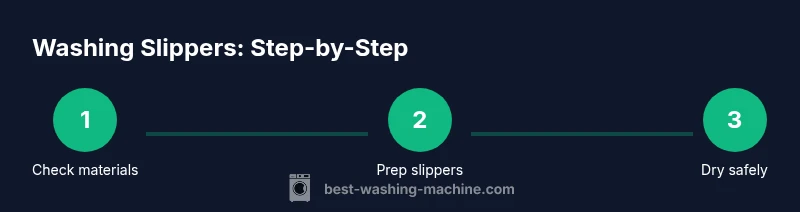
- 1
Check materials and care labels
Examine the slipper materials and any care labels. If leather, glued embellishments, or delicate trims are present, consider hand-washing instead. This step prevents accidental damage and guides cycle choice.
Tip: When in doubt, err on the side of caution and skip machine washing for risky slippers. - 2
Prep slippers and protect them
Remove loose dirt and debris. Place slippers in a mesh laundry bag to cushion them and reduce direct agitation. Zip or secure if there are removable decorations.
Tip: Balancing the load with a second item helps prevent drum vibration. - 3
Set washer to gentle cold cycle
Choose cold water, a gentle or delicate cycle, and a low spin speed. This minimizes fiber stress and slows dye transfer. Use a small amount of detergent and ensure the slippers are fully submerged.
Tip: If your machine has a 'hand wash' option, use it for extra protection. - 4
Add detergent and optional deodorizer
Use a mild liquid detergent. If odors are strong, add a splash of white vinegar during rinse. Do not overfill the dispenser; excess soap can leave residue on fabric.
Tip: Avoid bleach on colored slippers; it can cause fading. - 5
Unload and inspect after wash
Remove slippers promptly and inspect for loosened seams or damp areas. Rewash only the affected areas if needed. Do not dry with heat if there are still damp spots.
Tip: Reshape slippers gently while damp to preserve fit. - 6
Air-dry completely
Lay slippers on a flat surface or drying rack away from direct heat. Allow full air-drying time, which may take several hours to overnight depending on material and thickness.
Tip: Fluff up nap fibers with a light brush halfway through drying for even texture.
FAQ
Can I wash leather slippers in the washing machine?
Generally not. Leather slippers can crack or stiffen when exposed to agitation and heat. Hand-wash or spot-clean instead, following the care label.
Leather slippers should usually be hand-washed or spot-cleaned to avoid damage.
Will slippers shrink in the washing machine?
Slippers can shrink if washed in warm or hot water, or if exposed to high heat during drying. Use cold water and a gentle cycle to minimize this risk.
Shrinking happens with heat; stick to cold water and gentle cycles.
What water temperature is best for slippers?
Cold water is safest for most slippers, especially dyed fabrics. It reduces color transfer and fiber stress.
Cold water is usually best for slippers.
Can I machine dry slippers?
Air-drying is preferred. If you must use a dryer, use a no-heat or air-dry setting and a bag to protect the slippers.
Air-dry is best; if you use a dryer, use no-heat.
How can I remove odors after washing?
Pre-treat with baking soda or a small amount of white vinegar during rinse, then air-dry completely. Keep slippers ventilated to prevent musty smells.
Pre-treat odors and give them a full air-dry.
Watch Video
The Essentials
- Start with care labels to determine washability.
- Use a mesh bag and cold water on gentle cycles.
- Avoid machine washing leather or glued slippers.
- Air-dry thoroughly to preserve fit and material quality.