Top Load Washing Machine Detergent Placement: A Complete Guide
Learn exactly where to put liquid, powder, or pods in a top-load washer. This guide covers detergent types, dispenser layouts, and best practices for clean, efficient laundry.


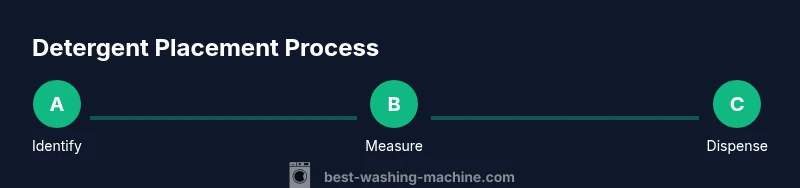
In a top-load washing machine, detergent belongs in the main wash dispenser or drum, depending on the model. Use the correct compartment or pod, measure according to the load size, and avoid overfilling to prevent residue and suds. This guide explains where to put liquid, powder, or pods for clean, efficient cycles. Understanding exact placement reduces wear and keeps your clothes fresh.
Why the placement matters
Detergent placement isn't just about following a label; it's a practical detail that affects cleaning results, rinse performance, and machine longevity. When you pour detergent into the wrong slot or into the drum itself, you risk uneven distribution, excessive suds, and residue clinging to clothes. According to Best Washing Machine, the majority of modern top-load washers rely on a dedicated main wash compartment to keep the cleaning chemistry evenly dispersed through the cycle. The wrong placement can also trigger foaming that overwhelms the drum and reduces the effectiveness of agitation. In this section, you'll learn how compartment design varies across models, why it matters for stain removal, and how to adapt your practice without guessing. By understanding where detergent should go, you reduce wear on fabrics, minimize rewashs, and get consistently fresher results.
Understanding detergent types for top-load washers
Detergents come in three broad forms: liquid, powder, and single-dose pods. Each form behaves differently in a top-load machine, and some configurations are designed to work only with certain types. Liquid detergents dissolve quickly and typically go into the Main Wash dispenser, where they mix with water as the drum fills. Powder detergents often require a similar path but may clump in cold cycles or when used in non-HE machines, unless the manufacturer indicates otherwise. Pods are convenient but their performance depends on their dissolution rate and the model’s agitation. In all cases, always check the detergent label for whether it’s compatible with high-efficiency washers, and follow the guidance given by the Best Washing Machine Team in our 2026 analysis to ensure you’re using the right formula for your specific washer.
Locating your detergent compartments: common layouts
Most top-load washers feature a primary detergent compartment labeled Main Wash, with additional slots for Fabric Softener and sometimes Pre-Wash. Some compact or older models put all additives in a single dispenser; others have a dedicated tray that splits into multiple chambers. If the manual isn’t clear, inspect the dispenser drawer under the lid: it often reveals embossed icons (P for powder, L for liquid, W for wash). For a deeper dive, visit the user manual or the manufacturer’s support site to confirm the exact layout. Regardless of layout, the rule remains: use the main wash compartment for detergent unless instructed otherwise by the model. If you’re unsure about your model, test with a short cycle and observe how the detergent disperses during the fill phase.
Liquid detergent: how and where to pour
Liquid detergents are designed to mix with incoming water as the tub fills, which helps them reach fabric efficiently. In most top-load machines, pour liquid detergent into the Main Wash compartment until you reach the indicated fill line or labeled level. If your dispenser lacks a line, use the cap as a measuring guide and fill to a level that matches a typical load without overflowing. When you add liquid, consider the wash temperature: in hot or warm cycles the detergent dissolves quickly; in cold cycles it may take longer, so ensure the cap is fully seated and the dispenser lid is closed. Avoid pouring liquid directly into the drum, as this can cause early sudsing and uneven cleaning.
Powder detergent: handling and pitfalls
Powder detergents require a clean, dry path into the dispenser. Pour powder into the Main Wash compartment; some brands recommend pre-dissolving in warm water before adding to a cold-cycle load. If your washer is a high-efficiency model, powder must be labeled HE and placed in the dispenser rather than directly in the drum. Be mindful of clumps: if you see lumps, stir or shake the powder to break them up before adding. Always replace caps and lids to prevent moisture intrusion, which can cause caking and ineffective cleaning. And if the powder does not fully dissolve during cold cycles, consider running a warm wash to re-activate the cleaning action.
Detergent pods and single-dose packets: safe use
Pods are designed for convenient, accurate dosing, but their use depends on your washer’s design. In many top-load models, place the pod directly in the drum at the start of the cycle rather than in the dispenser, ensuring it’s fully submerged and can dissolve evenly. Do not crush or split pods, and never place multiple pods in the same cycle unless the manufacturer explicitly allows it. Some washers accept pods in the detergent compartment; in those cases, place the pod in the main wash chamber as directed. Always read the label to confirm compatibility with your model and cycle selection.
Special cases: high-efficiency vs standard-efficiency top-loads
High-efficiency (HE) top-load washers use less water and rely on a more concentrated cleaning formula. If you have an HE machine, choose a detergent labeled HE and place it in the main wash dispenser or drum exactly as the label instructs; avoid using standard formulas that create excess suds. In traditional, standard-efficiency washers, you may have a larger gap between fill levels, so follow the dispenser’s lines and the detergent package directions. The goal is to ensure the wash water picks up the detergent fully and evenly; incorrect placement can leave residue on fabric and require a second wash. Understanding your machine’s efficiency helps you optimize detergent type, amount, and placement.
Measuring detergents for different load sizes
Detergent labels typically offer guidance for small, medium, and large loads. Use the instrument that comes with the detergent—either the cap, cup, or bottle markings—and align your measurement with the load size. For smaller loads, reduce the amount according to the label; for larger loads, increase only if the manufacturer permits it. If you’re unsure, start with the standard amount recommended for a regular load and adjust by a modest amount for larger or heavily soiled cycles. Always avoid guessing or “eyeballing” how much you need; precise dosing improves rinse performance and reduces soap residue.
Detergent for heavily soiled clothes and stains
When clothes are heavily soiled, pretreat stains before washing and consider a detergent with enhanced stain-fighting enzymes. You may choose to run a pre-wash or a short pre-soak cycle on the toughest stains, then add detergent to the main wash as usual. For such loads, a small additional amount of detergent may be appropriate, but do not overdo it; excess suds can trap dirt and redeposit it on fabrics. If you’re using pods, ensure they dissolve without leaving fragments; if powder is used, dissolve in water for best results. Always wash heavily soiled items in a separate cycle to prevent cross-contamination with lightly soiled clothes.
Maintenance: cleaning dispensers to prevent build-up
Dispensers accumulate soap scum, fabric softener film, and mineral deposits over time. Remove the tray or drawer as directed by your model, rinse with warm water, and scrub with a soft brush to dislodge residue. Reinstall and run an empty cycle with hot water to flush the system. If you notice persistent build-up, use a mild cleaning agent recommended by the manufacturer; never use abrasive cleaners that could scratch plastic components. Regular cleaning keeps detergent from clogging lines, improves dispensing accuracy, and extends the life of your washer.
Common mistakes to avoid
Avoid common mistakes that undermine cleaning performance: never mix different detergents in the same cycle, never pour liquid directly into the drum, and never load detergent into the fabric softener compartment. Use the correct compartment for detergent and maintain the dispenser’s lid. Also, don’t ignore warning labels about bleach and fabric softeners; these can alter how the dispenser functions and may damage seals. Finally, always run a test cycle after replacing a cartridge or moving to a new detergent brand to confirm there’s no residue or excessive suds.
Quick-start checklist for your next load
Before your next load, confirm the detergent form, locate the proper dispenser, measure according to load size, and ensure the container is closed. Check that the washer is set to the appropriate cycle and temperature for the fabric type. Place any fabric softener in its own compartment, if used. Run a short test cycle to verify proper dispensing and gentle agitation, then inspect clothes and the dispenser for residue. This quick checklist helps you achieve clean clothes without surprises.
Tools & Materials
- Liquid laundry detergent (HE formula)(Use only recommended HE detergents; pour into main wash compartment according to model)
- Powder laundry detergent (HE formula)(If using powder, choose HE formula and dissolve in water if cold cycles)
- Detergent measuring cup or cap(Use to measure detergent amounts accurately)
- Top-load washer user manual (paper or digital)(Consult for compartment layout and refilling indicators)
- Softener (optional)(If used, place in fabric softener dispenser only)
- Gloves (optional)(Protect hands when handling concentrated detergents)
- Cleaning cloth(For wiping dispenser after cycles)
Steps
Estimated time: 15-25 minutes
- 1
Check detergent layout
Locate the main wash dispenser and any secondary compartments. Refer to the manual to identify labels (Main Wash, Softener, Pre-Wash) and confirm where each type should go. This preparation minimizes errors during the wash and helps you plan for liquid, powder, or pod use.
Tip: If unsure, take a quick photo of the dispenser for later reference. - 2
Choose the detergent form
Decide whether you’ll use liquid, powder, or a pod based on your model and the cycle. Check that the product is labeled for high-efficiency (HE) if you own an HE washer, and ensure compatibility with the cycle you plan to run.
Tip: Always follow the detergent label guidance to avoid excess suds. - 3
Measure the detergent
Use the provided measuring cup or the cap to measure the recommended amount for your load size. Do not estimate; precise dosing improves rinsing and reduces residue on clothes.
Tip: Start with the standard amount for a regular load and adjust only if your manual allows. - 4
Pour liquid detergent
Pour liquid detergent into the Main Wash compartment until you reach the indicated level or fill line. Ensure the dispenser cap is seated properly and the lid is closed to prevent leaks during agitation.
Tip: Wipe any spills and close the dispenser cap firmly. - 5
Handle powder detergent
If using powder, place it in the Main Wash compartment. For cold cycles, consider pre-dissolving powder in warm water to prevent clumping and ensure even distribution.
Tip: Shake the container before pouring to break up clumps. - 6
Use pods correctly
If your washer supports pods, place the pod directly in the drum at the start of the cycle. Do not place pods in the dispenser unless the manual specifies it is allowed by your model.
Tip: Do not crush pods; ensure they are fully submerged for proper dissolution. - 7
Run a test cycle
Run a short test cycle with a small amount of laundry or empty to confirm that the detergent disperses correctly and there are no excessive suds.
Tip: Observe the dispenser during the fill to verify even distribution. - 8
Clean the dispenser after the cycle
Wipe the dispenser tray with a damp cloth and rinse it to remove any residual detergent. Dry and reassemble to prevent residue buildup before the next load.
Tip: Perform this cleanup monthly or when you notice buildup.
FAQ
Where do I put liquid detergent in a top-load washer?
Liquid detergent usually goes into the Main Wash dispenser. Check your model’s labels and the manual to confirm. Do not pour liquid directly into the drum in most cases.
Put the liquid detergent in the Main Wash compartment according to your model’s instructions.
Can I put powder detergent directly into the drum?
Generally, powder should be placed in the main wash dispenser unless your model specifies otherwise. In cold cycles, dissolving powder in warm water can help prevent clumping.
Usually avoid putting powder directly in the drum; use the dispenser unless your washer manual says otherwise.
Are detergents in pods safer than liquids?
Pods offer precise dosing and convenience, but model compatibility matters. Verify that your washer supports pods and follow the label directions for best results.
Pods are convenient, but always check your washer’s guidance before using them.
What about fabric softener?
Fabric softener goes in its own dedicated dispenser. Do not mix it with the detergent and do not pour it into the main wash compartment unless the manual specifically allows it.
Use the fabric softener compartment only; don’t mix with detergent.
How do I know if my detergent is HE?
Check the packaging for HE or High Efficiency. If in doubt, use a detergent labeled for high-efficiency washers and follow the manufacturer’s dosing guidelines.
Look for HE on the label and follow its dosing guide.
What should I do if there’s residue after washing?
Run a maintenance wash and clean the dispenser to remove buildup. Use hot water if your model recommends it and inspect for clogged channels.
If you see residue, run a cleaning cycle and clean the dispenser.
Watch Video
The Essentials
- Identify the correct detergent compartment before loading.
- Choose the right detergent form for your model and cycle.
- Measure accurately and avoid overfilling to prevent residue.
- Avoid pouring liquid directly into the drum.
- Clean the dispenser regularly to prevent buildup.