Washing Machine Cleaner for LG Washer: A Comprehensive Comparison
Comprehensive comparison of commercial LG-friendly cleaners vs DIY methods for LG washers. Learn about compatibility, efficacy, residue, cost, and maintenance to keep your LG front-load or top-load performing at peak efficiency.


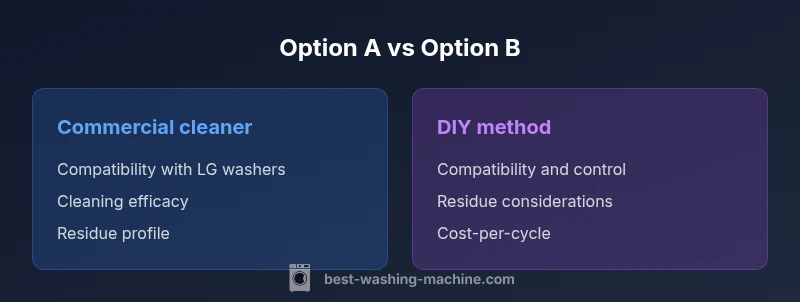
Selecting the right washer cleaner for LG models is essential for maintaining odor-free, efficient operation. This quick comparison highlights two common paths: a dedicated commercial cleaner designed for LG washers and a DIY approach using safe household ingredients. Read on to see which option suits your LG front-load or top-load machine best, and why compatibility matters.
Why Cleaners Matter for LG Washers
Understanding how cleaners interact with LG washers helps prevent odors, mold, and mineral buildup that can reduce efficiency and shorten the life of your appliance. When evaluating a washing machine cleaner for lg washer options, homeowners should consider compatibility with front-load and top-load models, enzyme-safe formulas, and how residue is flushed during cycles. According to Best Washing Machine, choosing the right cleaner can noticeably improve drum cleanliness and fabric care over time. In practice, the cleaner you pick should target common LG-specific challenges, such as soap scum on gaskets and hard-water mineral deposits on the heater coil. The goal is not merely fresh smelling clothes; it is sustained performance and reduced maintenance costs over the machine’s lifetime.
How LG Washers Respond to Cleaning Cycles
LG washers have design features that influence cleaning efficacy: sealed drum, high spin speeds, and flexible wash programs. Cleaning cycles release hot water and allow cleaners to circulate through the pump and hoses. Some LG models feature a dedicated tub-clean or eco-cycle designed to partner with cleaners; others rely on standard hot-water cycles. The key is to match the cleaner’s active ingredients with the machine’s water temperature and drum motion. If you skip the recommended cycle time, you may not reach the same level of mineral removal or odor control. A reliable cleaner should specify the appropriate cycle and temperature for LG units and minimize suds that can carry residues into the drain area.
Types of Washing Machine Cleaners
Cleaners fall into three broad categories: (1) commercial, LG-specific formulas marketed for laundry appliances; (2) multi-purpose products labeled for machines but not LG-specific; (3) DIY solutions such as diluted vinegar, citric acid, or baking soda. Commercial LG-friendly cleaners often include surfactants designed to dissolve soap scum and minerals while including rinse aids to minimize residue. Non-LG cleaners can still be effective when properly used, but they may lack explicit guidelines for LG gaskets and bearings. DIY methods are inexpensive and accessible, but their efficacy depends on precise ratios and thorough rinsing. Consider your water hardness and the machine’s warranty implications when choosing between these categories.
DIY Cleaning vs Commercial Cleaners: Conceptual Framework
From a decision-science perspective, the choice comes down to reliability, maintenance intervals, and cost over time. A commercial cleaner offers a predictable dosage, explicit instructions for LG models, and a defined residue profile. DIY methods offer flexibility and lower upfront cost, but results can be inconsistent and harder to document for warranty purposes. In practice, many households adopt a hybrid approach: use a dedicated cleaner for major cleanings every few months and supplement with a simple rinse between cycles. Always read the label for LG compatibility and avoid mixing products that could create excessive foaming or chemical reactions with seals.
Safety and Compatibility Considerations with LG Models
LG’s warranty guidance often emphasizes using tested cleaners that are compatible with rubber seals, hoses, and inner tub coatings. Using cleaners designed for other brands can be safe if the label explicitly states LG compatibility, but it may void some warranty or require extra rinsing. Avoid cleaners with high acidic content on models with aluminum parts or older seals. For front-loader LG washers, be mindful of gaskets where soap scum can accumulate; poor cleaners may leave residue that invites mold. Always perform a test run in an inconspicuous cycle and monitor for leaks or unusual noises after a cleaning.
How to Use Cleaners Effectively on LG Front-Load vs Top-Load
For front-load LG models, remove laundry and run an empty cycle with the recommended cleaning product and hottest safe temperature. Use the maximum recommended duration to maximize mineral removal and deodorization without over-sudsing. For top-load LG machines, some products require different dosing and a deeper soak to reach the impeller and tub edges. In both cases, pause mid-cycle if your cleaner bottle instructs it or if you notice excess suds. After the cycle, run an additional rinse to flush out any leftover residues. Document the results to track improvements over time.
Common Mistakes to Avoid
Skipping the manufacturer’s cleaning instructions can lead to poor results or void warranties. Avoid mixing cleaners or adding extra vinegar on top of a commercial product. Using cleaners with fragrance-heavy surfactants can mask odors but leave residues that accumulate on seals. Don’t reuse a bottle that has mixed detergents, and never run a cleaning cycle with lint in the drum. Finally, neglecting to wipe gasket areas after cleaning can invite mold growth.
Cleaning Schedule and Maintenance Plan
Set a routine based on water hardness and usage. If your LG washer handles a heavy load or hard water, schedule a deep-clean every 2-3 months and a lighter rinse every 4-6 weeks. Create a simple log that records the product used, cycle duration, and any noticeable changes in odor or drum cleanliness. Some households pair a cleaner cycle with a water-softening cartridge replacement if available. A consistent cadence helps maintain performance and reduces the risk of buildup between major overhauls.
Cost and Value: Price vs Performance
Commercial cleaners for LG washers range in perceived value based on concentration, scent, and marketing claims. In many cases, cost-per-clean is higher upfront but yields longer-lasting results and reduced odors, which may translate into fewer maintenance cycles. DIY methods have a lower upfront cost, but consumables may be used more frequently to achieve comparable results. When choosing between options, consider the total annual cost of maintenance, the time saved by predictable cycles, and the potential impact on warranty coverage. The goal is to maximize clean, not to chase the cheapest option.
Environmental and Residue Considerations
Manufacturers increasingly design cleaners to minimize environmental impact and to be septic-safe. However, the environmental footprint increases if you frequent use strong acids or disproportionate amounts of cleaning agents. Always flush the system with copious water after a cleaning cycle to minimize chemical residue in the drain and pipes. For those concerned about microplastics or packaging waste, consider concentrated formulas with recyclable bottles and refill options. Keep the washer’s interior free of harsh residues that can affect clothes and skin.
Real-World Scenarios: When to Choose Each Cleaner Type
In homes with very hard water and persistent odor, a dedicated LG-compatible cleaner often delivers the most reliable results and the best warranty alignment. If you’re on a tight budget but still want a reasonable level of cleaning, a DIY method with careful measurement can work between major machine cleanings. For renters or those with shared machines, using a widely available LG-friendly cleaner ensures consistent results regardless of water conditions or detergent brands. In areas with recurring mold issues in gaskets, a robust cleaning cycle tailored to LG front-load models is particularly beneficial.
Practical Recommendations and Next Steps
To start, identify your washer type (front-load vs top-load) and water hardness. Then select a cleaner category aligned with your goals: ease and warranty compliance, or budget efficiency. Follow the cleaner’s dosing instructions precisely and schedule regular cycles as part of a maintenance calendar. Finally, monitor results and adjust frequency based on odor, residue, and clothes feel. This approach gives LG owners a clear path to sustained cleanliness and performance.
Comparison
| Feature | Commercial cleaner for LG washers | DIY vinegar-baking-soda method |
|---|---|---|
| Compatibility with LG washers | Excellent for LG front-load and top-load models | Good for common LG models but not LG-specific claims |
| Cleaning efficacy against buildup | High efficacy against odors and mineral buildup when used per label | Moderate efficacy; depends on technique and material balance |
| Residue and rinse requirements | Low residue with follow-the-label instructions | May require extra rinses to avoid fizzing residues |
| Cost per cleaning cycle | Moderate to high per bottle; cycle cost depends on usage | Low upfront cost but higher per-cycle cost if used frequently |
| Environmental impact | Formulated to minimize residues and safe for septic systems | Depends on ingredients; some DIY methods can be harsher if misused |
| Safety and warranty considerations | Typically supported when used as directed; check LG warranty guidance | User-applied DIY methods may affect warranty in some cases |
What's Good
- Proven efficacy with LG-compatible formulas
- Clear dosing and usage guidance
- Supports warranty when using official cleaners
- Widely available and easy to purchase
Downsides
- Higher upfront cost and recurring purchases
- Potential residue if used incorrectly
- DIY methods can be inconsistent and less effective
- May require more frequent cleaning for hard water
Dedicated LG-compatible cleaners are the safer, more reliable choice for LG washers
If you want predictable results and warranty alignment, use a cleaner marketed for LG washers. DIY methods can work but require careful handling and follow-up rinses.
FAQ
What is the best cleaner for LG washers?
There isn’t a single universal best. Look for cleaners labeled as compatible with LG washers and follow the manufacturer’s instructions for front-load vs top-load models.
Look for LG-compatible cleaners and follow the label. There isn’t one universal best; compatibility matters.
Are DIY cleaners safe for LG warranty?
DIY methods can affect warranty if the manufacturer’s guidelines are not followed. Always verify with LG model documentation and use products designed for washers when possible.
DIY methods may affect warranty—check your LG model guide and prefer LG-approved cleaners.
How often should I clean an LG washer?
Frequency depends on usage and water hardness. Generally, cleaning during periods of heavy use or after exposing the drum to odors is advisable, with routine maintenance between cycles.
Clean based on use and water quality; more often in hard water areas.
Can I use vinegar in LG washers?
Vinegar can be used cautiously in some cases, but it can interact with gaskets or seals if used excessively. Always consult LG guidelines and avoid mixing with certain cleaners.
Vinegar is possible in some cases, but use sparingly and follow guidelines.
Is front-load cleaner different from top-load cleaner?
The main difference is the recommended cycle settings and compatibility notes. Use products labeled for the specific wash configuration (front-load or top-load).
Front-load and top-load cleaners are similar, but pick the one labeled for your washer type.
What are signs of buildup in an LG washer?
Odors, cloudy water, residue around gaskets, or clothes not smelling fresh can indicate buildup. Run a dedicated cleaning cycle and inspect seals.
Watch for odors and residue; run a cleaning cycle to address buildup.
The Essentials
- Assess LG compatibility before buying any cleaner
- Choose LG-front-load or LG-top-load targeted products if possible
- Follow label instructions to avoid residue
- Consider cost per cycle when planning maintenance
- Schedule regular cleanings to prevent buildup