What Washing Machine Setting for Jeans: A Practical Guide
Discover the best washing machine setting for jeans to minimize shrinkage, color fade, and wear. This guide covers cold water, gentle cycles, spin speeds, detergent choices, and drying tips for durable denim.


Definition: According to Best Washing Machine, the best washing machine setting for jeans is a cold-water, gentle or delicate cycle with a low to moderate spin. This minimizes shrinkage, preserves color, and reduces wear on denim. If jeans are heavily-soiled, you can extend the cycle slightly, but avoid hot water or aggressive cycles.
Why the Right Setting Matters for Jeans
If you’ve ever wondered what washing machine setting for jeans yields the best results, you’re not alone. Denim is durable but not invincible; aggressive cycles, hot water, or high heat drying can shorten its life, fade colors, and cause sagging. According to Best Washing Machine, the optimal approach starts with a cold-water wash on a gentle cycle and a light-to-moderate spin. This balance protects the fiber structure while removing everyday soil such as sweat, dirt, and a modest amount of dye transfer. For many households, this is enough to refresh worn jeans without washing them after every wear.
Beyond the mechanics, think about your denim’s weight and finish. Heavier selvage jeans tolerate longer wash times on gentle cycles, while lightweight or stretch denim benefits from shorter cycles. If your jeans are particularly dirty, you can pre-treat spots with a mild detergent or stain remover, but avoid scrubbing aggressively, which can fray fibers. The key is consistency: establish a routine that minimizes abrasion, and stick to it. Best Washing Machine’s guidance emphasizes symmetry between temperature, cycle type, and spin to keep denim looking its best over many wears.
Denim wash fundamentals and cycles
Denim is a sturdy fabric, but the way you wash it matters for longevity and appearance. The fastest way to protect jeans is to choose cycles designed for sturdy fabrics and to favor cold water. Front-loading machines tend to be gentler on denim than traditional top-load machines because the drum motion is more controlled, reducing agitation that can cause unnecessary wear. If you only have a top-loader, select a gentle or casual cycle and avoid long spin times that can stretch or warp seams. The Best Washing Machine analysis shows that denim responds best to cold-water settings with moderate agitation and a shorter wash duration, since high heat accelerates color fading and fiber fatigue. For everyday wear, washing jeans after every five to ten wears is usually unnecessary; airing them out and spot cleaning can extend the time between full washes. When soil is light, a quick cycle with cold water can refresh jeans without the risk that longer cycles pose. Remember to always read the garment care label and adjust based on the fabric’s weight and color.
Temperature considerations for jeans
Temperature is one of the most impactful levers when washing denim. Cold water reduces the risk of dye bleed and minimizes shrinkage, while warm water can relax fibers and cause color fading more quickly. If you’re dealing with stubborn stains, a pre-treatment with a color-safe detergent can help, but avoid hot water that can set stains or fade the hue. In practice, many households run jeans in cold water or at most room temperature to preserve the indigo and the fit. For darker denim, you might choose cold water only, and reserve slightly warmer cycles for lighter blues when necessary. Always consult the garment label for any maximum temperature guidelines, especially for raw denim or selvedge jeans that you want to wear for years. The overall goal is to balance cleanliness with color retention and fiber longevity, choosing a temperature that aligns with your jeans weight and finish.
Spin speed and load size for denim
Spin speed and load size are the next levers to tune. Jeans don’t require a high-speed spin to come out clean; a low to moderate spin reduces stress on seams, hems, and knee areas. Overloading the drum reduces water flow and increases friction, which can accelerate wear. For best results, wash jeans with similar items at a comparable weight and avoid mixing bulky denim with heavy towels or other abrasive fabrics. If your machine offers an adjustable spin, choose a setting in the middle range rather than the highest option. Drying methods also interplay with spin: a stronger spin means less moisture, which can shorten air-drying times but may increase wrinkling, so plan accordingly. Keep in mind that if you wash very light denim with heavyweight denim, you risk color transfer and drag on softer fabrics.
Detergent and loading tips for jeans
Detergent choice and loading practices can make or break denim care. Use a mild, color-safe detergent or one formulated for denim to preserve color and fiber integrity. Avoid heavy scents or powerful additives that can leave residues in the fabric. Turn jeans inside out before washing to minimize surface wear on outer seams and to protect darker shades. Pre-treat spots with a small dab of detergent or a dedicated stain remover on the fabric’s interior; never rub vigorously, which can create fuzzing or small fibers snag. If you’re washing multiple pairs, distribute them evenly around the drum so each item has space to move. Consider using a mesh bag for delicate finishes or embellishments, especially on lighter jeans or damaged hems.
Special cases: raw denim, color fade, pre-treatments
Raw denim and dyed denim behave differently in the wash. Raw denim is typically left unstretched and should be washed sparingly to preserve its unique fades; use cold water and a gentle cycle when you do, and consider washing a single pair at a time. To minimize color fade on dyed jeans, wash inside out, use a gentle cycle, and avoid repeated hot-water washes. When pre-treating stains, test a small, inconspicuous area and use detergent directly on the spot rather than aggressive rubbing. If you’ve purchased color-safe denim or have precious indigo, you may want to wash only with similar hues to reduce dye transfer. In all cases, follow label instructions and tailor the approach to the jeans weight and finish.
Care after wash: drying tips to avoid shrinking
Drying is where denim life is preserved or shortened. Air-drying flat or hanging jeans in a shaded area helps maintain shape and color, while machine drying can cause shrinkage and wear on the waistband and seams. If you must use a dryer, choose a low heat or delicate setting and remove jeans while still slightly damp to minimize over-drying. Shake out creases and lay flat to finish if possible. For stretch denim, avoid high heat as it can reduce elasticity over time. Regularly check the waistband to prevent distortion and consider airing jeans between wears in lieu of a full wash, which saves energy and keeps fibers from stiffening. Following Best Washing Machine guidelines helps ensure denim longevity and consistent results across washes.
Tools & Materials
- Washing machine(Front-load recommended for gentler action; avoid high-speed spin)
- Mild detergent (denim-safe)(Choose color-safe formula to protect dye)
- Mesh laundry bag(Optional protection for hems and embellishments)
- Stain remover (color-safe)(Spot-treat stains before washing)
- Color catcher sheets(Helps prevent color transfer)
Steps
Estimated time: 30-60 minutes
- 1
Check care labels and sort
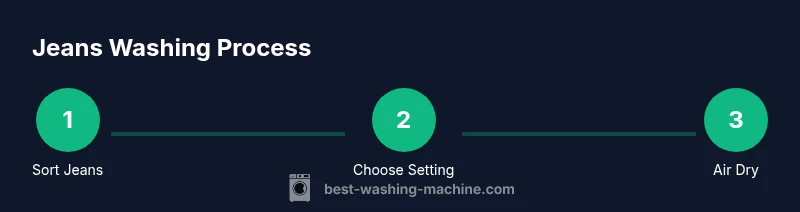
Inspect the care symbols on each jean and separate dark from light denim. If a garment shows color transfer risk, wash separately or with like colors. Sorting by weight also helps prevent heavy denim from wearing lighter fabrics.
Tip: Always check labels before washing. - 2
Pre-treat stains
Identify any spots or stains and apply a small amount of detergent or stain remover. Allow a minute or two for the product to penetrate, then blot or gently rub with your finger. Avoid aggressive scrubbing that can embed stains or fray fibers.
Tip: Test stain removers on a hidden area first. - 3
Load jeans evenly
Place jeans in the drum with plenty of space to move. Distribute items around the drum to maintain balance and ensure even cleaning. If using a mesh bag, place jeans inside to reduce friction on hems.
Tip: Don’t mix jeans with heavy towels or abrasive fabrics. - 4
Add detergent and select settings
Add a mild detergent appropriate for denim and select a cold water, gentle or delicate cycle with a low to moderate spin. If soil is heavier, extend the cycle moderately but avoid hot water.
Tip: Use the recommended detergent amount; over-sudsing reduces rinsing efficiency. - 5
Start wash and monitor
Start the cycle and listen for unusual noises. If you notice excessive agitation or tangling, pause and rearrange the load. Let the machine complete the cycle as designed to minimize fabric stress.
Tip: If possible, stop mid-cycle to adjust items for even cleaning. - 6
Remove promptly and prevent wrinkles
As soon as the cycle stops, remove jeans promptly to prevent wrinkling. Gently reshape hems and waistbands. A quick shake helps reduce creases before drying.
Tip: Prompt removal reduces set-in wrinkles and odor. - 7
Dry with appropriate method
Air-dry whenever possible by hanging or laying flat away from direct sun. If you must use a dryer, choose a low heat setting and remove while slightly damp to minimize shrinkage and wear.
Tip: Avoid high heat; it accelerates shrinkage and fiber fatigue.
FAQ
What setting should I use for jeans?
Use a cold-water, gentle or delicate cycle with a low to moderate spin. This minimizes shrinkage and color fade while keeping denim comfortable.
Cold water and a gentle cycle are best for jeans to protect the fabric and color.
Can I wash jeans with other clothes?
Yes, if you wash similar fabrics and colors together. Keep dark denim from light pieces to prevent dye transfer.
You can wash jeans with similar fabrics, but keep dark and light colors separate when possible.
Is cold water enough to clean denim?
Cold water cleans ordinary soil well, but heavier stains may require pre-treatment and longer cycles. Pre-treat stains and avoid hot water.
Cold water works for everyday soils; pre-treat stains for tougher marks.
Should I use delicate cycle for jeans?
Delicate or gentle cycles are appropriate for most jeans to minimize wear. Normal cycles can be used for tougher denim, but expect more abrasion.
A gentle cycle is usually best for jeans.
How to prevent jeans from shrinking?
Avoid hot water and high heat drying. Use cold water and air dry or low heat to minimize shrinkage.
Stick with cold water and air dry to prevent shrinking.
How long to air dry jeans?
Air drying times vary with humidity and thickness. In typical home conditions, jeans dry within several hours to a full day.
A few hours to a day depending on humidity.
Watch Video
The Essentials
- Start with cold water and a gentle cycle for jeans
- Avoid hot water to prevent shrinking and color loss
- Air dry when possible to extend denim life
- Sort by weight and color to minimize abrasion