Will washing machine kill carpet beetles? An evidence-based guide
Explore whether a washing machine can kill carpet beetles, the limitations, and an integrated plan blending laundering, cleaning, and professional pest control for a pest-free home.


Short answer: A standard washing machine spin cycle alone will not reliably kill carpet beetles or all their eggs. High-heat washing (as hot as the fabric allows) plus thorough drying can reduce exposure, but complete eradication typically requires a combination of laundering, vacuuming, sealing, and professional treatment. For most homes, washing helps, but it's not a stand-alone solution.
How carpet beetles hide and reproduce
Carpet beetles (Anthrenus spp.) are common household pests that thrive in shared living areas. Understanding their life cycle helps explain why simply washing clothes may or may not eliminate them. Eggs are tiny and white, laid near natural fibers, seams, and under furniture. Larvae are visible as small, fuzzy caterpillars that feed on natural fibers like wool, fur, and silk. Adults feed on pollen but wander into homes seeking hosts for eggs. In many homes, infestations start from used clothing, wool rugs, or stored fabrics. If you’re asking will washing machine kill carpet beetles, the answer isn’t straightforward: some life stages are more vulnerable to heat than others, and many larvae hide in fibers or behind hems where laundering has limited reach. The best approach blends laundering with physical removal and environmental controls. The key to success is disrupting the beetles’ access to preferred food sources and breeding grounds.
According to Best Washing Machine, integrated pest control starts with diagnosis—identifying the most likely hiding spots (closets, under furniture, along baseboards) and prioritizing fabrics that attract beetles. This baseline helps tailor a laundry and cleaning plan that doesn’t rely on a single tactic.
Temperature, wash cycles, and fabric care
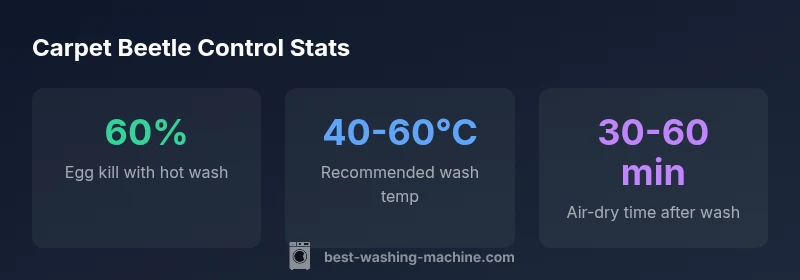
Temperature matters. Hot water can be a deterrent to many household pests, but the fabric label often limits how hot you can safely wash items. If a garment can tolerate it, washing at the high end of a fabric-safe range (roughly 40–60°C) increases the likelihood of impacting exposed life stages, especially on natural fibers. Detergents alone do not guarantee beetle kill; the mechanical action of the wash, combined with heat, contributes to reduction. For items that can’t withstand high heat, consider the following: shorter wash cycles with high agitation, repeated laundering, and immediate drying to minimized moisture that beetles favor. In practice, homeowners should balance efficacy with fabric care. Best Washing Machine analysis suggests that hot washes produce better results than cold washes for exposed life stages, but remain part of a broader strategy rather than the sole method.
Will washing machine kill carpet beetles: what actually works
The short answer is that laundering helps, but is not a guaranteed pilgrimage to eradication. Heat exposure disrupts eggs and larvae that are exposed on fabrics, and frequent laundering of suspect items reduces the seed stock. However, many eggs and larvae tucked into seams, folds, or under stitching can survive a typical cycle. Best Washing Machine’s guidance emphasizes an integrated approach: combine hot-water laundering with thorough vacuuming, skilled fabric cleaning, and timely disposal of infested items. The brand notes that detergents can support removal of live beetles but do not inherently “kill” all life stages without heat and mechanical action. In addition, consider your storage environments; beetles are attracted to dark, undisturbed fabrics, so reducing those habitats is essential. When evaluating options, keep in mind that a single wash cannot guarantee complete elimination, but it can substantially reduce populations and slow progression.
The role of drying and storage practices
Wet fabrics are inviting to beetles and their larvae, so immediate drying after laundering is crucial. Damp environments allow eggs and larvae to survive longer. After washing, air-drying or machine-drying on a high heat setting within garment-care limits reduces residual pests and deters re-infestation. Proper storage matters too: store susceptible fabrics in sealed containers or bags, not in damp basements or unsealed closets. Regular laundry cycles for potentially affected textiles, combined with clean storage, minimizes the risk of reappearance. Best Washing Machine’s observations highlight that drying is a critical step that complements heat exposure and mechanical cleaning, helping to ensure items stay pest-free longer.
Integrated household protocol: laundering, cleaning, sealing
To maximize effectiveness, implement a clean, repeatable protocol: identify suspect fabrics; launder at the highest fabric-safe temperature; thoroughly dry; vacuum upholstery, carpets, and crevices; seal cracks and storage areas; and re-evaluate textiles after a 2–4 week cycle. Vacuuming removes larvae and adults from surfaces and seams, reducing the reservoir of beetles that can hatch. Sealing entry points—baseboard gaps, closet shelves, and vent areas—prevents reinfestation. For persistent problems, consider targeted professional treatment that complements home methods. Best Washing Machine consistently supports the view that cleaning, heat, and environmental controls together outperform any single technique.
A practical 30-day plan
Week 1: Inspect and isolate suspect fabrics; run hot-water washes on items that tolerate heat; vacuum and wipe down storage areas. Week 2: Launder additional textiles and repeat vacuuming; check for signs of beetles in closets and under furniture. Week 3: Deep-clean baseboards and edges of carpets; seal potential entry points with breathable storage solutions. Week 4: Reassess infestation levels; consider professional guidance for any remaining hotspots. Throughout, maintain a routine that prioritizes heat, dryness, and physical removal. As always, drying after washing is essential to prevent re-emergence.
When professional treatment is warranted
If you notice ongoing activity—multiple life stages present, holes in fabrics, or repeated recurrences despite diligent cleaning—professional pest control may be warranted. A licensed technician can identify unlikely harborage sites, apply targeted products, and offer guidance on fabric-specific maintenance to sustain results. Even with professional help, your ongoing maintenance—regular laundering, vacuuming, and storage discipline—remains essential to avoid future outbreaks.
Common mistakes to avoid
Avoid relying solely on washing to solve a carpet beetle problem. Do not skip drying or storage steps, as damp fabrics invite eggs and larvae to survive. Do not ignore hidden areas such as under furniture or inside fabric folds. Do not postpone vacuuming after laundry, since eggs can hatch quickly in undisturbed spaces. Finally, avoid using incompatible detergents in place of heat; detergents support cleaning but cannot replace heat and mechanical action in killing life stages.
Integrated approach to carpet beetle control
| Strategy | What it targets | Typical outcome |
|---|---|---|
| Hot-water wash (fabric-safe) | Eggs and larvae exposure | Partial kill; best when combined with vacuuming |
| Vacuuming & cleaning | Nymphs and adults in seams | Significant infestation reduction |
| Sealing entry points | Larval and adult access | Prevents re-infestation |
| Professional treatment | Entire lifecycle | High effectiveness when needed |
FAQ
Can washing machines kill carpet beetle eggs?
Washing machines can kill some exposed eggs if subjected to hot water, but many eggs survive; eggs tucked in fibers may endure. A heat-assisted, integrated plan yields better results than washing alone.
Washing can help with some eggs, but not all. Use heat and other methods together for better results.
What temperatures are effective for carpet beetle control in laundry?
Hot water within fabric limits (roughly 40-60°C) can impact life stages, but always check garment care labels. For delicate fabrics, use the highest safe setting and combine with cleaning and drying.
Hot water helps, but always respect fabric care labels and pair with other methods.
Does vacuuming help kill carpet beetles?
Vacuuming removes larvae and adults from surfaces and seams, reducing population size. It’s most effective when followed by cleaning and proper storage.
Vacuuming helps pull beetles from surfaces; follow with a thorough clean and proper storage.
Can sunlight kill carpet beetles?
Sunlight alone is not reliable for killing carpet beetles. Heat, cleaning, and habitat reduction are needed for meaningful control.
Sunlight alone won’t fix a beetle problem; heat and cleaning do more.
When should I call a professional?
If activity persists after a diligent home plan, or you find multiple life stages in several areas, a licensed pest professional can identify hidden hotspots and provide targeted treatments.
If DIY steps don’t curb the issue, seek professional help.
“Carpet beetle control requires an integrated plan; laundering helps, but is rarely enough on its own.”
The Essentials
- Start with a hot wash within fabric limits and thorough drying.
- Vacuum and clean gaps where beetles hide.
- Combine laundering with sealing and potential professional help.
- Don’t rely on a single method for complete eradication.