Rent a Washing Machine and Dryer: A Practical How-To Guide
Learn how to rent a washing machine and dryer, compare rental plans, delivery, setup, and maintenance. This educational guide helps homeowners, renters, and small businesses choose flexible, affordable laundry solutions.


Renting a washer and dryer means choosing a trusted provider, comparing plans, and arranging delivery and installation. Expect monthly fees plus optional maintenance. For a smooth setup, follow our detailed step-by-step guide and watch for contract terms and hidden fees.
Why renting a washer and dryer makes sense in 2026
Renting a washer and dryer can be a smart option for renters, homeowners undergoing a move, or anyone who wants laundry-day flexibility without a large upfront purchase. According to Best Washing Machine, renting a washer and dryer provides access to contemporary features, reliable service, and predictable costs, all while avoiding the risks of ownership. If you frequently relocate, live in a small space, or simply want to test premium models before committing, a rental arrangement can adapt to your schedule.
Key benefits include low upfront costs, maintenance and repairs included in many plans, and the ability to upgrade to newer models as technology evolves. For people who juggle multiple short-term housing situations or prefer predictable monthly expenses, rental programs provide a feasible alternative to ownership. In practice, you’ll typically pay a monthly fee that covers delivery, installation, routine service, and a functioning warranty window. As you review options, weigh the total cost of ownership, not just the monthly payment, and consider whether the plan includes replacement in case of a breakdown.
In this guide you’ll find a clear framework for evaluating rental offers, how to negotiate terms, and practical steps to get hot water and clean clothes without a heavy initial investment. The goal is to help you rent a washing machine and dryer confidently, with support whenever you need it.
Top considerations before you rent
Before you sign up for a rental, map out your space, budget, and laundry needs. Here are the core factors to compare:
- Space and layout: Measure the doorway, hallway, and the area where the unit will live. Look for a location with easy access to water supply and drainage.
- Capacity and cycle options: Decide between compact, standard, or larger-capacity models, and review washing and drying cycle options (quick wash, heavy duty, delicate, and energy-saving modes).
- Energy and water use: Prioritize energy-efficient models and low water usage to reduce ongoing operating costs.
- Stacking and installation: If you have limited space, check whether the provider offers stackable configurations and whether professional installation is included.
- Service scope: Confirm what the plan covers—delivery, installation, maintenance, repairs, and the cost of replacements if a unit fails.
Pro tip: Ask about model swap options if your needs change during the term. Also verify how the contract handles upgrades when newer models are released.
- Planning for your lifestyle: If you have high laundry loads, consider higher-capacity models; if you travel frequently, flexible terms may matter more than a long commitment.
Remember: the goal is to align the rental with your daily routines, not just the sticker price. This alignment will determine whether renting remains cost-effective over ownership for your situation.
Typical rental plans and what they cover
Rental plans vary, but most providers structure offers around three pillars: delivery and installation, ongoing maintenance, and a replacement clause in case of failure. When you rent a washer and dryer, you’ll typically see options like basic delivery with standard installation, extended maintenance packages, and upgrade or swap allowances during the term. Best Washing Machine analysis shows that many providers bundle key services—delivery, installation, and routine maintenance—into a single monthly fee, which can simplify budgeting and reduce surprise costs. Always read the contract for what’s included and what constitutes chargeable add-ons.
Here are common inclusions to look for:
- Delivery window and setup: A specific appointment block and professional hookup to ensure proper water connections, drainage, and venting if applicable.
- Startup testing: A hands-on demonstration of operator controls, cycle selection, load settings, and error codes.
- Routine maintenance: Scheduled checks for hoses, seals, and drainage paths, plus replacement of worn parts under the plan.
- Emergency replacement: A policy allowing a replacement unit if the current one breaks down beyond repair in a defined timeframe.
- Leases and upgrades: Options to upgrade to newer models or adjust the plan term if your circumstances change.
Understanding these inclusions helps you compare apples to apples when evaluating different providers. It also clarifies the true cost of ownership versus rent-to-use over the lease period.
How to compare providers and read contracts
To make an informed choice, treat the rental decision like a small-business procurement task. Start with the total cost of ownership (TCO) over the expected term, including monthly payments, maintenance fees, delivery charges, and penalties for early termination.
- Compare monthly fees across providers and note whether maintenance and upgrades are included.
- Look for a clearly defined maintenance window and response times for repairs.
- Check cancellation terms and any penalties for ending the agreement early, as well as any required notice periods.
- Inspect the fine print for hidden fees, such as late payments, raised service charges, or mandated service visits.
- Confirm whether you can swap models mid-term and what the swap costs would be.
In addition, verify support channels and the provider’s coverage area. If you move locations, ask how transfers are handled and whether a new delivery is required. Retain written confirmations and get the contact details of a dedicated account representative for quick assistance.
Finally, consider the total experience: responsive customer service, clear documentation, and a straightforward process for addressing issues quickly.
What to expect during delivery, setup, and maintenance
Delivery day marks the transition from planning to practical use. Expect a professional to bring, place, and connect the unit, with protective packaging removed and hoses properly installed. They should test multiple cycles to confirm water supply, drainage, and spin performance without leaks. If you’re stacking units, the installer will verify stability and safety features.
After setup, you should receive a brief orientation on cycle selection, load size, and energy-saving tips. Maintenance visits are typically scheduled at regular intervals or triggered by fault codes. If your plan includes preventive maintenance, you’ll get reminders and service windows, reducing the risk of unexpected downtime. Keep a log of service visits, as this helps when discussing upgrades or end-of-lease options with the provider.
For ongoing use, follow the manufacturer’s care instructions included in your rental packet. Clean the lint filter, avoid overloading, and use the recommended detergents. If an error code appears, consult the provided guide or contact customer support before forcing a reset, which can sometimes worsen the issue.
Finally, understand the end-of-lease process: can you renew, upgrade, or return the unit without penalties? Having this awareness helps you plan ahead and avoid surprises when your term ends.
Money-saving tips and common pitfalls
Renting a washer and dryer can be money-smart, but only if you negotiate wisely and avoid common traps. Here are practical tips and red flags:
- Pro-tip: Ask for bundled pricing that includes delivery, installation, and maintenance to reduce hidden costs.
- Look for energy-efficient models, which lower operating costs over the term and may qualify for sustainable living incentives.
- Beware of long-term contracts with automatic annual rate increases; ask for a fixed rate or a capped increase.
- Review early-termination penalties and the conditions under which you can swap models without hefty fees.
- Confirm what happens if either the washer or dryer fails and whether a replacement or loaner is provided during repairs.
- Document the unit’s condition at delivery and report any damage immediately to avoid later disputes.
By focusing on inclusions and total value rather than the monthly sticker price, you can prioritize long-term savings and reliability over short-term savings.
Adopt a proactive stance: set reminders for maintenance windows and keep all contract documents in a dedicated folder for easy reference.
Real-world scenarios: renters, homeowners, and small offices
Different living or work situations change the value proposition of renting a washer and dryer. For renters, especially in apartments or rental homes, a rental arrangement offers flexibility if you plan to relocate soon or don’t want to commit to a high upfront cost. Ensure your lease allows the installation and confirms who bears responsibility for any building-related fees.
Homeowners benefit from flexibility and quick upgrades without the hassles of selling old units. If you’re renovating or waiting to purchase a permanent setup, renting can bridge the gap. For small offices or shared facilities, maintenance coverage and staged replacements can minimize downtime and support reliable operations. In each case, ensure the plan aligns with your expected usage patterns and that you have a clear end-of-lease option if needs change.
If you’re unsure whether renting is the best route, compare scenarios with cost-of-ownership estimates and factor in maintenance, upgrades, and downtime. The right rental plan should feel like a natural extension of your daily routines—simple, predictable, and scalable as needs evolve.
Tools & Materials
- Proof of residence(Recent utility bill or lease agreement)
- Identification(Driver's license or passport)
- Space measurements(Measure width, height, depth; check doorways)
- Payment method(Credit/debit card or digital wallet)
- Delivery access(Elevator, stairwell clearance, parking space)
- Optional: stacking kit(If stacking, confirm compatibility with model)
Steps
Estimated time: 1-2 weeks
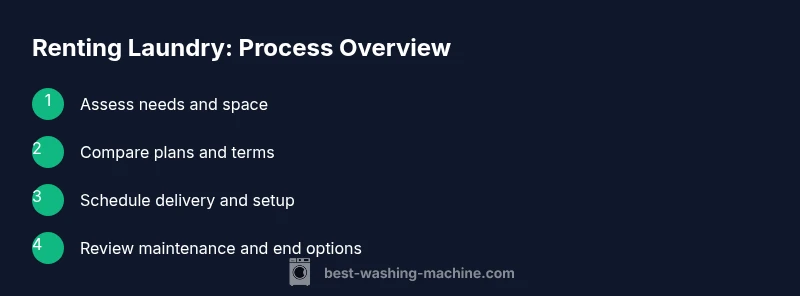
- 1
Define needs and constraints
Assess your typical laundry load, cycle preferences, and available space. Document measurements and any access constraints to ensure the model fits and is easy to install.
Tip: Take photos of the space and doorways to share with the provider. - 2
Compare rental plans
Review monthly fees, included services, and terms. Note any maintenance, upgrades, or replacement allowances.
Tip: Ask for a written cost breakdown to compare offers accurately. - 3
Check hookup requirements
Confirm water supply, drainage, and electrical compatibility. Decide on stackable vs. side-by-side based on space.
Tip: Request confirmation that the model is compatible with your space before committing. - 4
Review the contract
Read inclusions, penalties, and end-of-lease options. Look for hidden fees and the process for upgrades.
Tip: Highlight unusual clauses and seek clarification in writing. - 5
Schedule delivery and installation
Set a window that works with your routine. Ensure professional installation and initial testing are included.
Tip: Be present during delivery to verify setup and record the initial test results. - 6
Inspect on delivery
Check for damage, verify model and features, and confirm all connections are secure.
Tip: Document any pre-existing conditions with photos. - 7
Run a test cycle
Run at least two cycles (wash and dry) to ensure performance and proper drainage/leak checks.
Tip: Note any unusual noises or leaks and report immediately. - 8
Understand maintenance and end options
Know when routine maintenance is due and how to renew, swap, or return at term end.
Tip: Keep a digital record of all service visits and terms for easy reference. - 9
Maintain records and usage logs
Store receipts, service notes, and contract documents for future reference.
Tip: Set reminders for maintenance windows and renewal deadlines.
FAQ
Is renting cheaper than buying in the long run?
Not universally. Renting can be more affordable upfront and includes maintenance, but long-term costs depend on usage, term length, and added services. Compare both options over your expected horizon.
Renting can save upfront costs and include maintenance, but your total cost depends on how long you use it and what services you need.
What’s typically included in rental plans?
Most plans include delivery, installation, routine maintenance, and a replacement option if the unit fails. Always confirm what happens during emergencies and whether upgrades are allowed.
Most plans include delivery, installation, maintenance, and a replacement option if something breaks. Check if upgrades are allowed.
Can I upgrade or swap models during the term?
Many providers allow model swaps, especially for upgrades to newer efficiency or capacity, but terms and fees vary. Ask for swap terms before signing.
Many providers let you swap models during the term, but terms vary. Confirm swap rights and any fees up front.
Are there hidden fees I should watch for?
Watch for termination penalties, service visit charges, and any mandatory add-ons not clearly listed in the base price. Get a written breakdown.
Look out for termination penalties and hidden charges. Get a clear written price breakdown.
How long does delivery typically take?
Delivery timelines vary by provider and location, but most schedules can accommodate within a week. Confirm the exact window before payment.
Delivery usually happens within a week after ordering, but confirm the exact window with the provider.
What happens at the end of the rental term?
You can renew, upgrade, or return the units depending on the contract. Understand the process and any fees to avoid surprises.
At term end, you can renew, upgrade, or return the units. Check for any fees and required steps.
Watch Video
The Essentials
- Compare total cost of ownership, not just monthly fees
- Prioritize inclusive maintenance and upgrades
- Ensure delivery and installation are included
- Check end-of-lease options before signing
- Document all terms in writing