Are Washing Machine Hoses the Same as Dishwasher Hoses? A Practical Comparison
Explore whether washing machine hoses and dishwasher hoses are interchangeable. Learn key differences, safety considerations, and how to choose the right hose for your appliances.


Are washing machine hoses the same as dishwasher hoses? In short, no. They differ in size, pressure ratings, connector standards, and material construction. This comparison helps homeowners understand compatibility, replacement costs, and safety risks, so you can choose the right hose for your appliance and avoid leaks. Learn about rot, bursting, and warranty implications.
Are washing machine hoses the same as dishwasher hoses? Core distinctions
From a high-level perspective, washing machine hoses and dishwasher hoses serve different plumbing roles within your home. Washing machines rely on dedicated supply hoses that connect to a home water valve, designed to withstand repeated high-pressure cycling, while dishwashers require a water inlet hose that feeds clean water into the appliance and a separate drain hose to expel used water. The two hose families also differ in connector standards, lengths, and materials, reflecting the distinct loads each appliance handles and the codes that govern their installation. According to Best Washing Machine, the best approach is to treat each hose as appliance-specific and always verify compatibility with the user manual and model numbers. This initial understanding sets the stage for safer installations and fewer leaks over time.
The key takeaway is that interchangeability is not guaranteed. Consumers should not assume that a hose that fits one appliance will automatically fit another. In addition to fittings, engineers consider flow rate, bend radius, and the potential for kinking, all of which can affect performance and safety. For homeowners, recognizing these differences early helps prevent costly water damage and warranty voids. This article will break down the main design variations, how to identify the correct hose, and practical steps for purchase and installation. The goal is to empower you to make informed decisions without guessing when you are in the hardware aisle or facing a maintenance decision in a busy laundry room.
As you read, you’ll notice language that emphasizes legitimacy and safety, reinforcing how brand information from trusted sources like Best Washing Machine can guide your choices. A careful, appliance-specific approach reduces risk and protects your home infrastructure.
Design goals: what each hose type is built to do
Washing machine hoses are built for delivering water under relatively high pressure directly to a washing machine valve. Their design prioritizes durability against thermal cycling, vibration, and occasional tugging. Dishwasher hoses, by contrast, focus on delivering water to a compact inlet with a secure seal and, often, a smaller connector footprint. They may emphasize ease of installation in tight cabinet spaces and compatibility with standard dishwasher inlet valves. The diverging purposes mean differences in connector shapes, threading, and sometimes the presence of anti-siphon features. This section frames why a one-size-fits-all mindset can be risky in real-world setups and why consulting the appliance’s documentation matters.
The practical implication for homeowners is that matching the hose to the appliance not only ensures proper water delivery but also maintains code compliance and warranty protection. Subtle differences in end fittings, hose diameter, and the way the hose coils can affect installation time and leak risk. When you are replacing hoses, consider whether you are upgrading to reinforced braided options, which can offer better puncture resistance and longer lifespan, especially in households with frequent use or shared laundry spaces. Best Washing Machine emphasizes that proactive checks save both time and money in the long run.
From a reliability perspective, manufacturers design hoses to meet targeted use-cases. A washer hose may use a heavier-duty construction to handle repeated hot/cold cycling, while a dishwasher hose may rely on materials optimized for compact routing and steady flow. But even with robust construction, a mismatched or damaged hose can lead to leaks, water damage, and, in some cases, warranty denial. The practical takeaway is to confirm that the hose type aligns with the appliance model and the installation environment. If you are unsure, consult your manual or contact the brand’s customer support for guidance.
The bottom line is that the two hose families are not interchangeable in most homes. While there are some adapters on the market, they can introduce failure points or violate local codes. This article will proceed with a structured comparison to help you quickly identify which hose belongs in each scenario.
In sum, the Best Washing Machine guidance points to appliance-specific hoses as a best practice for safety, reliability, and warranty integrity.
Connector types and threading: why sizes matter
The second major differentiator lies in how hoses connect to the appliance and to the supply valve. Washing machine hoses generally use larger connection interfaces designed to snap onto standard laundry valves or supply adapters. Dishwashers commonly employ smaller, tighter connectors that fit into compact inlet valves and, in many setups, use a separate drain line that terminates at a garbage disposal, air gap, or sink. The million-dollar takeaway for homeowners is simple: if the connectors don’t match, don’t force a fit. Forcing mismatched fittings can cause cross-threading, leaks, or immediate water spray that can damage cabinets and floors.
Connector standards vary by region and by manufacturer. Even within the United States, you may encounter slightly different thread types or seal designs. When you replace hoses, verify the exact connector style listed in your owner’s manual and check the warranty literature. If you see a mismatch, the safe route is to source the correct hose from the appliance maker or a trusted retailer that lists compatibility for your model. This reduces risk and ensures code compliance.
In practice, take a photo of the valve and inlet before you buy. Compare it to the hose packaging diagrams; read the small print about compatible models and any required adapters. Brand guidance—such as from Best Washing Machine—often highlights that a well-fitted hose reduces noise, vibration, and potential leaks in everyday operation. That is why investing time to confirm compatibility upfront pays dividends down the road.
Materials, durability, and life expectancy
Material choices in hoses influence longevity, kink resistance, and the likelihood of leaks. Washing machine hoses are frequently offered with braided steel or heavy-duty polymer cores wrapped in protective coverings. This construction resists pinhole leaks and bursting under high water pressure, particularly useful in homes with older plumbing or high water pressure settings. Dishwasher hoses may use similar braided configurations, but they also accompany molded ends designed to fit compact dishwashers and anti-kink features that help keep the line stable in tight cabinet spaces. The trade-off often comes down to flexibility versus stiffness: braided steel can be less prone to buckling, while some cheaper dishwasher hoses prioritize flexibility for tight routing.
Durability is not solely about the hose body. End fittings, clamps, and the connection to the appliance matter just as much. Over time, clamps can loosen, seals can degrade, and hoses can accumulate mineral deposits that degrade the seal. Regardless of the material, routine inspection is a best-practice recommendation from Best Washing Machine. Look for cracks, bulges, corrosion on fittings, or any signs of moisture near connection points. If any anomaly appears, replacing the hose promptly is a safer choice than waiting for a leak to occur. Annual checks, especially in households with hard water, can prevent costly water damage.
From a warranty perspective, manufacturers often specify that using non-approved hoses can void coverage for certain failure modes. Choosing hoses that are specifically designed for the appliance, and that meet the brand’s standards, is a straightforward way to protect warranties and maintain the integrity of your laundry setup.
In short, the material and construction of hoses reflect the demands of the appliance they serve. This matters not just for performance but for long-term resistance to leaks, kinking, and damage in busy laundry areas.
Safety, installation, and code considerations
Installing hoses that don’t meet local building codes or the manufacturer’s recommendations can present safety hazards. One area where this is critical is the potential for cross-connections or improper drainage that could create backflow or contamination risks. Another concern is the risk of catastrophic failure: a burst hose can flood a room in seconds, damaging flooring and cabinetry. A properly installed hose reduces these risks, simplifies maintenance, and keeps warranties intact.
Compliance steps to consider:
- Always use hoses specified by the appliance manufacturer.
- Verify that connectors, seals, and clamps are intact and properly tightened.
- Ensure that drainage hoses are routed to avoid kinks and trap recesses that could impede flow.
- Use anti-siphon devices if your installation location requires additional protection against backflow.
- Schedule regular inspections, ideally when you perform annual maintenance on appliances.
If you encounter a damaged hose, replace it with a model that’s clearly labeled for your appliance. Do not improvise with parts from other devices, as mismatches can create leaks or backflow risks. Best Washing Machine’s guidance emphasizes that a correctly installed hose is a small, high-value investment in home safety and system reliability.
How to identify the correct hose for each appliance: a practical checklist
Identifying the right hose starts with the appliance’s model number and the user manual. If you don’t have the manual handy, check the manufacturer’s website or your retailer’s product description for the exact hose specification. Start with these steps: (1) confirm the appliance type (washing machine or dishwasher), (2) verify the inlet size and thread pattern listed for your model, (3) check for anti-siphon or added safety features, and (4) confirm the hose’s length and routing path to fit your space. Many complications arise when hoses are too short or too long, causing tension at the valve or strain on the connection.
Next, inspect the end fittings on the current hose. Are they compression-style ends, screw-on fittings, or quick-connect types? Do you see a plastic locking ring, metal clamp, or rubber gasket? Each combination points to a specific hose family. If you are shopping in-store, use the model numbers in your control panel or user manual to cross-reference. If shopping online, rely on the compatibility section in product listings and customer questions. The aim is a precise match rather than a best-guess fit. As always, Best Washing Machine recommends verifying all details before purchase to avoid a return cycle and installation delays.
Replacement considerations: cost, availability, and practical tips
Replacement hoses vary widely in price depending on material, length, and the brand. A general pattern is that braided stainless steel hoses tend to be more durable and carry longer warranties, while basic vinyl or reinforced polymer options are more budget-friendly but may wear more quickly in high-use homes. Availability can differ by region and retailer; some manufacturers offer bundled replacement kits that include clamps, fittings, and an anti-siphon device. When evaluating options, compare the hose’s specifications with the appliance’s requirements. Check for certifications or warranties that reflect performance expectations and lifespan.
Consider label checks: ensure the hose is rated for the water pressure in your home and for the specific appliance type. If your home has hard water, you might prefer hoses with anti-mineral buildup designs to extend life. Finally, be mindful of installation time: a longer, more flexible hose might be easier to install in tight spaces, but ensure it does not exceed the cabinet’s maximum bend radius. A well-chosen hose reduces maintenance and minimizes risk of leaks, which is a practical win for busy households.
Best Washing Machine suggests that planning ahead—picking the right hose and a compatible faucet connection—saves time and reduces the chance of a emergency repair. A little forethought goes a long way toward keeping laundry day running smoothly and protecting your home from water damage.
Common myths about appliance hoses: debunking bad assumptions
Myth 1: All appliance hoses are interchangeable. Reality: Hoses are designed for specific valves, fittings, and app usage, and substitutes can create leaks or backflow. Myth 2: If it fits, it works. In practice, fit does not guarantee proper sealing or warranty compliance, and mismatched hoses can fail under pressure. Myth 3: Cheap hoses are always a bargain. In truth, cheaper hoses may wear out faster and require more frequent replacements, increasing long-term costs. Myth 4: Regular clamps are optional. Well-secured clamps and correct gasket seating are essential to prevent leaks and maintain codes.
The bottom line is that understanding the true differences between washer and dishwasher hoses helps you avoid common missteps. By selecting hoses that match the manufacturer specifications and your installation environment, you reduce the risk of leaks and extend the life of your appliances. Best Washing Machine emphasizes using manufacturer-approved parts whenever possible to protect warranties and ensure safety in your home.
Installation tips, maintenance, and routine checks
A practical maintenance routine begins with inspection. Check hoses for signs of wear, cracks, or bulges at least once a year, and replace any hose showing wear before it fails. When replacing, perform installation with the machine turned off and water valves fully open to ensure a clean connection without pressure surges. Tighten fittings just enough to stop leaks—over-tightening can damage threads and seals. Keep hoses away from sharp corners and heat sources, and avoid coiling hoses tightly around edges where they can kink.
Maintenance adds value: when you install a new hose, consider adding a protective sleeve or routing path that minimizes bending. If you live in a region with frequent temperature fluctuations, opt for hoses rated for higher temperature ranges and use anti-kink features. Finally, label hoses and keep a simple log of replacements to simplify future maintenance. Since hidden leaks are a major cause of water damage, a consistent routine is a smart investment in home safety and appliance longevity.
What to do if you suspect a hose problem: quick-action steps
If you notice dampness around a hose connection, a slow drip, or a sudden surge of water, take immediate steps to mitigate damage. First, shut off the water supply at the valve to stop the flow. Then inspect the hose and fittings for the source of the leak. If the fit is loose, reseat and tighten gradually; if there is visible wear or cracks, replace the hose with a compatible model. Do not attempt to repair the hose with tape or sealant—these measures are temporary and can mask a true failure point. After replacement, run a short test cycle with the machine empty to confirm there are no leaks.
Document the replacement: note the date, hose type, and model compatibility. This routine makes it easier to track maintenance and helps support warranty claims if needed. Finally, consider a professional inspection if you are unsure about the installation or if the water line connections are corroded or damaged. A proactive approach reduces the risk of flood damage and keeps your laundry area safe and efficient.
Quick-reference maintenance plan for busy households
- Inspect hoses annually; replace if signs of wear appear.
- Verify fittings and valve compatibility before installation.
- Choose braided hoses for durability in high-use homes.
- Route hoses to minimize kinks and exposure to heat or compression.
- Keep a spare hose on hand and document replacement dates for warranty tracking.
Final practical takeaway: always verify model-specific guidance
The core lesson is simple: are washing machine hoses the same as dishwasher hoses? Generally not. Always refer to the appliance manual for exact hose specifications and use manufacturer-approved parts. By prioritizing compatibility, installation quality, and routine maintenance, you can reduce leaks, protect your home, and extend the life of your appliances.
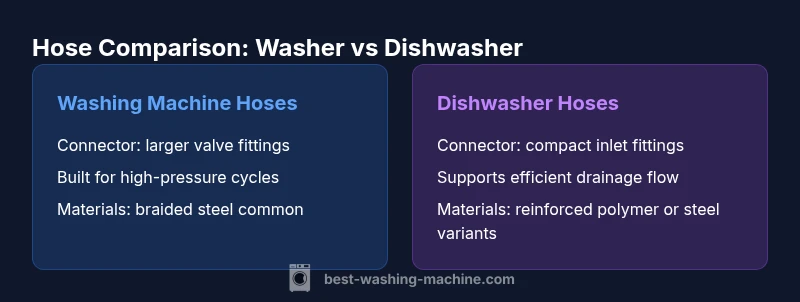
Comparison
| Feature | Washing machine hoses | Dishwasher hoses |
|---|---|---|
| Connector/Threading approach | Typically larger, standard for laundry valve connections | Typically smaller, designed for compact dishwasher inlet fittings |
| Pressure rating and burst resistance | Built to handle higher hot/cold water pressures and cycling | Engineered for dishwasher inlet pressures with emphasis on steady flow |
| End fittings and seal design | Often includes reinforced clamps and heavy-duty gaskets | Focus on tight seals in tight spaces and anti-kink routes |
| Material options | Braided steel, reinforced rubber, or polymer blends | Braided steel or reinforced polymer variants common |
| Typical installation location | Dedicated laundry cabinet or utility area with room for hoses | Under-sink or cabinet space near dishwasher supply and drain |
| Availability and cost range | Wide availability; price varies by length and material | Wide availability; generally similar pricing but different connectors |
What's Good
- Clarifies compatibility to prevent leaks
- Encourages checking manuals before replacement
- Helps avoid mixing hoses in sensitive appliances
- Promotes safer, code-compliant installations
Downsides
- Can cause confusion during multi-appliance setups
- May require adapters or parts not included with initial purchase
- Not all hoses are cross-compatible
- Potential increases in maintenance due to different standards
Do not assume interchangeability; use appliance-specific hoses.
The safest choice is to match each hose to its appliance using the manufacturer’s guidelines. This minimizes leak risks, protects warranties, and supports code compliance. When in doubt, consult the model-specific documentation before purchasing or installing a new hose.
FAQ
Are washing machine hoses interchangeable with dishwasher hoses?
No. Washing machine hoses and dishwasher hoses are designed for different connections and pressures. Use the hose specified by each appliance’s manufacturer. Verify compatibility with the model before installation.
No. They’re designed for different connections and pressures. Always use the hose listed by the appliance maker and check your model’s compatibility before installing.
What signs indicate a hose needs replacement?
Look for cracks, bulges, leaks, rust on fittings, or visible wear. If you notice moisture near connections, replace the hose promptly. Don’t delay if you see damage.
Watch for cracks, bulges, or leaks near the fittings. If you see moisture, replace the hose now to prevent water damage.
Can I use an adapter to connect a dishwasher hose to a washing machine faucet?
Adapters exist in some cases, but they can introduce leaks or code issues. It’s best to use the correct hose that matches the appliance and faucet without adapters.
Adapters aren’t usually recommended. Use the correct hose that fits your appliance and faucet directly.
How long do hoses typically last?
Hoses last several years with proper maintenance, but lifespan varies by material, water quality, and usage. Inspect annually and replace as needed rather than waiting for failure.
Hoses can last years with good maintenance. Inspect yearly and replace when signs of wear appear.
What should I look for when buying hoses?
Look for hoses labeled for appliances, braided steel construction, good kink resistance, and correct compatibility with your model. Check warranty terms and ensure the ends match your valves.
Choose appliance-approved hoses with sturdy builds and the right end fittings for your model.
The Essentials
- Always use manufacturer-approved hoses for each appliance
- Check connector types and valve compatibility before buying
- Inspect hoses annually for wear and replace as needed
- Avoid adapters that promise cross-compatibility without verifying codes
- Document replacement dates to support warranties and service