What Hoses Are Needed for Washing Machines: A Practical Guide
Discover which hoses your washing machine needs, how to choose durable materials, proper installation, and essential maintenance tips to prevent leaks and ensure reliable operation. Includes supply and drain hose sizes and safety guidelines.


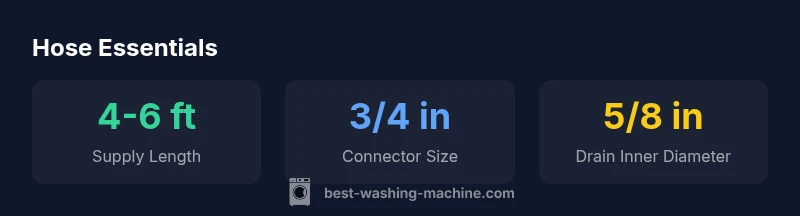
For most homes, the washing machine requires two hoses: a water-supply hose with 3/4-inch female connectors and a drain hose designed for standard laundry drainage. Drain hoses commonly fit 5/8-inch inner diameter. Inspect hoses for cracks or bulges, ensure metal braiding if present, and replace hoses at the first sign of wear or damage.
Why hoses matter for washing machines
Understanding what hoses are needed for washing machine is essential for safety, efficiency, and preventing water damage. The typical setup relies on two hoses: a supply hose that brings water into the drum, and a drain hose that removes used water. The exact hoses you need depend on your model and your home's plumbing, but knowing the basics helps you shop confidently and install correctly. In this guide, we cover the main types, common sizes, and wear signals to watch for. Poorly chosen or worn hoses are one of the leading sources of appliance leaks, so starting with the right hose pair is a smart first step for any laundry room.
Hose materials and connectors
Hose materials vary in durability, flexibility, and resistance to pressure. The most common options are rubber and reinforced braided hoses, sometimes with a stainless-steel exterior for extra protection. Rubber hoses are affordable but can crack over time if exposed to heat or sunlight. Reinforced braided hoses offer better durability and kink resistance, especially in tight cabinet spaces. When selecting hose connectors, most washing machines use standard 3/4-inch female connectors for water supply and a compatible drain port on the machine. If your home plumbing uses nonstandard fittings, you may need adapters or longer hoses to reach the shutoff valves without stretching the hose. For added peace of mind, consider stainless-steel braided supply hoses, which resist punctures and bulges better than basic rubber models. Always verify compatibility with your washer’s manual and the outlet valves before purchasing.
Matching hoses to your machine and plumbing
Before buying, identify the outlet types on both your machine and your plumbing. Most modern washers use two supply hoses with 3/4-inch female ends and a single drain hose that fits typical laundry drains. Measure the distance from the washer to the nearest shutoff valves to determine if a longer hose is needed, but avoid excessive slack that can cause kinking or sagging. Check whether your washer requires hot and cold supplies or only cold; many newer models operate on cold water, with hot being optional. If you live in a multi-story home or a tight laundry nook, look for hoses with bend radii and protective sheathing to minimize stress points. Finally, ensure that the drain hose has a secure loop above the drain to prevent backflow and potential siphoning.
Sizing, lengths, and fit considerations
Hose length should be long enough to reach valves without straining but not so long that it sags. A well-fitted hose reduces friction, wear, and the risk of leakage at the fittings. When measuring, account for the space behind the washer where hoses run, plus any future rearrangements. Connectors must align with the machine ports and the shutoff valves; misaligned connectors can cause cross-threading or leaks. If your space requires an angle, consider elbows or swivels designed for appliance hoses to keep the line straight and reduce torsion. In regions with hard water or high mineral content, choosing hoses with robust inner linings can prolong life and maintain flow.
Installation tips and maintenance
Proper installation starts with turning off the main water supply and cleaning the valve ports before attaching hoses. Hand-tighten first, then use a wrench for a quarter-turn to ensure a snug fit — avoid over-tightening, which can damage threads. After installation, run a short test cycle with the machine unloaded to observe any leaks at both ends. Weather and temperature changes can affect hose material; store hoses away from direct sunlight when not in use. Periodic inspection should be part of regular appliance maintenance: look for cracks, bulges, rust on metal components, and any discoloration where hoses bend. If you notice wear, replace the hose promptly rather than risking a leak. Consider adding a tray underneath and moisture sensors in areas prone to water damage for extra protection.
Common mistakes and quick fixes
Common mistakes include using old or damaged rubber hoses, over-tightening fittings, and routing hoses through sharp bends. Quick fixes include replacing worn hoses with braided stainless-steel options, using protectors to guard against rubbing on cabinet edges, and ensuring a proper loop for the drain hose to avoid backflow. Always unplug the machine and shut off water before attempting any replacement. If you detect a slow drip, replace the affected hose rather than trying to reseal. For older homes with unusual valve sizes, seek adapters rather than forcing a fit, which can cause cross-threading and leaks.
What to buy and where to buy
When shopping for hoses, prioritize durability, correct connector size, and manufacturer warranties. Look for hoses labeled as reinforced or stainless-steel braided for supply lines, and ensure the drain hose is suitable for your drain setup. Compare products that offer leak-prevention features such as integrated clamps or corrosion-resistant fittings. Buying a kit that includes both supply and drain hoses can simplify installation and ensure compatibility with common washer models. Always purchase from reputable retailers or the washer manufacturer to avoid counterfeit parts. Finally, check for certifications or standards that indicate quality construction and long-term reliability.
Washing machine hose components and their roles
| Item | Description | Typical Size |
|---|---|---|
| Water supply hose | Connects the washer to water outlets; carries hot or cold water | 3/4 in female connectors |
| Drain hose | Carries wastewater to drain; prevents backflow | 5/8 in inner diameter (typical) |
| Hose extensions | Increase reach or replacements | Varies by model |
| Hose clamps | Optional accessories to secure hoses | N/A |
FAQ
Do I need both hot and cold hoses for my washing machine?
Most washers use two supply hoses, one for hot and one for cold. Some models only require cold water with a separate internal heating element; always check your manual. If both are required, ensure both hoses are rated for the temperatures in your area.
Most washers need both hot and cold supply hoses; check your model to confirm.
Are metal braided hoses safer than rubber?
Metal braided hoses tend to resist punctures and bulges better than plain rubber. Both types can leak if the connections aren’t secure or the fittings wear out. Prioritize quality, proper length, and correct fittings.
Braided hoses last longer and resist damage, but proper installation is still key.
Can I reuse old hoses?
It’s generally not recommended to reuse old hoses. Worn or cracked hoses are a common cause of leaks, even if they appear intact. Replace with new hoses when you upgrade the washer or detect wear.
Don’t reuse old hoses—replace them if you see wear.
How often should hoses be replaced?
Inspect hoses annually and replace if there are signs of wear, cracking, or bulging. A practical rule is to replace every few years, especially in households with hard water or fluctuating temperatures.
Check every year and replace as needed.
What should I do if I notice a leak?
Shut off water at the valves, unplug the machine if needed, and inspect the hose ends for cracks or loose fittings. Replace the hose if the leak persists after tightening or if there is visible damage.
Shut off water, inspect, and replace if leaking.
Are there hoses compatible with hot water?
Yes, many hoses are rated for hot water. Choose hoses labeled for hot and cold use if your setup requires both, and ensure the temperature rating matches your water supply.
Some hoses handle hot water—check ratings before use.
“Choosing the right hoses is a low-cost defense against water damage; regular inspection and timely replacement save homeowners from costly leaks.”
The Essentials
- Identify the two core hose types first: supply and drain.
- Choose durable materials (braided steel or reinforced rubber) and correct connectors.
- Measure length and ensure fit with your valves and drain location.
- Inspect hoses regularly and replace at first signs of wear or damage.
- Follow manufacturer guidelines for installation to minimize leak risk.