Can You Put a Washing Machine in a Skip? A Practical Guide
Learn whether you can place a washing machine in a skip, the rules, and safer disposal options. This guide covers WEEE recycling, provider policies, and practical steps for responsible appliance removal.


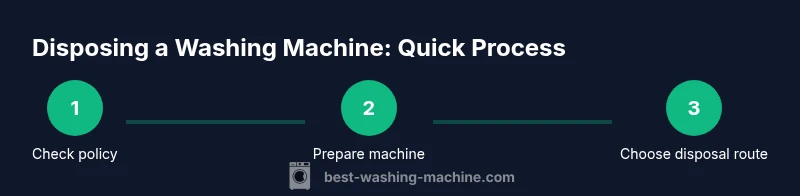
Can you put a washing machine in a skip? Generally, no. Most skip hire services prohibit bulky electrical waste, and local rules require proper WEEE recycling. To dispose correctly, confirm with your provider, prepare the appliance (unplug, drain water, remove door), and consider bulky waste collection or a dedicated WEEE drop-off for proper recycling. This guide explains safe, compliant options.
Why disposal of washing machines via skips is tricky
Disposing bulky appliances like washing machines in a skip is not as simple as tossing other trash. These machines include electronics, metals, and plastics, and they may still contain water or detergents. Local rules and skip providers often impose restrictions on electrical waste, making it risky to assume a washer will be accepted by default. According to Best Washing Machine, the safest first move is to verify policy with the skip company before loading anything. The consequence of ignoring rules can range from refused loads at the tipping site to fines or penalties for improper disposal. Even when a skip is labeled for household waste, white goods frequently require a separate recycling route. Knowing this upfront saves time, money, and potential environmental harm while keeping you compliant with local waste-management practices.
In practice, the question “can you put washing machine in skip” usually has a negative answer unless you arrange a special service. Homeowners should also consider the weight of a washer: a full machine can push a standard skip beyond its weight limit, resulting in higher charges or additional fees. For renters or small businesses, coordinating with a council bulky-waste program or a dedicated WEEE recycling point is often more straightforward and environmentally responsible.
wordCountPleaseNote
format
Tools & Materials
- Heavy-duty work gloves(Protect hands from sharp edges and rust; choose cut-resistant if possible)
- Screwdriver or pliers(To detach hoses or panels as needed)
- Bucket or tray(Catch residual water when disconnecting hoses)
- Towel or absorbent cloth(Wipe up small spills and prevent leaks during handling)
- Plastic sheeting or old tarp(Contain leaks and protect the ground around the skip area)
- Sealable bag or container for refrigerants/oils (if present)(Only handle if you know the appliance contains fluids; follow local guidance)
- Marker and tape(Label parts that cannot be mixed with general waste)
Steps
Estimated time: 30-60 minutes
- 1
Check skip policy
Call the skip company or check their website to confirm whether bulky electrical waste or white goods can be accepted. If not, ask about alternatives like a dedicated white-goods collection or a WEEE drop-off. This prevents delays and unexpected fees.
Tip: Get confirmation in writing (SMS or email) for accountability. - 2
Prepare the appliance
Unplug the machine and disconnect hoses. Drain any remaining water into a container and wipe dry. If the door is reversible, consider removing it or securing it so it cannot close on a person.
Tip: Always unplug before touching electrical components to avoid shocks. - 3
Secure the area
Place a towel or absorbent material under the drain outlet to catch leaks. Use plastic sheeting if you anticipate minor drips. Keep the surrounding area clear to prevent slips and damage.
Tip: Do not mix liquids with other waste in the skip; keep a separate container if possible. - 4
Load responsibly
If the skip policy allows it, load the washer upright and distribute weight to avoid tipping or crushing other items. Do not overload the skip or force a load that exceeds the stated capacity.
Tip: Balance heavier items at the bottom and lighter items on top to maintain stability. - 5
Confirm disposal route
Ensure you receive a disposal acknowledgment from the provider, or be prepared to be redirected to a proper WEEE recycling facility. If a fee applies, get a clear breakdown.
Tip: Keep receipts or confirmation numbers for future reference.
FAQ
Is it legal to put a washing machine in a skip?
Legality depends on local regulations and the skip provider. Many areas restrict bulky electrical waste or require it be recycled separately. Always check policy before loading.
Whether you can put a washing machine in a skip depends on local rules and the provider. Check their policy first.
What are safer disposal alternatives if a skip isn’t allowed?
Consider a bulky-waste collection service, a dedicated WEEE recycling drop-off, or a charity take-back program. These paths ensure proper recycling and minimize environmental impact.
Bulky-waste pickup, WEEE recycling sites, or charity take-back are safer disposal options.
Do all skips accept washing machines?
Not all skips accept washing machines. Many providers restrict electrical devices; some offer a separate white goods service. Always confirm in advance.
Not all skips accept washers; ask ahead about white goods services.
What should I do to prepare the washer for disposal?
Unplug, drain residual water, detach hoses, and consider removing the door for safety. Label any restricted parts and ensure the appliance is safe to handle.
Unplug, drain water, detach hoses, and secure the door if possible.
Will there be extra charges for washing-machine disposal?
Some providers charge a premium for bulky electrical waste. Get a written quote and understand whether it covers recycling fees.
Extra charges may apply; get a written quote before disposal.
What environmental considerations should I keep in mind?
WEEE rules require proper recycling of electrical waste. Improper disposal can harm the environment and may breach local regulations.
Recycling electrical waste protects the environment and meets regulations.
Watch Video
The Essentials
- Verify skip policy before loading any washer.
- Follow WEEE guidelines by using proper recycling routes.
- Drain water and unplug before disposal.
- Consider bulky-waste or WEEE drop-offs as safer alternatives.
- Document disposal details for future reference.