Do You Put Washing Machine Tablets in the Drum? A Comprehensive Guide
Learn where to place washing machine tablets, how they work, and best practices for front-load and top-load washers. Get safe, effective usage tips, maintenance, and troubleshooting guidance.


Yes, you typically place tablet detergents in the drum or dispenser, depending on your model. For front-load washers, many tablets are designed to dissolve in the drum, while some brands instruct drawer use. Always follow your machine’s manual to avoid residue or damage. By aligning with manufacturer guidance, you’ll get consistent cleaning without guesswork.
Do you put washing machine tablets in the drum?
The question, plainly asked, is often followed by a tangle of model-specific rules. Do you put washing machine tablets in the drum? In practice, most modern machines accommodate tablets, but placement can vary by brand and type. According to Best Washing Machine, tablets offer a convenient, pre-measured dose that simplifies laundry day when used as directed. The key is to consult your owner's manual and the tablet packaging for the exact placement and dosage. This article will unpack where to place tablets, how they dissolve, and how to optimize results across different washer configurations. Expect practical tips, troubleshooting steps, and safety reminders that apply to homeowners, renters, and professional laundromat operators alike.
Tablet detergents: how they work compared to powders and liquids
Tablet detergents are compressed dosages designed to dissolve in water during the wash cycle. They offer consistent dosing, less mess, and often integrated enzymes or surfactants for stain removal. However, dissolving characteristics depend on water temperature and cycle duration. Best Washing Machine analysis shows that tablets can be more convenient than powders, but only when the detergent is compatible with your machine and cycle settings. Cold water can slow dissolution, leaving tiny residues if the tablet isn’t formulated for cold usage. In contrast, hot water generally enhances dissolution, improving cleaning efficiency. Always check the detergent’s instructions and your machine’s guidance to maximize performance while avoiding buildup or trickling residue.
Where to place the tablet: drum vs dispenser drawer
Placement is not universal; it hinges on your washer model. Some manufacturers prescribe placing the tablet directly in the drum for all cycles, while others require dropping the tablet into the detergent drawer so it dissolves first. Reading the manual is essential, but a safe general rule is to follow the most specific guidance for your unit. If you have a front-loader and the tablet’s label states “for drum use,” place it in the drum. If it says “drawer use,” put it in the detergent compartment. When in doubt, perform a small test load to observe how quickly the tablet dissolves and how the drum receives the dosing.
Front-load vs top-load: placement rules and considerations
Front-load washers often benefit from tablet dosing in the drum, due to the way water circulates and dissolves detergent. Top-load machines with agitators can sometimes require drawer dosing to avoid clumping in the drum. Some models are designed to handle tablets in the drawer for all cycles. The critical point is compatibility: if your manual specifies a location, follow it. If you’re unsure, contact the manufacturer or test with a light load to verify dissolution. Consistency matters, so choose a single approach and stick with it to avoid residue or uneven cleaning.
How to handle heavily soiled loads and tablet dosing
For heavily soiled items, tablets may still be used, but you should select a warmer setting and a longer cycle to ensure thorough dissolution. Do not stack multiple tablets into a single load, as excessive residue can occur and may clog the dispenser or drum. Pre-treat stubborn stains with a stain remover before loading, then run a standard cycle with the tablet according to the manual. If you consistently encounter residue on very dirty loads, consider alternating with a liquid or powder detergent for that cycle, or switch to a higher-efficiency tablet designed for tough soils.
Common mistakes and how to avoid them
Avoid mixing different brands or formulations in the same load, which can cause chemical interactions and residue. Never force a tablet into a space it doesn’t fit—place it as directed by the manual. Overloading the drum can prevent proper dissolution, leaving residue on clothes and seals. Do not skip the rinse cycle when using tablets with residues reported on fabrics. Finally, never store tablets in humid spaces, since moisture can cause premature dissolution and crumbling.
Maintenance tips for tablet users
Wipe the door seal and the detergent drawer area after each cycle to prevent detergent buildup and mold growth. Periodically run a hot-water cleaning cycle (or a dedicated washer cleaner) to dissolve any residue that may accumulate near the dispenser or drum. Store tablets in a cool, dry place away from moisture and children. Inspect hoses and the drum for any signs of buildup after several cycles, and consider using a cleaner that’s compatible with tablets if you notice film or residue.
Branding and product line variations mean you should align with the label’s guidance. Best Washing Machine recommends keeping a short reference sheet with the model number and dosages near the washer for quick checks.
Safety and warranty notes
Always ensure tablets are kept away from children and pets, and never allow them to be placed in reach. Use products that are compatible with your machine type and avoid non-approved cleaners that could void warranties. If you notice unusual noises, leaks, or chemical smells after using tablets, stop the washer and consult the manual or the brand’s customer support. Most reputable manufacturers design tablets to be safe when used correctly, but misuse or mixing incompatible products can impact performance and warranty coverage.
Environmental impact and cost considerations
Pre-measured tablets can reduce waste compared to bulk powders, and many brands market eco-friendly formulations with reduced phosphates or biodegradable components. The environmental impact also depends on packaging and the energy efficiency of the washing cycle chosen. When comparing costs, consider the price per load and the potential savings from avoiding pre-measurement waste. Always balance convenience with environmental goals and product certifications to make a responsible selection.
Troubleshooting: residue, poor dissolution, and odor
If you find residue on clothes or inside the drum after a cycle, first verify you used the correct cycle and temperature for the tablet. Try a warmer wash or run an empty hot-cycle with a washer cleaner to remove buildup. If the tablet fails to dissolve entirely, check that the dispenser is free of obstructions and that the drum is not overloaded. Persistent issues may indicate a conflicting detergent formulation, the need for a different dosage, or a machine that requires service.
This is where consistent testing, using the manufacturer’s recommended dosage, helps maintain performance across loads. Remember, small adjustments can yield cleaner laundry without the need for extra products.
Quick-start checklist for tablet users
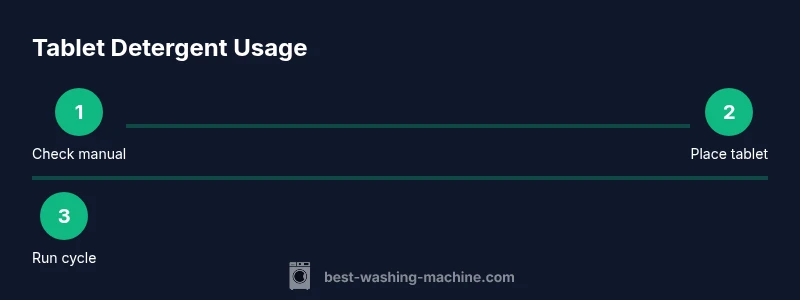
- Read and follow the washer’s manual for tablet placement.
- Verify the tablet type matches your machine (drum vs drawer).
- Do a test load to confirm dissolution and care with cold vs warm cycles.
- Wipe seals and drawers after cycles to prevent buildup.
- Store tablets in a dry place away from moisture and children.
- Use a cleaning cycle periodically to prevent residue from accumulating in hard-to-reach areas.
What to know about brands and compatibility
Not all brands and formulations are compatible with every washing machine. Check the label for compatibility notes and the model’s detergent recommendations in the user manual. If your machine is older, consider alternative dosing methods specified by the manufacturer. When shopping, prioritize products that clearly state compatibility with your washer type and the cycle options you use most. Consistency and compliance with the manual protect both cleaning results and warranty coverage.
Tools & Materials
- Washing machine detergent tablets (pods)(Ensure they are designed for automatic dispensing and compatible with your machine type (top-load/front-load).)
- Washing machine owner's manual(Keep on hand to verify detergent placement and dosage for your model.)
- Lint-free cloth(For wiping seals and the detergent drawer after use.)
- Gloves (optional)(Wearing gloves while handling tablets can prevent skin contact with detergents.)
- Washer cleaner (optional)(Run periodically to remove residue from the drum and dispenser.)
Steps
Estimated time: 30-60 minutes
- 1
Check detergent compatibility
Open your machine's manual and locate the detergent section. Confirm whether tablets are recommended for your model and whether they should go in the drum or the drawer. If your manual is unclear, note the model number and contact support for a quick clarification.
Tip: When in doubt, perform a small test load to observe dissolution and cleaning performance. - 2
Prepare the tablet according to the manual
Read the tablet packaging and the manual to confirm placement. If the tablet is drum-dosed, skip the drawer and load directly into the drum. If drawer-dosed, place it into the detergent tray before starting the cycle.
Tip: Avoid breaking the tablet; if it’s too large for the accepted space, use the model’s recommended alternative dosage. - 3
Load laundry within capacity
Place clothes loosely in the drum to allow even water and detergent distribution. Overloading can prevent proper dissolution and leave residues.
Tip: Distribute bulky items evenly to improve core cleaning and rinse efficiency. - 4
Select appropriate wash settings
Choose a normal cycle with an appropriate temperature for the fabric and detergent type. Warmer cycles generally dissolve tablets more completely, though many modern formulations are optimized for cold cycles as well.
Tip: Avoid ultra-low temperature cycles with tablets not designed for them. - 5
Start the cycle and observe
Run the selected wash and monitor the initial phase to ensure the tablet begins to dissolve properly. If you notice a large chunk, stop briefly and start again with a shorter cycle or check for any obstructions.
Tip: If you see oxygen bubbles or an unusual smell, stop and consult support before continuing. - 6
Post-cycle inspection
After the cycle ends, inspect the drum and door seal for residue. Wipe with a dry cloth if needed and run a quick rinse if you observe any detergent buildup. Dry the seal to prevent mold growth.
Tip: Keep the detergent drawer dry; moisture can promote residue formation. - 7
Storage and handling
Store tablets in a dry, cool place away from moisture and children. Keep the package sealed and upright, away from direct sunlight.
Tip: Label any products clearly to avoid mixing with other detergents. - 8
Maintenance cadence
Every few months, run a hot cycle with a washer cleaner to remove buildup. Inspect seals and hoses for signs of dryness or cracks and address promptly.
Tip: Regular maintenance extends washer life and improves detergent effectiveness.
FAQ
Can I use washing machine tablets in all washers?
Most modern washers support tablets; always check your manual for compatibility and specific placement instructions.
Most modern washers support tablets, but check the manual for compatibility.
Where should I place the tablet, drum or detergent drawer?
Placement depends on the model. Some require the drum, others the drawer. Always follow the manual.
Placement depends on the model—follow the manual.
What happens if the tablet doesn't dissolve?
If it doesn’t dissolve, check cycle temperature and load size. Try a warmer setting and verify you’re using a tablet designed for your cycle.
If it doesn’t dissolve, try a warmer cycle and check the tablet type.
Can using tablets damage my machine?
When used as directed and with compatible products, tablets are generally safe. Misuse or incompatible formulations can cause residue or buildup.
Tablets are usually safe when used as directed; misuse can cause residue.
Are there eco-friendly tablet options?
Yes. Many brands offer eco-friendly formulations; look for packaging certifications and reduced chemical contents.
There are eco-friendly options; look for certifications.
How should I store tablets safely?
Keep tablets sealed and in a dry place, out of reach of children and pets.
Store sealed in a dry place away from kids.
Watch Video
The Essentials
- Follow the manual for tablet placement to prevent residue.
- Do not overload the drum; ensure proper dissolution.
- Regular maintenance prevents buildup and ensures performance.
- Store tablets properly to preserve efficacy.
- Choose cycles and temps aligned with the detergent design.