Fix Bosch Washing Machine: Step-by-Step Troubleshooting
Practical, at-home guidance to diagnose and fix common Bosch washing machine faults, including not draining, not spinning, and leaks. Learn safe tools, step-by-step checks, and when to call a professional.


You will learn how to diagnose and safely fix common Bosch washing machine issues, such as not draining, not spinning, and leaks. You’ll verify electrical safety, inspect drains and filters, and perform practical fixes you can do at home before calling a technician. This quick path helps you save time and protect your appliance.
Why Bosch Washing Machines Experience Common Faults
Bosch washing machines are built with durable components and smart sensors, but they still face occasional faults as everyday wear and household conditions change. The most frequent problems include drainage failures, drum not spinning, leaks around seals, and door-lock errors. When you start troubleshooting, a structured approach helps you identify whether the issue is electrical, mechanical, or a simple clog. According to Best Washing Machine analysis, drain- and spin-related faults account for a large portion of service calls, and many stem from routine clogs, clogged filters, or worn-out hoses. This guide aims to empower you to diagnose fix-bosch-washing-machine issues safely at home, so you can avoid unnecessary trips to the repair shop. Remember: model-specific variations exist, so always check your user manual for exact parts locations and replacement numbers.
Safety First: Power, Water, and Disposal
Before you touch any moving parts or open panels, unplug the machine and shut the water supply to prevent leaks. Do not work on live electrical components with wet hands, and avoid using metal tools near live circuits. Place towels or a shallow bowl to catch any residual water from the drum. If the machine is mounted or installed in a tight space, ensure you have ample room to work and keep the area dry. When in doubt, turn off the circuit breaker to guarantee no energy is flowing to the washer during inspection. These precautions protect you and your home from common hazards during DIY repairs.
How to Diagnose Not Draining
Not draining is one of the most common Bosch washer issues and usually has a straightforward fix. Start by checking the drain hose for kinks or clogs, then inspect and clean the pump filter. If the filter is clean and the hose clear, test the pump by running a drain-only cycle and listening for the pump motor. If you hear no pump activity or see water still in the drum, there may be an obstruction in the pump or a faulty sensor. If the machine still wont drain after these checks, consider inspecting the drain pump impeller and wiring connections for signs of wear or loose contacts. Always reassemble carefully and run a short test cycle to confirm.
How to Diagnose Not Spinning
A drum that refuses to spin can be caused by a worn belt, a faulty motor coupling, a jammed drum, or an electronic control issue. Start with a simple balance check: ensure the load is evenly distributed and not too heavy for the drum. If you have access to the belt drive, inspect the belt for cracks or looseness and replace if needed. For front-loading models, verify the door lock engages fully; a faulty door lock can prevent spinning. After any adjustment, run a brief spin cycle to observe performance and listen for abnormal noises.
Leaks and Drips: Quick Checks
Leaks around the door seal or hoses are common, especially in newer or high-use homes. Inspect the door boot for cracks or worn gaskets and ensure the drum is centered. Check all hoses for bulges, cracks, or loose fittings, and tighten clamps as required. If you see water pooling under the machine, inspect the pump housing and drainage lines for leaks. Small leaks often come from a loose hose clamp or a worn seal, both of which are typically quick, affordable fixes.
Filter, Drain Pump, and Hose Inspection
Many Bosch washers rely on a small filter and a compact drain pump to manage water flow. Start by locating the filter access panel (usually near the bottom front). Place a towel and a shallow container to catch water when you open it. Remove any visible debris and rinse the filter under running water. Inspect the pump inlet and outlet hoses for obstructions or kinks. If the hoses are hard to access, consult the user manual for model-specific guidance. Reassemble carefully and run a test cycle to verify.
Common Fixes You Can Do
Basic maintenance often resolves the majority of faults. Clean the pump filter and drain hose, ensure hoses are free of kinks, and verify the drum can spin freely by manually rotating it if safe to do so. Tighten loose hose clamps and replace any cracked hoses. Reset the machine by unplugging it for a minute and plugging back in, then run a short diagnostic cycle. If your model shows an error code, refer to the manual or Bosch support site to interpret the code and follow model-specific steps.
When Professional Service is Required
If you hear grinding, burning smells, or observe visible damage to internal components, stop using the machine and contact a qualified technician. Electrical issues, unusual sounds, or repeated error codes after basic checks often indicate a failed motor, control board, or pump assembly that requires professional repair. For expensive or complex issues, obtaining an estimate from a Bosch-authorized service center helps you decide whether repair or replacement is more cost-effective.
Maintenance to Prevent Future Breakdowns
Regular cleaning of the filter and drain hose prevents clogs, while keeping the door seal clean reduces leaks. Run a monthly maintenance cycle with a descaling agent or an appropriate cleaner to prevent mineral buildup. Inspect hoses and the pump area for signs of wear every few months and replace worn parts promptly. Finally, avoid overloads by distributing laundry evenly; this reduces strain on belts and bearings and keeps the drum balanced for smoother operation.
Tools & Materials
- Flathead screwdriver(Small flathead for panel screws)
- Phillips screwdriver(Common size #2 for fasteners)
- Multimeter (voltage tester)(Test electrical connections safely)
- Pliers (needle-nose)(Grip hoses and clamps)
- Towel or shallow container(Catch water during drain checks)
- Flashlight(Illuminate dark panels and corners)
- Bucket(Collect water from the drain area)
- Replacement pump or filter (model-specific)(Only if you know the exact Bosch model number)
- Gloves(Protect hands from sharp edges)
- Model-specific service manual or guide(Helpful for parts locations and codes)
Steps
Estimated time: 45-60 minutes
- 1
Power down and prepare
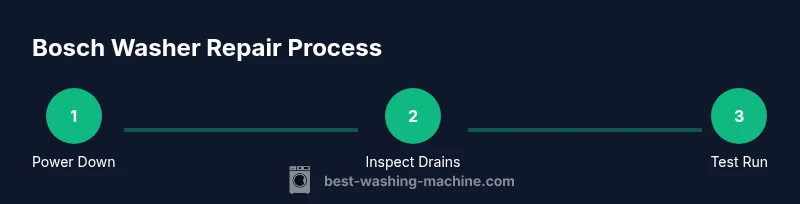
Unplug the machine and switch off the water supply. Move the washer to a clear workspace and put towels down to catch any residual water. This initial safety step prevents shocks and minimizes mess before you begin.
Tip: Take photos of wiring and hoses before removing any panels to aid reassembly. - 2
Gather tools and safety gear
Collect essential tools and a battery of safety gear. Dress in dry hands and keep your work area dry. Having everything at hand reduces repeated trips and improves accuracy during disassembly.
Tip: Arrange tools in a tray so you don’t misplace small screws. - 3
Access the drain filter and hose
Open the access panel for the drain pump/filter. Place a towel and bucket beneath to catch water. Remove the filter and inspect for debris, then clear the area around the drain hose.
Tip: Keep the filter cap oriented so you can reinstall it without leaks. - 4
Inspect the pump and hoses
Check the pump housing and hose connections for blockages, cracks, or loose clamps. Detach and clean any debris found in the pump impeller area. Reconnect all hoses firmly.
Tip: Do not tug on hoses; gently release clamps with proper tools. - 5
Check drum, belt, and door latch
Rotate the drum by hand if safe to ensure it spins freely. Inspect the drive belt (if present) for wear. Ensure the door latch engages fully and seals correctly.
Tip: If the belt is cracked or stretched, replace with the correct belt for your model. - 6
Test run and observe
Plug in the machine, reattach the hoses, and run a short cycle to observe performance. Listen for abnormal sounds and watch for leaks or poor draining/spinning.
Tip: Document any codes or symptoms to guide professional service if needed.
FAQ
What should I do first if my Bosch washing machine won't drain?
Start with a safe check: unplug the machine, inspect the drain hose for kinks, then remove and clean the pump filter. If water remains, test the pump by running a drain cycle. Seek professional help if the issue persists.
First, unplug the washer, check the drain hose for kinks, and clean the pump filter. Run a drain cycle to test the pump; if it still won’t drain, contact a professional.
Why won’t my Bosch washer spin after draining?
Causes include a worn drive belt, faulty motor coupling, a jammed drum, or a bad door latch. Inspect for visible wear, test the drum’s rotation by hand if safe, and verify the belt is intact. If symptoms persist, professional diagnosis may be necessary.
It could be a worn belt, a broken coupling, a jam, or a faulty latch. Check those parts, and if it still won’t spin, call a pro.
Is it safe to fix a Bosch washing machine myself?
Basic maintenance such as cleaning the filter, checking hoses, and reseating panels is reasonably safe if you follow safety steps. Do not attempt high-voltage repairs or disassembly beyond your confidence level. When unsure, consult a professional.
DIY can be safe for simple tasks, but avoid high-voltage parts and complex disassembly. If unsure, get a pro.
How can I reset a Bosch washer after a fault code appears?
Unplug the unit for a minute, then plug it back in and restart a normal cycle. If the fault recurs, note the code and refer to the manual or Bosch support site for model-specific steps.
Unplug for a minute, plug back in, and restart. If it comes back, check the manual for the exact fault code steps.
When should I replace parts rather than repair?
Consider replacing parts if they show visible damage, wear beyond safe limits, or recurrent failures despite cleaning and reseating. For older models, compare repair costs with the price of a new unit and factor in reliability.
Replace parts when damaged or repeatedly failing; compare repair costs with a new unit for older models.
What tools do I need for basic Bosch washer repair at home?
Essential tools include screwdrivers, pliers, a flashlight, a towel, and a multimeter for electrical checks. Always follow the model-specific manual for safe disassembly and part locations.
You’ll want screwdrivers, pliers, a flashlight, towels, and a multimeter for basic electrical checks.
Watch Video
The Essentials
- Identify the fault type before disassembly.
- Safety first: unplug and shut off water.
- Clean and inspect the drain system to fix draining issues.
- Check the belt, pump, and door latch for spinning problems.
- If codes persist, seek professional service with documentation.