Is Your Blanket Too Big for the Washer? A Practical Guide
Learn how to know if a blanket is too big for your washing machine with practical checks, measurements, and washing strategies to protect your appliance and outfit your laundry.


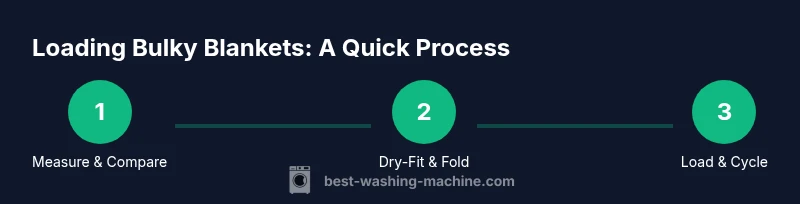
Is your blanket too big for the washer? You can tell by checking fit and balance before starting a cycle. Measure the blanket and compare to your drum space, fold or roll to test clearance, and avoid forcing it in. If it crowds the drum, causes vibration, or stops mid-cycle, it’s too big.
Why blanket size matters for washers
Blankets come in different sizes and fabrics, and the size relative to your washer drum matters for successful cleaning. A blanket that nearly fills the drum can prevent water and detergent from circulating evenly, leading to incomplete cleaning and extra wear on the motor and suspension. According to Best Washing Machine, oversized blankets can stress the motor and disrupt drum balance, increasing vibration and the risk of leaks. Always start with the blanket's dimensions and the washer's official drum size from the manual, not guesswork. This guidance helps you avoid damage to the appliance and ensures a safer, more effective wash for your bedding.
When you overfill a drum, water can't reach all fibers equally, which can leave crumbs of dirt and detergent on some sections. Even if the blanket fits visually, you want room to move and water to flow around every thread. If you routinely wash large blankets, consider models with larger drums or specialized cycles, but never force a bulky item into a tight opening. Your goal is clear circulation, not a tight fit.
How to measure blanket and compare to drum space
Begin by measuring the blanket's length and width at its widest points, and note its thickness when folded. Compare these numbers to the washer's drum diameter and depth as described in the user manual. Since drum capacity varies by model, focus on whether you can fit the blanket with several inches of clearance on all sides and enough space for water to circulate. If the blanket fills most of the drum with little to no wiggle room, it's probably too large for a standard load. If uncertain, perform a dry test by placing the folded blanket in the drum and rotating the drum by hand to feel resistance. This helps you gauge whether a full wash would be balanced or lopsided during agitation.
The test-fit method: folding and rolling
Fold the blanket along its length and width to create a compact bundle, then attempt to insert it into the drum with the door open. If you can slide it in and still move the fabric without forcing, it may be safe. Try rolling the blanket as you load to ensure even distribution; you should still be able to close the lid or door comfortably and have room for water to circulate. If the bundle sticks, bulges, or prevents the drum from turning freely, reduce size or split the wash into multiple cycles. A well-fitted load feels balanced and spins smoothly without unusual noise or gait.
Signs your blanket is too big
Watch for clear indicators that a blanket is too large for a standard wash. The drum may feel crowded, and you might hear excessive vibration or see the washer struggle to reach full spinning speed. If the lid or door locks or unlocks during the cycle, or if water pools unevenly around the tub, these are signals of an imbalanced load. Detergent may not dissolve completely, leaving residue on fibers. If you notice these signs, pause the cycle, remove some fabric, or switch to a smaller, split load or alternative cleaning method. These cues help prevent wear on the motor and suspension system.
Washing strategies for large blankets
When a blanket is large but washable in your model, use a gentle cycle with cold or warm water, not hot, to protect fibers. Consider washing it with a lightweight, evenly distributed load to aid balance; avoid stuffing the drum. Use a mild detergent and skip heavy fabrics like towels in the same cycle to reduce bulk. If your blanket is extremely bulky, try washing in halves or thirds, then reassemble for drying. For some fabrics, a mesh laundry bag can help prevent snagging and distribute weight more evenly, but test fit first to ensure it still fits comfortably.
Alternatives and care options for oversized blankets
If a bulky blanket clearly won’t fit, explore alternatives to a full-home wash. Spot cleaning large stains with a mild detergent solution can be effective for small areas, and airing out between cleanings helps reduce odor. A trip to a laundromat with larger front-loading machines is a practical option for oversized blankets, or you may opt for professional cleaning services for delicate fabrics. Always check the blanket's care label for washing limits and temperature guidance, and consider a hand-wash approach for very delicate or heavy textiles.
Pre-wash care and fabric considerations
Fabric type matters when deciding how to wash a large blanket. Cotton blends and wool blends may tolerate machine washing better than plush fleece or thick chenille, which can shed and mat if squeezed into a small drum. Always read the care label for water temperature, cycle recommendations, and drying guidance. Pre-treat stains, and consider washing in layers of lighter loads to reduce stress on the machine. Avoid using too much detergent, since excess soap can create excessive suds and imbalance the drum.
Quick checks before starting a cycle
Before you run any cycle with a big blanket, perform a quick fit test and distribution check. Move the blanket around with your hands to feel whether it can rotate freely and whether there’s even space around all sides. Ensure small towels or rags don’t get stuck inside the blanket, as they can throw off balance. Verify that the home washer’s drum is free of debris that could snag fibers and hamper movement. If you have doubts, opt for a smaller load or change the approach for greater safety.
Authority sources and additional guidance
For appliance safety and care guidelines, consult reputable sources. The U.S. Consumer Product Safety Commission (CPSC) and energy-efficiency programs offer general care guidance for home appliances, while extension services from universities provide practical laundry tips for families. These resources reinforce best practices for loading bulky textiles and maintaining machine longevity. You can refer to: CPSC — https://www.cpsc.gov; Energy.gov — https://www.energy.gov; Extension programs — https://extension.illinois.edu.
Final verdict
The Best Washing Machine team emphasizes that care and fit take precedence over simply filling the drum. If a blanket barely fits with minimal clearance, wash in parts or opt for an alternate cleaning method to protect your machine and fabric. The goal is clean laundry without stressing the washer, so whenever in doubt, choose smaller loads or external cleaning options. The verdict is clear: prioritize fit, follow the manual, and use alternative methods when necessary.
Tools & Materials
- Measuring tape(Measure blanket length and width at widest points)
- Washer user manual(Check drum dimensions and max recommended blanket size)
- Blanket(The item to test for fit)
- Notebook and pen(Record measurements and fit results)
- Mesh laundry bag (optional)(Helps distribute weight for bulky loads)
Steps
Estimated time: 15-25 minutes
- 1
Measure blanket dimensions
Lay the blanket flat and measure length and width at the widest points. Note thickness when folded to estimate potential bulk. Compare results against your washer’s drum capacity as described in the manual.
Tip: Record measurements to compare against multiple drum sizes if you own more than one machine. - 2
Check drum clearance
With the door open, place the folded blanket near the drum opening to test if there is several inches of clearance around all sides. A tight fit often signals a potential overload.
Tip: If the blanket barely fits, consider splitting the load or washing in halves. - 3
Test-fit by dry loading
Insert the folded blanket into the drum without water or detergent. Try to rotate the drum by hand to feel for resistance or binding.
Tip: If you can’t rotate freely, don’t proceed with a full wash. - 4
Decide on hardware load strategy
If the blanket is large, plan to wash in halves or use a larger-capacity machine if available. Alternatively, opt for a laundromat with bigger front-loading machines.
Tip: Balancing is easier with a similar-weight partner item; pair with a light towel if needed. - 5
Choose the right cycle
Use a gentle or bedding cycle with cold or warm water depending on fabric. Avoid hot water and high-speed spins that can stress fibers and the motor.
Tip: Use a mild detergent and avoid over-sudsing. - 6
Load loosely and distribute evenly
Place the blanket in the drum so it can move; distribute evenly around the circumference to avoid one-sided stress during agitation.
Tip: Add a lightweight item to help balance if the blanket is unusually bulky. - 7
Run a short test cycle
If possible, run a quick test cycle with a small portion of water and detergent to evaluate balance before a full wash.
Tip: Monitor for unusual sounds or excessive vibration during the test. - 8
Assess after the cycle
Check the drum for wear, any loose fibers, and whether the blanket is evenly cleaned. If not, re-evaluate loading or consider alternate methods.
Tip: Dry the blanket thoroughly to prevent mildew and odors.
FAQ
Can I wash a very large blanket in a standard washer?
Yes, but only if it fits with several inches of clearance and can move freely during the wash. If it doesn’t, split the load or use a different method. Always consult the blanket care label.
You can wash a large blanket in a standard washer if it moves freely and isn’t packed tight. If not, split it or seek an alternative method.
What signs indicate the blanket is too big?
Common signs include excessive vibration, crowding of the drum, slow or halted spinning, and uneven water distribution. If you notice these during a test or cycle, stop and adjust the load.
Look for vibration, drum crowding, and uneven cycling. Stop and adjust if you see these signs.
Should I cut a blanket into smaller pieces to wash it?
Cutting is usually not recommended and can damage fibers and seams. Instead, wash in halves or use a larger machine or laundromat with appropriate capacity.
Breaking the blanket into pieces is rarely a good idea; wash in smaller loads or find a bigger machine.
What should I do if my home washer can’t handle the load?
Use a laundromat with larger front-loading machines or consider professional cleaning for bulky blankets. Always check care labels first.
If your home washer is overwhelmed, go to a laundromat or professional cleaner.
Are fleece blankets harder to wash in the washer?
Fleece can be bulky and fluffy, which increases load volume. It still needs adequate drum clearance; consider split loading with lighter items where possible.
Fleece is bulky; make sure it fits and consider washing in parts if needed.
How can I protect my machine when washing large blankets?
Use a gentle cycle, cold water, and mild detergent. Balance the load, avoid overloading, and monitor for unusual noises. Regular maintenance helps prevent wear.
Protect the machine by choosing gentle cycles, keeping loads balanced, and using mild detergent.
Watch Video
The Essentials
- Test fit before washing by measuring and dry-fitting.
- Balance and clearance matter more than visual fit.
- Split large blankets into smaller loads or use alternate cleaning methods when necessary.
- Follow fabric care labels to prevent fiber damage.
- If in doubt, consult the manual or a larger-capacity machine.