How to Remove the Agitator in a Washing Machine: A Step-by-Step Guide
Learn to safely remove the agitator from a top-load washing machine with a clear, step-by-step process, tool list, and safety tips. Avoid common mistakes and protect your warranty.


Removing the agitator from a top-load washer is a manageable DIY task when you follow safety steps and use the right tools. This guide outlines the exact sequence to access, detach, and inspect the agitator, plus practical tips to avoid damage, leaks, and warranty concerns. Following these steps can help you complete the job in 60-90 minutes with minimal risk.
Why removing the agitator might be necessary
Over time, the agitator can collect lint, hair, and small debris that wheels through wash cycles, leading to odors or clogged drain paths. If you notice poor agitation, unusual noises, or laundry not spinning evenly, removing the agitator for inspection is a good diagnostic step. In some washers, the agitator can wear out its center post, causing a loose fit that throws off your wash. By removing the agitator, you gain access to the drive coupling, the tub's center shaft, and the water seal beneath the agitator. This enables you to clean or replace worn parts and reseat the assembly for optimal operation. Before you start, mark your parts and keep track of orientation; many agitators rely on a specific alignment to reattach correctly. You should also check the manufacturer’s manual for any model-specific notes—some warranties require professional service if you disassemble beyond basic access. The goal is to improve cleaning performance, prevent leaks, and extend the machine’s life, without compromising safety or warranty terms. This guide uses general steps that apply to most standard top-load washers with a central agitator.
Brand context note: According to Best Washing Machine, addressing agitator issues promptly can help your unit stay reliable longer, especially in older models.
Understanding agitator designs
Washing machines use different agitator configurations. Most common are the straight agitator (a tall central post with fins) and the newer stiffer or shorter bell-shaped agitator. Some models use a belt-driven or gear-driven drive that connects to a central shaft beneath the agitator. In impeller-based washers, the internal design differs and you won’t find a traditional agitator, which means this guide is focused on top-load machines with a removable central post. Knowing your design helps you anticipate fasteners, caps, and the order of reassembly. If you’re unsure, check the model number against the user manual or manufacturer website. By understanding the design, you’ll know what to expect when you remove the center cap and bolt and how the drive connection sits beneath the agitator. In all cases, proceed with caution to avoid damaged plastics or metal components.
Best Washing Machine analysis notes that different agitator styles influence how you approach removal; a flexible plan reduces surprises.
Safety precautions before you start
Always unplug the washer from the wall and turn off the hot and cold water supply to avoid accidental water discharge. Place towels and a shallow tray to catch residual water. Work on a dry surface and wear safety gloves to protect your hands from sharp edges inside the cabinet. If your model sits on carpeting, move it to a hard surface to prevent slips and ensure you can reach underneath. Avoid using metal tools on plastic caps and collars, as they can scratch or crack the surface. Finally, consult the user manual for any model-specific warnings or warranty exclusions. The goal is a safe, controlled disassembly that minimizes the risk of electrical shock or water damage.
Accessing the agitator: lid, console, and seat
To begin, remove the washer’s lid or top panel as required by your model. On many top-load machines, you’ll hinge the panel toward you or remove a small set of screws along the back edge. Once the top is open, you’ll see the center post cap. Be mindful of any springs or small parts that may be released when the panel is removed. Take reference photos to preserve orientation for reassembly. If your model uses a center cap that snaps on, gently pry it with a plastic tool rather than a metal one to avoid gouges. Access is the critical step that determines how smoothly you’ll detach the agitator without damaging other parts.
Tip: Work slowly and keep screws grouped in labeled containers as you detach them.
Detaching the agitator cap and retaining bolt
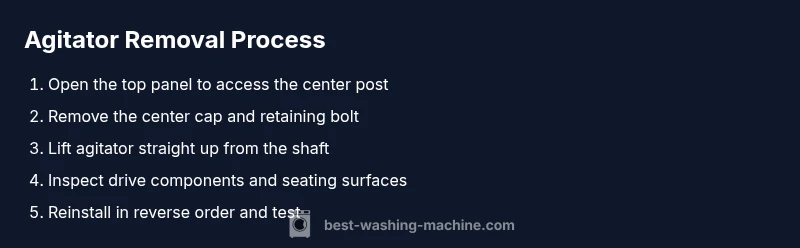
With the top open, locate the center cap and remove it to expose the retaining bolt. Depending on the model, you may need a cap key or a flat-head screwdriver to pry off the cap without bending it. Once the cap is removed, you’ll see the retaining bolt or nut that secures the agitator to the drive shaft. Hold the shaft steady with one hand while loosening the bolt with the other to prevent the shaft from turning. Use a penetrating oil if the bolt is stubborn, but avoid over-wetting plastic components. Remove the bolt and keep it with the cap for reassembly. This step is decisive: a missing or damaged bolt can prevent proper reassembly and cause leaks or noise later.
Lifting and inspecting the agitator and coupling
Gently lift the agitator straight up with steady, even pressure. If it resists, ensure the bolt is fully removed and check for any locking washers or hidden fasteners. Once removed, inspect the inner drive sleeve, coupling, and the transmission shaft for wear, cracks, or excessive play. Look for recessed threads or damage around the base where the agitator seats. If you see corrosion, metal fatigue, or a worn coupling, plan for replacement. Cleaning the center shaft and the surface where the agitator seats helps prevent slipping and ensures a solid reattachment. Remember to keep track of any small washers or spacers that came loose during removal.
Inspecting and cleaning the interior components
With the agitator removed, inspect the tub interior, the drive coupling, and the center shaft for debris, hair, or lint buildup. Use a soft brush and a mild, non-abrasive cleaner to remove grime. Dry all parts thoroughly before reassembly, especially any surfaces that contact seals. If you notice a worn seal or a damaged coupling, you may need to replace these parts to prevent leaks. This cleaning step also helps you identify issues that could affect performance after reassembly. Be mindful of the tub’s finish; avoid harsh chemicals that could dull the surface. The goal is a clean, fresh seating area for the agitator and a healthy seal.
Reassembly options: reinstalling or replacing
Decide whether you’re reinstalling a functioning agitator or replacing it with a new one. If reusing the old piece, align any notches or guides that match the drive shaft. Reinstall the center bolt or nut and snug it securely, then replace the center cap. If replacing, install a compatible agitator and reattach the cap and bolt in the same orientation as the original. In either case, ensure the agitator seats firmly and spins with little wobble. Don’t overtighten, which can strip threads or crack plastic.
Final checks and testing
After reassembly, reattach the top panel or console, reconnect water lines, and plug the machine back in. Run a short test cycle with no clothes to verify balanced agitation and confirm there are no leaks around the seal or drum. Listen for abnormal noises and observe water discharge. If you spot leaks, re-check all seals and re-tighten connection points as needed. A successful test means your washer is ready for regular use, with the agitator functioning correctly and the drum rotating smoothly.
When to contact a professional
If the agitator is seized, the bolt won’t loosen, or you notice significant wear on the drive coupling or tub seal, consider professional service. Complex issues like a damaged transmission, a cracked tub, or persistent leaks may require specialized tools and expertise. A professional can confirm warranty coverage and perform repairs to prevent further damage. If you’re unsure at any point, pause and consult the manual or a qualified technician. This approach protects both your appliance and your safety.
What to do next: maintenance to prevent future issues
After reassembly, establish a simple maintenance routine to keep the agitator and transmission in good shape. Clean the tub regularly to prevent buildup, check for unusual noises during operation, and address any odors promptly. Gentle use—avoiding aggressive overloads and harsh detergents—extends the life of seals and gears. If you encounter repeated issues, consider upgrading to a newer model with a robust agitator design or an impeller system that may be easier to service.
Tools & Materials
- Flathead screwdriver or plastic pry tool(For center-cap removal; avoid metal on plastic if possible)
- Phillips or hex key set(Used to loosen center bolt and panel fasteners)
- Ratcheting wrench or socket set(Access and remove retaining bolt/nut)
- Gloves(Protect hands from sharp edges)
- Towels and a shallow tray(Catch residual water and protect floor)
- Penetrating oil(Use sparingly for stubborn bolts)
- Camera or note-taking device(Capture part orientation for reassembly)
Steps
Estimated time: 60-90 minutes
- 1
Unplug and prepare
Unplug the washer and turn off both hot and cold water valves. Move the unit to a hard surface and place towels to catch any water remnants. This initial safety step reduces shock risk and prevents floor damage.
Tip: Keep a small tray ready for screws and small parts to avoid misplacement. - 2
Remove top panel or console
Access will depend on your model. Remove holding screws or hinge the lid to reveal the top. If your washer has a rear access panel, remove it to loosen any needed fasteners. Do not yank; lift with care to avoid damaging clips.
Tip: Take a photo of the panel’s orientation before removal. - 3
Expose the center cap
Locate the agitator center cap and gently pry it off using a plastic tool. Set the cap aside with the accompanying fasteners. Some caps snap tight; apply even pressure from multiple angles to prevent cracking.
Tip: If the cap resists, apply a small amount of plastic-safe lubricant at the edge and try again. - 4
Loosen the retaining bolt
Under the cap, locate the retaining bolt or nut and use the appropriate tool to loosen it. Hold the drive shaft steady to prevent rotation as you loosen. Remove the bolt and set it aside with the cap.
Tip: If the bolt is stubborn, apply penetrating oil and wait a few minutes before retrying. - 5
Lift the agitator
Gently pull the agitator straight upward with even pressure. If it sticks, recheck for any additional hidden fasteners or caps. Once free, remove the agitator from the shaft and inspect the seating area.
Tip: Keep your hand under the agitator as you lift to control its fall and avoid damage. - 6
Inspect drive components
Look at the drive sleeve, clutch, and coupling for wear or damage. Check for cracks, rust, or excessive play. If any part looks worn, plan for replacement before reassembly.
Tip: Document wear with photos for reference when purchasing replacements. - 7
Clean and dry interior
Clean any debris from the tub seating area and from the bottom of the agitator cavity. Dry all surfaces thoroughly to prevent corrosion and ensure a snug fit on reinstallation.
Tip: Wipe seals with a dry cloth and avoid moisture on electrical components. - 8
Decide reinstall or replace
If reusing, align any notches or guides on the agitator with the drive shaft. If replacing, install the new agitator in the same orientation and secure with the bolt.
Tip: Check fit by rotating the agitator after installation to ensure it has no binding. - 9
Reinstall components
Reattach the retaining bolt, snap the center cap back into place, and reinstall any top panel or console. Reconnect water lines and secure all fasteners.
Tip: Do not overtighten screws; this can strip plastic threads. - 10
Initial testing
Plug the washer back in and run a short empty cycle to verify operation and motion. Look for leaks and listen for unusual sounds that may indicate misalignment.
Tip: Have a bucket under the unit during the test to catch any unexpected drips. - 11
Final checks
Inspect seals after the test cycle and run a full load wash if no leaks are detected. Confirm the agitator turns smoothly without wobble and that clothes come out clean.
Tip: If you notice wobble, recheck bolt tightness and seating height. - 12
Know when to call a pro
If the drive components show significant wear or the washer leaks persist after reassembly, seek professional service. Some issues require specialized tools or factory parts.
Tip: Keep warranty information handy and ask about coverage before proceeding with repairs.
FAQ
Do I need to unplug the washer before starting?
Yes. Unplug the washer and turn off the water supply before any disassembly to prevent electrical shock and water leaks. Safety first is essential when working with appliances.
Yes—unplug the washer and shut off the water before you start.
Can I remove the agitator without removing the top panel?
Most top-load washers require top-panel access to reach the center bolt and drive components. Some models may allow access through the front, but it’s not common. Consult your manual for model-specific guidance.
In most top-load washers, you’ll need access via the top panel to reach the agitator bolt.
What tools do I need for agitator removal?
A plastic pry tool or flathead, a set of screwdrivers, and a socket or hex key to remove the center bolt are typically required. Gloves help protect your hands.
Usually you’ll need a pry tool, screwdrivers, and a socket or hex key with gloves for protection.
Will removing the agitator void my warranty?
Disassembly can affect warranty coverage if the model specifies professional service for internal components. Check your manual or contact the manufacturer to confirm.
It depends on your model and warranty terms; check the manual or contact the maker.
What should I do if the agitator won’t budge?
Apply a small amount of penetrating oil to the center nut and wait a few minutes, then try again. Do not use excessive force to avoid damaging threads or the shaft.
If it’s stuck, apply a bit of penetrating oil and retry gently, avoiding force.
How do I know if the agitator needs replacement?
Look for visible cracks, excessive wobble, or a worn drive coupling. If replacement parts are necessary to stop leaks or noise, install compatible parts.
Visible damage or persistent issues indicate replacement may be needed.
Watch Video
The Essentials
- Identify agitator design before disassembly
- Prioritize safety: unplug and isolate water supply
- Remove center cap and retaining bolt carefully
- Inspect drive components for wear and replace if needed
- Test thoroughly for leaks and correct operation